

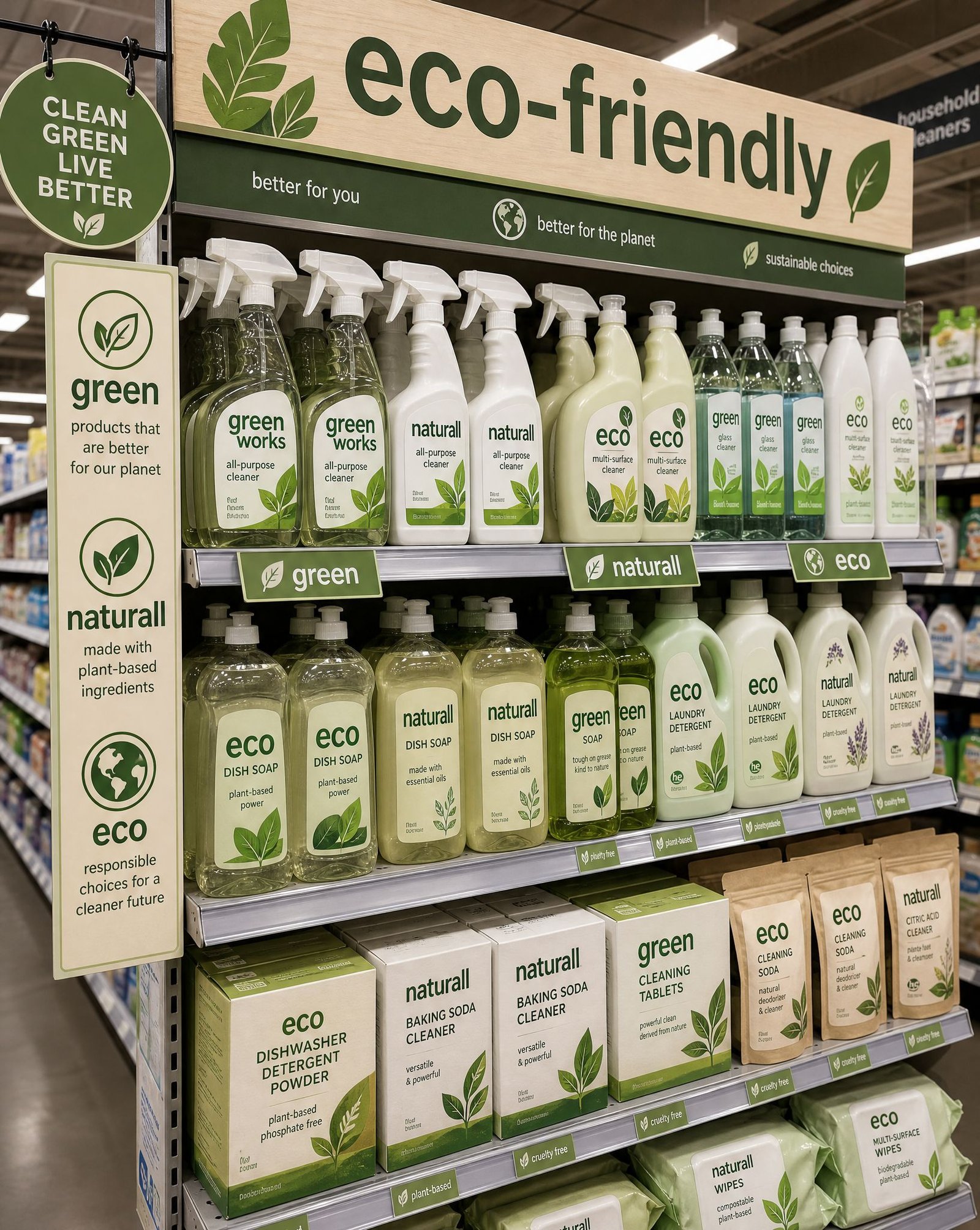
Walk down almost any supermarket aisle and you will see the language of sustainability everywhere.
Green. Natural. Eco. Planet-friendly. Conscious. Clean.
Leaves appear on packaging. Bottles turn beige or green. Products tell us they are kinder to the planet.
But what do these descriptions actually tell us?
Often, not very much.
That does not necessarily mean a manufacturer is deliberately trying to mislead us. Sustainability is complicated, products are complicated, and reducing an entire supply chain to a few words on the front of a bottle was never going to tell the whole story.
But as consumers become more interested in the environmental impact of what they buy, I think we need to move beyond asking:
“Is this eco-friendly?”
and start asking:
“Why is this a better choice?”
That small change opens up a much more useful conversation.
The UK Competition and Markets Authority takes a similar view. Its Green Claims Code warns that broad terms such as “green”, “sustainable” and “eco-friendly” can be misleading if businesses cannot substantiate what those claims actually mean. Consumers are encouraged to look beyond slogans and seek evidence.
So, the next time a product presents itself as the sustainable option, here are five questions worth asking.
1.What exactly is the environmental claim?
“Eco-friendly” sounds reassuring.
But friendly to what?
Is the packaging made from recycled material?
Has the amount of plastic been reduced? Are the ingredients readily biodegradable? Is it concentrated so that less product needs to be
transported? Is it refillable? Was it manufactured locally?
These are all different things.
A product can perform well in one area without performing particularly well in another.
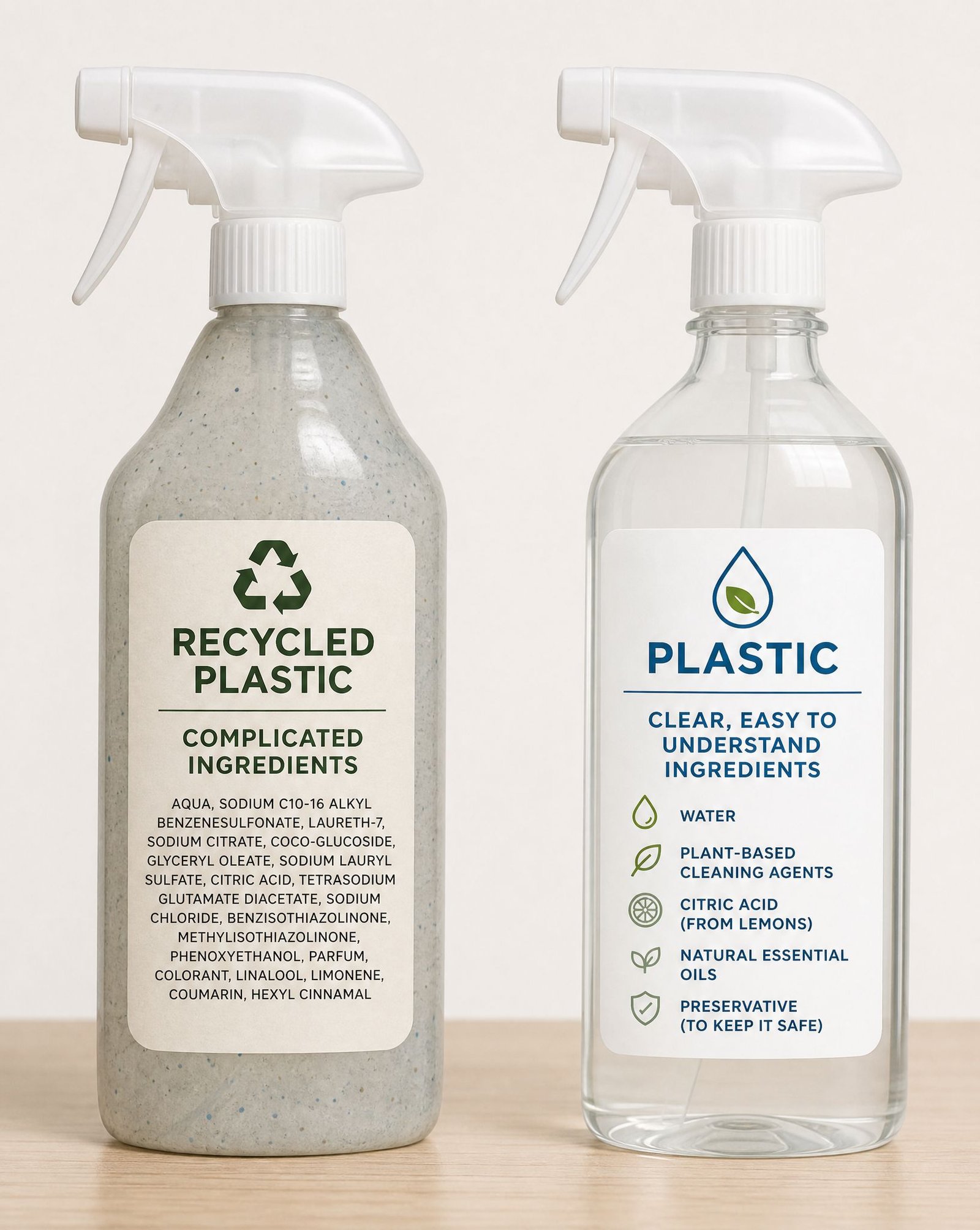
For example, a bottle may be made from recycled plastic while containing a formulation
whose ingredients tell a more complicated environmental story. Equally, a product
packaged in plastic may be highly concentrated, refillable and designed to last
significantly longer.
Neither example can be understood from one word on the label. Specific claims are far more useful than broad ones.
Bottle made from 100% recycled plastic” tells me something I can investigate.
“Eco bottle” does not. The CMA advises consumers not to rely on vague slogans and says businesses should
2. Where is the evidence
This is probably the question I ask most often.
If a company says something is biodegradable, plastic-free, compostable, natural or sustainably sourced, can I find out why?
Sometimes the information is right there on the product page.
Sometimes there is a certification.
Sometimes a manufacturer provides detailed ingredient information, sourcing policies, technical documentation or independent testing.
And sometimes you keep looking and find very little.
Transparency does not require a company to be perfect. In fact, I am often more comfortable with a business that openly explains its limitations than one that makes sweeping claims without explaining them.
A credible sustainability claim should survive the next question:
“Can you show me?”
The CMA’s guidance similarly says genuine environmental claims should properly describe the impact concerned and be backed by evidence.
3. What is the product actually made from?
Packaging receives enormous attention in sustainability conversations, understandably.
But the product itself matters too.
For household and personal-care products, I look at materials and ingredients as well as the container they arrive in.
With a cleaning accessory, that might mean asking whether it is made from cellulose, cotton, natural rubber, plant fibres, plastic or a mixture of materials.
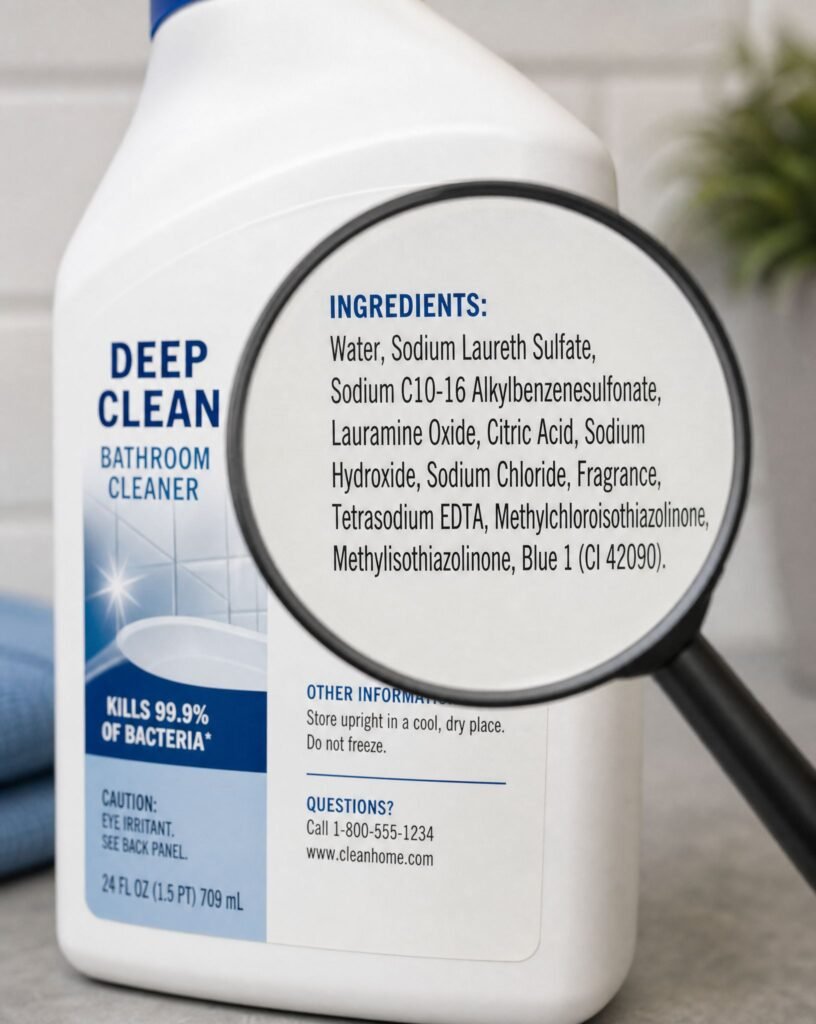
With a liquid cleaning product, the questions are different. What surfactants are being used? What preservatives? What fragrances? Is the ingredient information available? What happens to those ingredients when the product is used as intended?
This doesn’t mean dividing ingredients into simplistic categories of “good chemicals” and “bad chemicals”.
Everything is chemistry.
What matters is understanding characteristics such as purpose, concentration, biodegradability, persistence and the conditions under which an
ingredient is used.
The same principle applies to materials.
“Natural” is not automatically better in every circumstance, just as “synthetic” does not automatically mean harmful.
The useful question is:
Why was this material or ingredient chosen, and what evidence do we have about it?
4. What happens when I’m finished with it?
We spend a lot of time thinking about the moment we buy something and surprisingly little time thinking about the moment we stop using it.
But every product has an afterlife.
Can the packaging genuinely be recycled through the facilities available to me?
Can the item be refilled?
Can individual components be replaced instead of throwing away the whole product?
Can it be repaired?
If it is described as compostable, under what conditions?
And with cleaning and personal-care formulations, where do the ingredients go after we rinse them away?
“Down the drain” is not the end of the story.
This is one reason sustainability is much broader than packaging.
The CMA’s own consumer guidance specifically encourages shoppers to think about disposal and about the overall environmental picture rather than focusing on a single positive attribute.
5. Do I actually need to replace what I already own?
This may be the least exciting sustainability advice of all:
Use what you have.
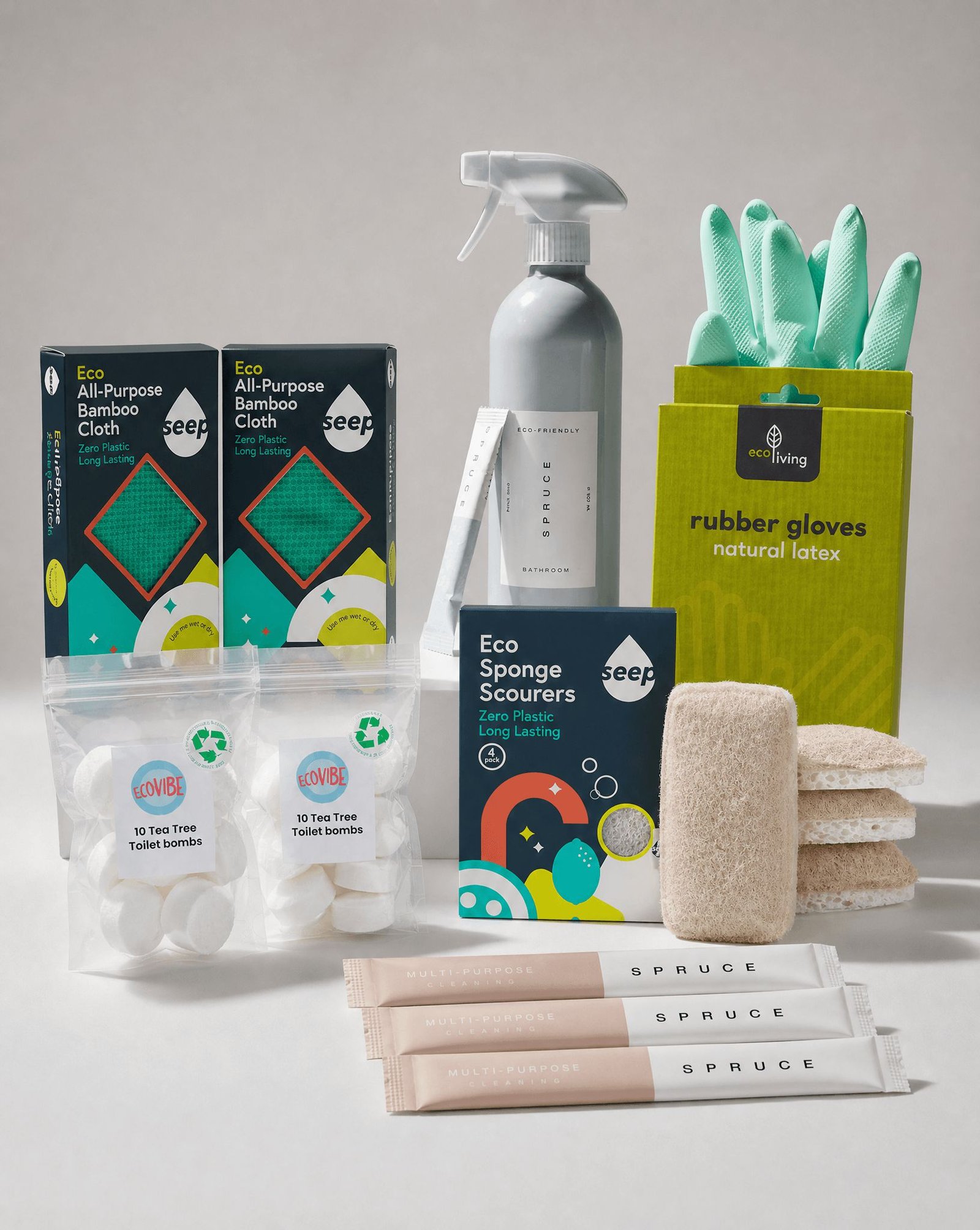
A perfectly serviceable plastic washing-up brush does not suddenly become an environmental emergency because you have discovered a beautiful wooden alternative.
Use it.
Look after it.
Then, when it reaches the end of its useful life, consider whether there is a better replacement.
The goal should not be to create another reason to consume.
Sustainable living does not require replacing the entire contents of your home in one weekend.
For most of us, it is a gradual process of making slightly more informed decisions as things run out, wear out or genuinely need replacing.
That is both more realistic and, I would argue, more sustainable.

and replaceable dish
brush head
Transparency is more useful than perfection
Perhaps the biggest change we can make is to stop looking for the perfect “green”
product.
It probably doesn’t exist.
Every product uses materials, energy and resources. Every choice involves trade-offs.
What we can ask for is better information.
We can reward companies that tell us what their products contain, where materials come from, what certifications mean and where the limitations lie.
And businesses can become more comfortable saying:
“Here is what we know. Here is what we have improved. Here is what we are still working on.”
That is much more meaningful to me than another green leaf printed on a label.
At EcoElara, this thinking has shaped how I approach products and suppliers. Rather than accepting an environmental claim at face value, I look further: at ingredients, materials, sourcing, packaging, end-of-life considerations and the evidence behind manufacturers’ claims.
Not because every product must be perfect.
But because people deserve enough information to make their own decisions.
The question therefore isn’t simply:
“Is it eco-friendly?”
The better question is:
“What makes it a better choice, and can you show me?”
Sandra Wilson is the founder of EcoElara, a curated home and personal-care retailer. EcoElara researches products and suppliers, looking beyond environmental marketing claims at ingredients, materials, transparency and sourcing before deciding what to stock.

Author: Sandra Wilson
Sandra Wilson is the founder of EcoElara, a curated home and personal-care retailer. EcoElara researches products and suppliers, looking beyond environmental marketing claims at ingredients, materials, transparency and sourcing before deciding what to stock.