





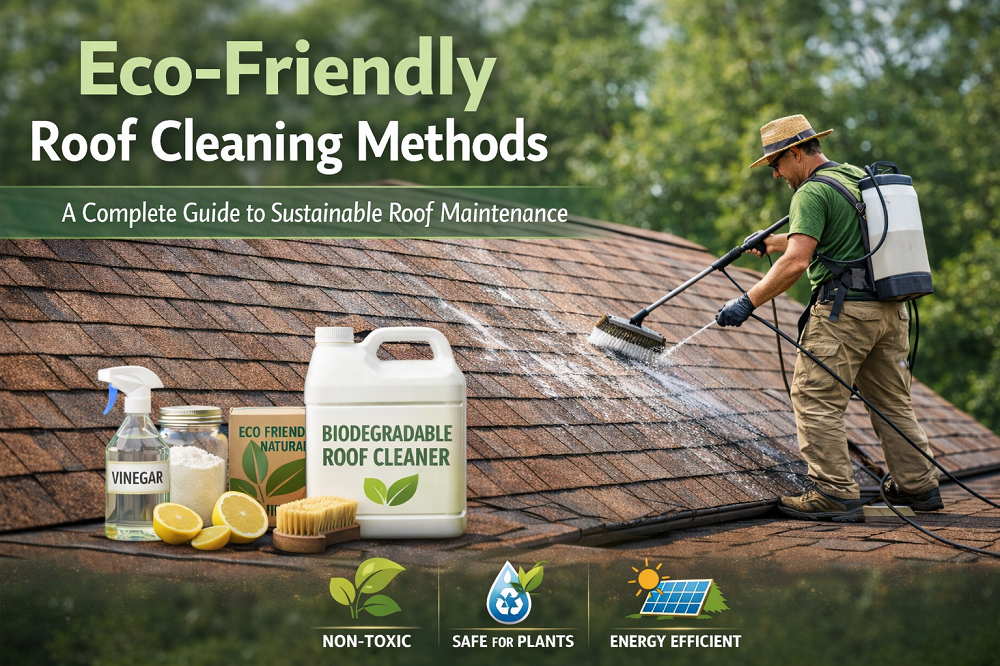
Keeping your roof clean is essential for maintaining the appearance, durability, and efficiency of your home. Over time, roofs accumulate dirt, algae, moss, mold, and debris that can gradually damage roofing materials. However, traditional roof cleaning methods often rely on harsh chemicals and high-pressure washing that may harm the environment, surrounding plants, and even the roof itself.
This is why many homeowners and professionals are now adopting eco friendly roof cleaning solutions. These environment friendly roof cleaning practices help remove contaminants while minimizing environmental impact, protecting landscaping, and extending the lifespan of roofing materials.
In this guide, we’ll explore the most effective eco-friendly roof cleaning methods, their benefits, and how to maintain different roof types safely and sustainably.
Soft Washing with Biodegradable Cleaners
One of the most popular and effective eco friendly roof cleaning techniques is soft washing with biodegradable cleaners. Unlike traditional pressure washing, soft washing uses low-pressure water combined with environmentally safe cleaning solutions to remove dirt, algae, moss, and mold.
The biodegradable cleaning agents are designed to break down naturally without causing harm to plants, soil, or water systems. These solutions typically contain eco-safe ingredients that target organic growth and stains while remaining gentle on roofing materials.
Soft washing works by applying the biodegradable cleaner across the roof surface and allowing it to penetrate and break down organic contaminants. After the solution has done its job, the roof is gently rinsed with low-pressure water to remove debris and residue.
Because it uses low pressure, this method is safe for delicate roofing materials such as asphalt shingles, tiles, and wood shakes. It also uses less water than traditional high-pressure cleaning techniques, making it a sustainable option for roof maintenance.
Benefits of Soft Washing with Biodegradable Cleaners
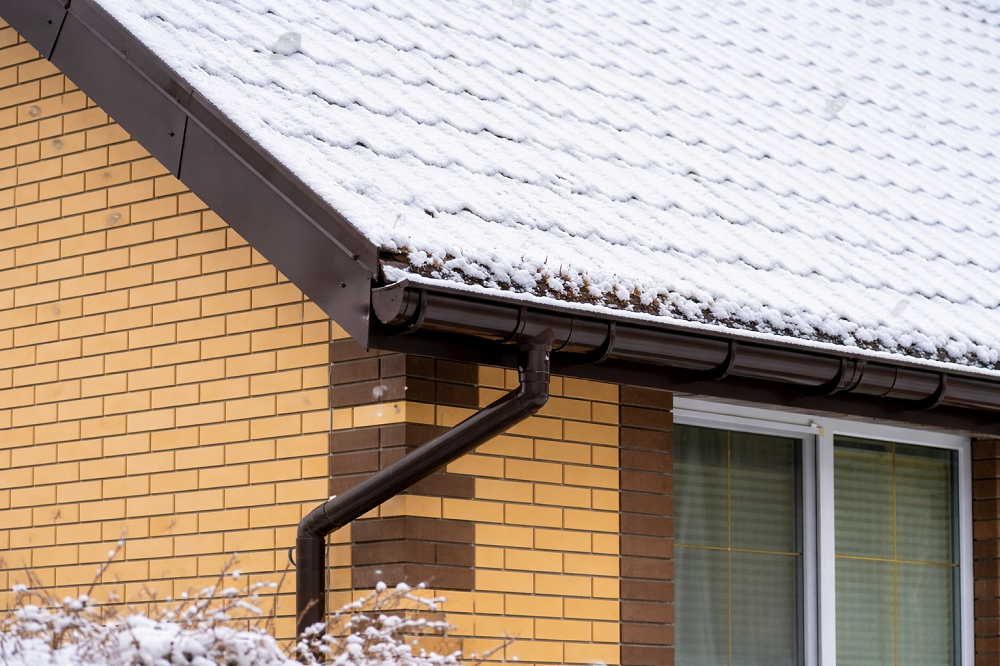
Soft washing has become a preferred choice for environment friendly roof cleaning practices because it offers several benefits for both homeowners and the environment.
Protects Roofing Materials
High-pressure washing can damage shingles, loosen tiles, and strip away protective coatings. Soft washing uses gentle water pressure, which preserves the structural integrity of the roof and prevents unnecessary wear and tear.
Environmentally Safe
Biodegradable cleaning solutions break down naturally, preventing chemical contamination in soil and nearby water systems. This makes the process safe for plants, pets, and wildlife.
Long-Lasting Results
Soft washing doesn’t just remove visible stains—it also eliminates the microorganisms that cause algae, moss, and mold growth. This helps keep the roof cleaner for a longer period and reduces the frequency of cleaning.
Water Conservation
Compared to pressure washing, soft washing requires significantly less water. This contributes to more sustainable and responsible roof maintenance.
Improved Curb Appeal
A clean roof enhances the overall appearance of your home. By using eco friendly roof cleaning methods, homeowners can maintain their property while also supporting environmentally responsible practices.
Natural Roof Cleaning Methods
In addition to soft washing, there are several natural roof cleaning methods that support environment friendly roof cleaning practices. These approaches minimize chemical use and focus on preventive maintenance.
Manual Debris Removal
Removing leaves, branches, and debris from the roof is one of the simplest ways to maintain roof health. Using tools such as soft brushes, leaf blowers, or plastic scrapers can help remove buildup without chemicals.
Regular debris removal prevents moisture accumulation, which reduces the chances of mold and moss growth.
Vinegar-Based Cleaning Solutions
For light stains and algae buildup, vinegar mixed with water can act as a natural cleaning solution. Vinegar has mild antimicrobial properties that help break down organic growth.
This method is especially useful for small areas or spot cleaning.
Zinc or Copper Strips
Installing zinc or copper strips along the roof ridge is a preventive natural solution. When rainwater flows over these strips, small amounts of metal ions wash down the roof surface. These ions naturally inhibit the growth of moss, algae, and mold.
This long-term solution helps reduce the need for frequent roof cleaning.
Improving Sunlight and Ventilation
Trimming overhanging tree branches allows more sunlight to reach the roof. Sunlight helps dry moisture and discourages moss and algae growth.
Proper attic ventilation also reduces humidity, which further prevents organic growth on the roof surface.
Comparing the 4 Eco-Friendly Roof Cleaning Methods
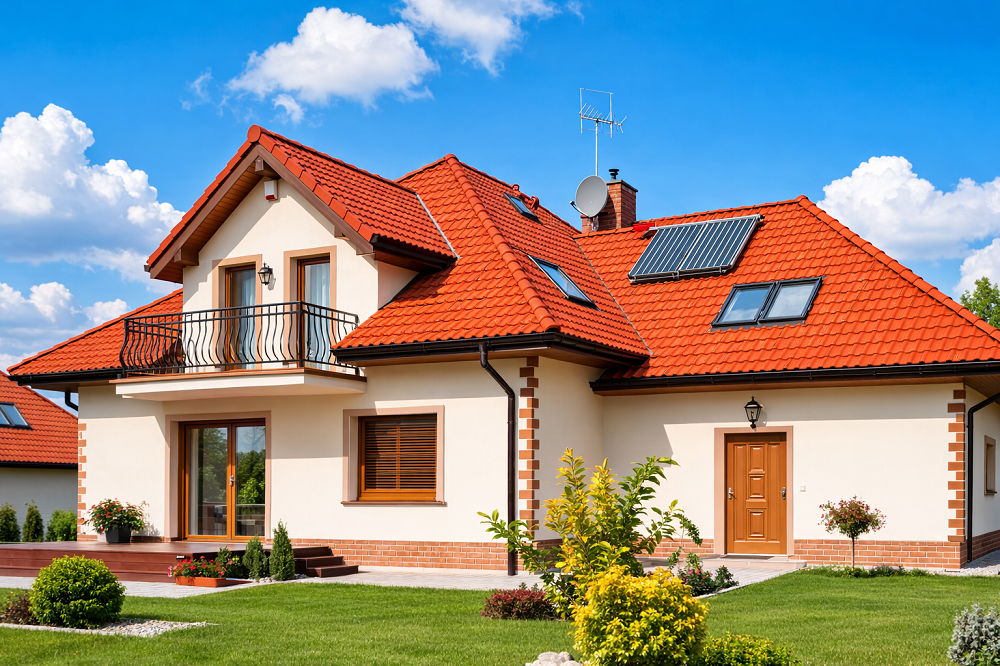
There are several eco friendly roof cleaning methods, each suited for different conditions and roof types. Below is a comparison of four common methods.
1. Soft Washing with Biodegradable Cleaners
Soft washing is ideal for removing algae, mold, and heavy stains. It is safe for most roofing materials and provides long-lasting results.
Best for: Asphalt shingles, tile roofs, and delicate materials.
2. Manual Cleaning
Manual cleaning involves removing debris and light moss buildup using brushes and scrapers.
Best for: Routine maintenance and small problem areas.
3. Natural Cleaning Solutions
Solutions such as vinegar mixtures provide mild cleaning for light stains.
Best for: Small patches of algae or surface stains.
4. Preventive Treatments
Zinc or copper strips prevent moss and algae growth before it starts.
Best for: Long-term roof protection and reduced cleaning frequency.
Each of these environment friendly roof cleaning practices contributes to sustainable roof care while reducing environmental impact.
The Principles of Safe, Eco-Friendly Roof Cleaning
To ensure successful eco friendly roof cleaning, certain safety and sustainability principles should always be followed.
Minimize Chemical Use
Whenever possible, choose biodegradable and non-toxic cleaning solutions. Avoid harsh chemicals that can damage plants and pollute water systems.
Use Low Pressure
High-pressure washing can damage roofing materials and force water beneath shingles. Low-pressure cleaning is safer and more effective for long-term roof health.
Protect Surrounding Landscaping
Before cleaning the roof, it’s important to wet plants and cover delicate landscaping areas. This helps prevent potential damage from cleaning solutions or runoff water.
Manage Runoff Water
Runoff from roof cleaning should be directed away from storm drains and sensitive areas. Proper drainage reduces environmental contamination.
Prioritize Preventive Maintenance
Regular inspections and maintenance reduce the need for intensive cleaning. Preventing buildup is more sustainable than removing it later.
Cleaning and Treating Different Roof Types
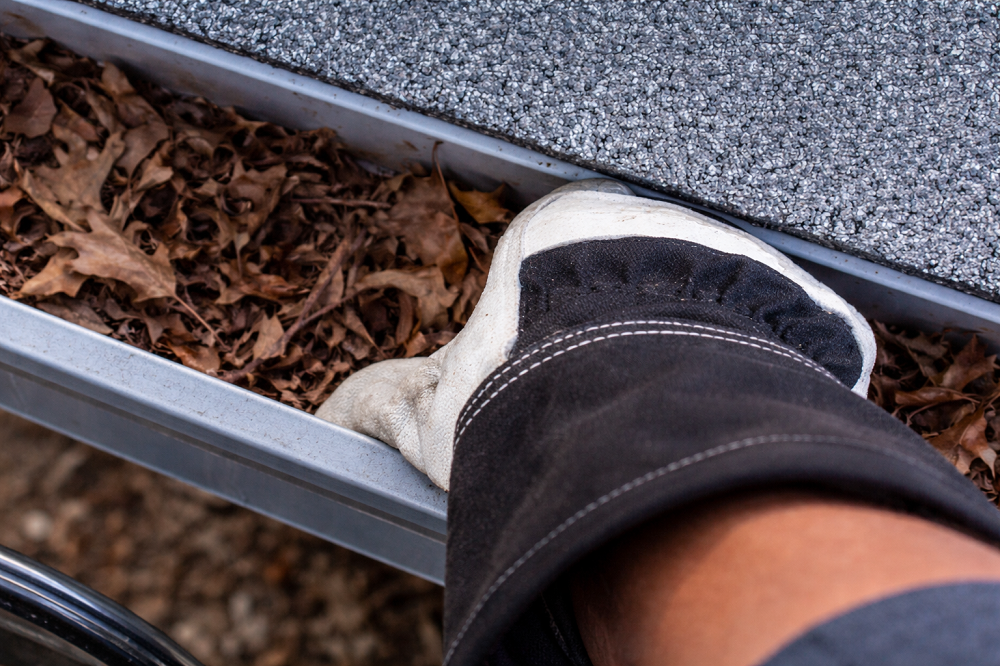
Different roofing materials require specific cleaning methods. Using the correct eco friendly roof cleaning approach ensures effective cleaning without causing damage.
Asphalt Shingle Roofs
Asphalt shingles are sensitive to high-pressure washing. Soft washing with biodegradable cleaners is the safest and most effective method for removing algae and stains.
Tile Roofs
Tile roofs can accumulate moss and debris in gaps between tiles. Gentle soft washing combined with manual debris removal works well for maintaining these roofs.
Metal Roofs
Metal roofs are relatively easy to clean because they resist algae growth. Mild eco-friendly cleaners and low-pressure rinsing are usually sufficient.
Wood Shake Roofs
Wood roofs require special care because moisture can cause mold and rot. Soft washing with natural cleaning solutions is recommended, along with proper ventilation to keep the wood dry.
The Essential Takeaways for Roof Cleaning & Maintenance
Maintaining a roof using environment friendly roof cleaning practices offers both environmental and financial benefits. Here are the key takeaways for sustainable roof care:
- Choose eco friendly roof cleaning methods such as soft washing with biodegradable cleaners.
- Avoid high-pressure washing that can damage roofing materials.
- Use natural cleaning solutions and preventive treatments whenever possible.
- Remove debris regularly to prevent moss and algae growth.
- Install zinc or copper strips to reduce long-term buildup.
- Protect surrounding plants and landscaping during the cleaning process.
- Schedule routine inspections to catch problems early.
By adopting these practices, homeowners can keep their roofs clean while reducing environmental impact and extending the life of their roofing systems.
Conclusion
Eco-friendly roof cleaning is more than just a trend—it is a responsible approach to home maintenance. By combining soft washing, natural cleaning methods, and preventive treatments, homeowners can maintain a clean and durable roof without harming the environment.
Using eco friendly roof cleaning techniques ensures that harmful chemicals, excessive water use, and roof damage are avoided. At the same time, these environment friendly roof cleaning practices promote sustainability, protect surrounding ecosystems, and improve the longevity of roofing materials.
With regular maintenance and the right cleaning methods, homeowners can enjoy a beautiful, well-maintained roof while contributing to a cleaner and healthier environment.
FAQs
1. What is eco friendly roof cleaning?
Eco friendly roof cleaning refers to cleaning methods that use biodegradable cleaners, low-pressure washing, and natural solutions to remove algae, moss, and dirt without harming the environment.
2. Is soft washing better than pressure washing for roofs?
Yes. Soft washing uses low pressure and eco-safe cleaning solutions, which protects roofing materials while effectively removing mold, algae, and stains.
3. What are the best environment friendly roof cleaning practices?
Some of the best practices include soft washing with biodegradable cleaners, manual debris removal, installing zinc or copper strips, and using natural cleaning solutions.
4. Can vinegar be used for eco friendly roof cleaning?
Yes. Vinegar mixed with water can help remove light algae or stains and is considered a natural cleaning solution for small roof areas.
5. How often should a roof be cleaned using eco friendly methods?
Most roofs should be cleaned every 1–3 years, depending on climate, tree coverage, and algae growth.
6. Does eco friendly roof cleaning prevent moss and algae growth?
Yes. Methods such as installing zinc or copper strips and maintaining proper roof ventilation help prevent moss and algae buildup.

Author: Sustainable Talks
Talk Green. Think Change. Act Sustainably. 🌍 Ideas, stories & actions for a greener future.