


As sustainability moves from a “nice to have” to a business necessity, food brands across the UK are rethinking how their products are packaged. From independent cafés in London to large-scale food manufacturers supplying supermarkets nationwide, the shift towards eco-friendly packaging is reshaping the food industry.
With increasing consumer awareness, tighter environmental regulations, and rising concerns about plastic pollution, sustainable packaging is no longer optional. Choosing the right biodegradable packaging or plastic-free alternatives can enhance brand trust, reduce environmental impact, and future-proof your business.
This guide explores why sustainable packaging matters, the main types of eco-friendly food packaging materials available in the UK, and what to consider when selecting the best solution for your food products.
Why Should You Consider Using Sustainable Packaging?
1. Growing Consumer Demand in the UK
UK consumers are more environmentally conscious than ever. According to multiple market studies, shoppers increasingly prefer brands that demonstrate genuine sustainability efforts. Food packaging is one of the most visible indicators of a brand’s environmental commitment.
Using eco-friendly packaging helps build trust, improve brand perception, and influence purchasing decisions—especially among younger, eco-aware demographics.
2. Compliance with UK Regulations
The UK government has introduced several initiatives aimed at reducing packaging waste, including:
- The Plastic Packaging Tax
- Extended Producer Responsibility (EPR)
- Stricter recycling and waste labelling requirements
Switching to plastic-free or recyclable packaging helps businesses stay compliant while avoiding future penalties.
3. Reduced Environmental Impact
Traditional plastic packaging can take hundreds of years to decompose. In contrast, biodegradable packaging materials break down naturally, reducing landfill waste and marine pollution.
By choosing sustainable packaging, food businesses actively contribute to:
- Lower carbon emissions
- Reduced reliance on fossil fuels
- Cleaner oceans and countryside
4. Competitive Advantage and Brand Differentiation
Sustainability can be a powerful marketing tool. Packaging that clearly communicates eco credentials helps products stand out on crowded supermarket shelves and online marketplaces.
Types of Eco-Friendly Packaging Materials for Food
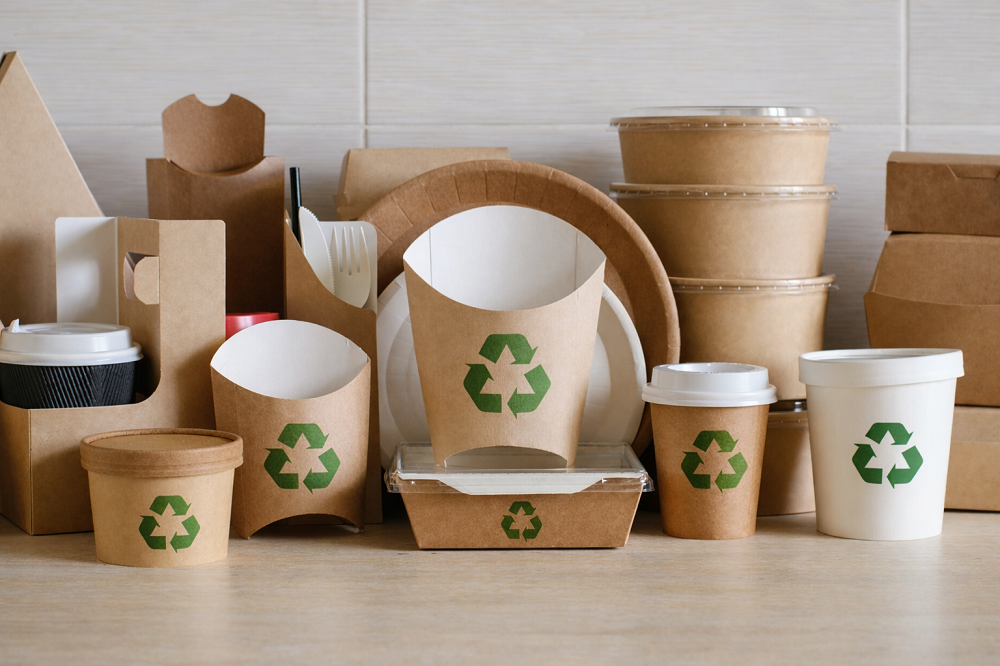
There is no one-size-fits-all solution when it comes to sustainable food packaging. The right material depends on food type, shelf life, storage conditions, and budget. Below are the most popular eco-friendly packaging options used across the UK food industry.
1. Paper and Cardboard Packaging
Paper-based packaging is one of the most widely used plastic-free solutions in the UK.
Key benefits:
- Widely recyclable
- Made from renewable resources
- Lightweight and cost-effective
Common uses:
- Bakery boxes
- Takeaway containers
- Dry food packaging
Look for FSC-certified paper to ensure responsible sourcing.
2. Compostable Packaging
Compostable packaging is designed to break down into natural elements under the right conditions.
Materials include:
- Plant-based fibres
- Sugarcane bagasse
- Cornstarch blends
Advantages:
- Ideal for food-contaminated packaging
- Supports circular economy models
- Reduces landfill waste
This form of biodegradable packaging is especially popular with UK cafés, street food vendors, and takeaway businesses.
3. Sugarcane (Bagasse) Packaging
Bagasse is a by-product of sugar production and is increasingly used in sustainable packaging.
Why it’s popular:
- Fully compostable
- Heat and grease resistant
- Suitable for hot and cold foods
Typical applications:
- Clamshell containers
- Plates and bowls
- Ready-meal trays
4. Bioplastics (PLA and Similar Materials)
Bioplastics such as PLA (polylactic acid) are derived from renewable resources like corn or sugarcane.
Benefits:
- Lower carbon footprint than traditional plastic
- Transparent and versatile
- Suitable for cold food packaging
Important note:
PLA is compostable but often requires industrial composting facilities, which should be clearly communicated to UK consumers.
5. Glass Packaging
Glass remains a premium eco-friendly packaging choice, particularly for food products requiring longer shelf life.
Pros:
- 100% recyclable
- Does not absorb flavours or odours
- High-end brand perception
Common uses:
- Sauces and condiments
- Jams and preserves
- Beverages
6. Aluminium Packaging
Aluminium is infinitely recyclable and widely accepted in UK recycling systems.
Advantages:
- Excellent barrier properties
- Lightweight
- Long shelf life
Used frequently for ready meals, takeaway containers, and beverage packaging.
What to Look for When Choosing Eco-Friendly Packaging
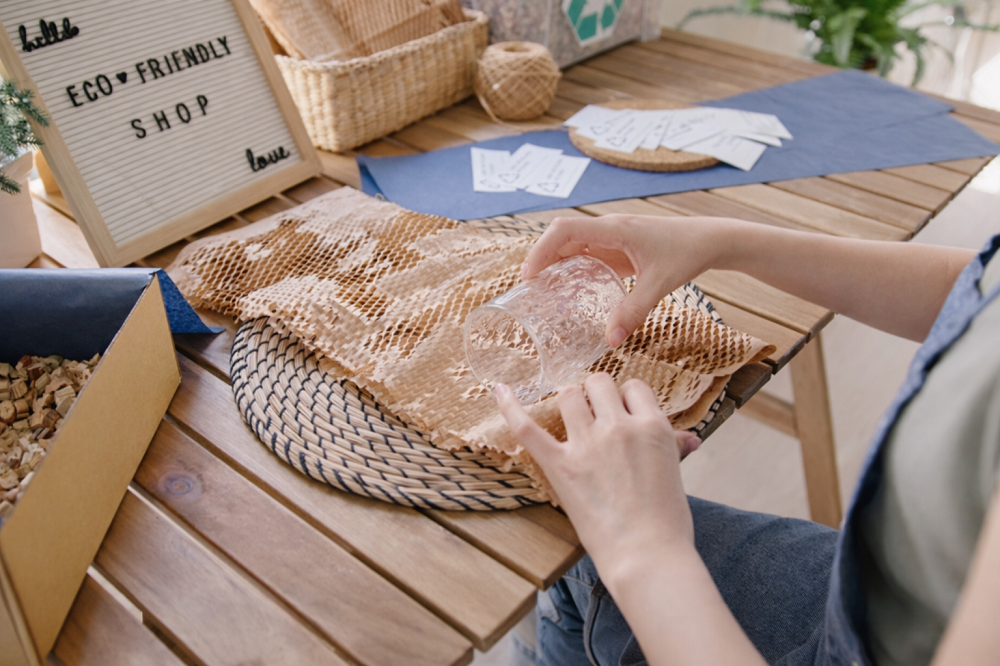
Selecting the right sustainable packaging goes beyond choosing a recyclable material. UK food businesses should evaluate several critical factors.
1. Food Safety and Compliance
Packaging must comply with UK and EU food safety standards. Ensure materials are:
- Food-grade certified
- Free from harmful chemicals
- Suitable for the intended food type
2. End-of-Life Disposal
Ask key questions:
- Is the packaging recyclable, compostable, or reusable?
- Can it be processed by UK waste facilities?
- Is disposal information clear for consumers?
Clear labelling is essential for maximising the environmental benefits of biodegradable packaging.
3. Carbon Footprint
True sustainability considers the full lifecycle of packaging, including:
- Raw material sourcing
- Manufacturing
- Transportation
- Disposal
Locally sourced or UK-manufactured packaging often has a lower carbon footprint.
4. Durability and Performance
Eco-friendly materials must still protect food quality and freshness. Consider:
- Moisture resistance
- Heat tolerance
- Shelf-life requirements
Poor performance can lead to food waste, undermining sustainability goals.
5. Cost and Scalability
While eco-friendly packaging may have a higher upfront cost, it often delivers long-term value through:
- Improved brand reputation
- Customer loyalty
- Reduced regulatory risks
Bulk purchasing and supplier partnerships can help UK businesses manage costs effectively.
6. Brand Alignment and Messaging
Your packaging should reflect your brand values. Minimalist, natural designs often pair well with plastic-free materials and reinforce sustainability messaging.
Final Thoughts: The Future of Food Packaging in the UK
Eco-friendly food packaging is no longer a trend—it’s the future. As UK regulations tighten and consumer expectations evolve, businesses that invest in sustainable packaging today will be better positioned for long-term success.
By choosing the right materials, understanding disposal pathways, and clearly communicating sustainability efforts, food brands can reduce environmental impact while building stronger connections with their customers.
Whether you’re a small takeaway or a national food producer, switching to biodegradable, eco-friendly, and plastic-free packaging is a meaningful step towards a more sustainable UK food industry.