

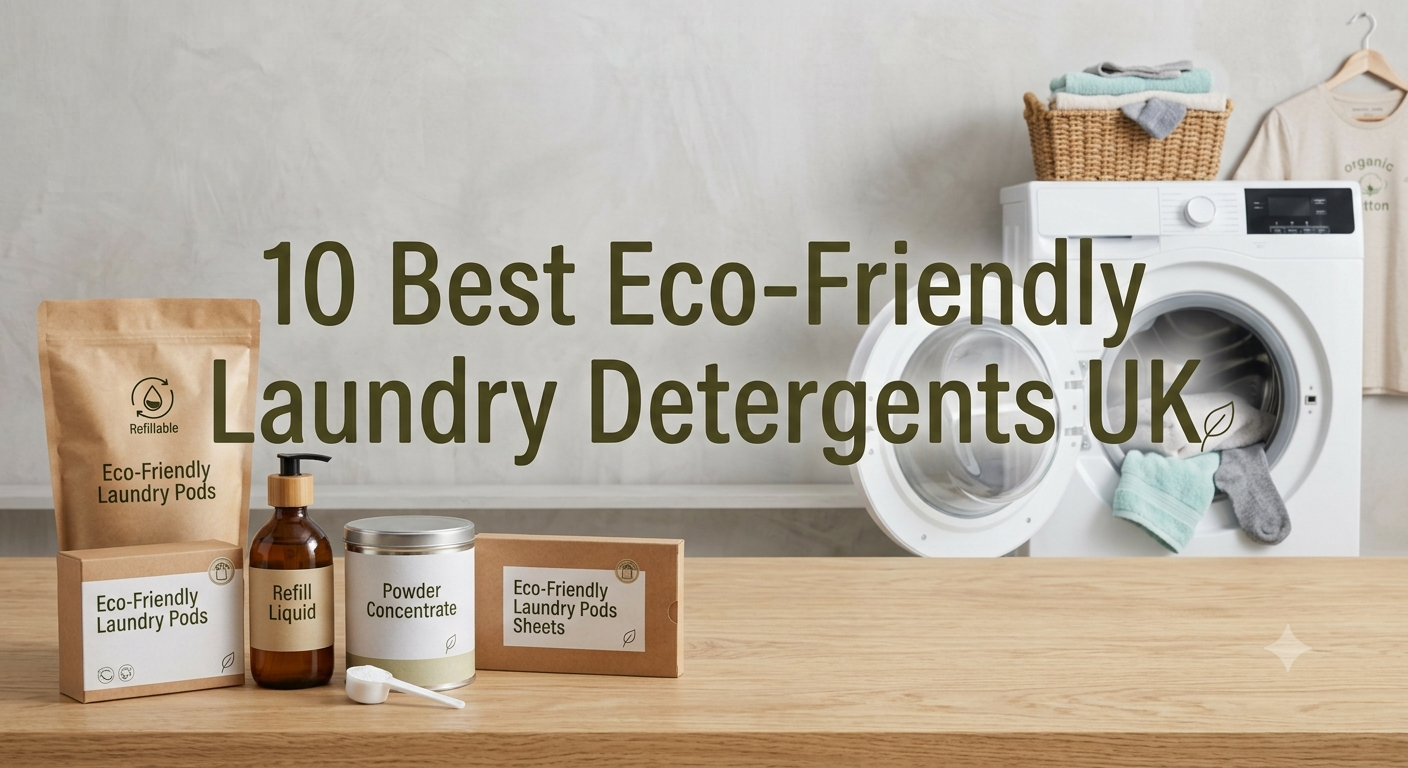
Switching to an eco-friendly laundry detergent is one of the simplest swaps you can make for a greener home. It cuts the amount of phosphates, synthetic fragrances, and microplastics going down the drain with every wash, while usually being just as gentle on your skin and just as tough on stains as a conventional detergent.
Below is a tested, UK-specific roundup of the 10 best eco-friendly laundry detergents available right now, followed by a clear breakdown of what actually makes a detergent “eco-friendly,” how to test one at home, and how to pick the right one for your household.
Quick Answer: The 10 Best Eco-Friendly Laundry Detergents UK
- Smol – Best subscription detergent capsules
- Bio-D – Best for sensitive skin and allergies
- Ecover – Best widely-available bio detergent
- Faith in Nature – Best concentrated liquid refill
- Delphis Eco – Best eco laundry powder
- Clothes Doctor Basil & Mandarin Leaf Eco Wash – Best premium plant-based liquid
- EcoEgg Laundry Egg – Best reusable, near-zero-waste system
- Homethings Laundry Sheets – Best plastic-free detergent sheets
- Miniml – Best refill-and-return liquid
- Splosh – Best budget-friendly refill subscription
1. Smol Laundry Capsules
Smol delivers pre-measured, plant-based capsules straight to your door on a flexible subscription, cutting out excess packaging and over-dosing. The formula is Leaping Bunny certified cruelty-free and free from optical brighteners.
- Format: Capsules (bio and non-bio)
- Best for: Households that want a no-fuss, auto-replenishing system
- From: Around 21–26p per wash on subscription
2. Bio-D
A long-standing UK brand, Bio-D makes fragrance-free and hypoallergenic formulas that are dermatologist-tested and free from SLS, parabens, and phosphates. It’s a favourite for whites and stubborn stains because of its enzyme-active non-bio formula.
- Format: Liquid and powder
- Best for: Sensitive skin, eczema-prone households, baby laundry
- Certifications: Leaping Bunny, vegan
3. Ecover
One of the most recognisable names in eco-cleaning, Ecover’s concentrated non-bio and bio detergents use plant-based active ingredients and ship in bottles made from 100% post-consumer recycled plastic, produced in a Zero Waste certified factory.
- Format: Liquid concentrate
- Best for: Widely available eco option you can buy in most UK supermarkets
- Certifications: Leaping Bunny (cruelty-free), recyclable PCR packaging
4. Faith in Nature
Faith in Nature’s super-concentrated laundry liquid, made with aloe vera and rosemary oil, is a strong pick if you want a natural fragrance without SLS, parabens, or phosphates. The 5L refill format is designed to minimise packaging waste per wash.
- Format: Liquid, available in large refill sizes (up to 5L)
- Best for: Bulk buyers wanting to cut plastic waste
- Certifications: Leaping Bunny, vegan
5. Delphis Eco
Originally a professional cleaning-products company, Delphis Eco brought its commercial-grade, plant-based formulas into a domestic range. Bottles use 100% recycled plastic.
- Format: Powder and liquid
- Best for: Buyers who want professional-grade cleaning power with a lower environmental footprint
- Certifications: UK-based manufacturing, recycled packaging
6. Clothes Doctor Basil & Mandarin Leaf Eco Wash
A premium plant-based liquid that’s palm oil-free and cruelty-free, sold in a 100% aluminium bottle rather than plastic. Clothes Doctor also specialises in garment-care products designed to extend the life of clothing, which itself reduces overall consumption.
- Format: Liquid, aluminium packaging
- Best for: Anyone prioritising plastic-free packaging and fabric longevity
- Certifications: Palm oil-free, cruelty-free
7. EcoEgg Laundry Egg
Instead of liquid or powder, the EcoEgg uses reusable mineral pellets housed in a plastic egg that lasts roughly 10 years and up to 720 washes before needing a refill. The pellets themselves are plant-based, biodegradable, and non-toxic.
- Format: Reusable pellet system
- Best for: Long-term waste reduction and low cost-per-wash
- Note: Refill bags reduce packaging further versus bottled detergent
8. Homethings Laundry Sheets (Laundrythings)
Ultra-thin, dissolvable detergent sheets that come in plastic-free cardboard packaging — ideal for small spaces, travel, or anyone trying to eliminate bulky plastic bottles from their laundry routine entirely.
- Format: Dissolvable sheets
- Best for: Plastic-free laundry and travel-friendly storage
- Note: Contains a small amount of PVA to hold the sheet’s shape; check current formulation if this matters to you
9. Miniml
Miniml specialises in concentrated, plant-based laundry liquid sold through refill stations and returnable packaging schemes, minimising single-use plastic and performing well even in hard water areas.
- Format: Liquid concentrate, refillable
- Best for: Hard water regions and refill-shop shoppers
- Certifications: Cruelty-free, no animal derivatives
10. Splosh
Splosh sends concentrated refill sachets that you mix into a reusable bottle at home, so you’re only ever shipping the active ingredient rather than water and plastic. It’s one of the more budget-friendly subscription options.
- Format: Concentrated refill sachets
- Best for: Budget-conscious households wanting a refill subscription
- Cost: From roughly 20–23p per wash on larger refill sizes
What Makes Laundry Detergent Eco-Friendly?
Not every product labelled “green” or “natural” actually earns it. Genuinely eco-friendly laundry detergents tend to tick most or all of these boxes:
- Biodegradable, plant-derived surfactants instead of petroleum-based ones, so the formula breaks down readily in waterways rather than persisting and harming aquatic life.
- Free from phosphates, parabens, chlorine bleach, and optical brighteners (fluorescent dyes used to make whites look brighter than they are).
- Low or no VOCs and synthetic fragrance, reducing indoor air pollution and skin irritation risk.
- Sustainable, minimal packaging — recycled or recyclable plastic, aluminium, cardboard, refill pouches, or reusable systems rather than single-use virgin plastic bottles.
- Cruelty-free and often vegan formulation, ideally backed by a real certification such as Leaping Bunny rather than a self-declared claim.
- Effective at low temperatures, so you can wash at 20–30°C instead of 40–60°C, cutting home energy use alongside the formula’s own footprint.
- Concentrated dosing, which means less water shipped, less packaging per wash, and a smaller transport footprint.
A genuinely sustainable detergent addresses both what’s in the bottle and what the bottle itself is made of — a product can have a clean plant-based formula but still be a poor environmental choice if it’s shipped in excessive single-use plastic.
How to Test Eco-Friendly Laundry Detergent
Before committing to a full-size bottle or a subscription, it’s worth running a simple home test to confirm a detergent actually performs:
- Check the ingredient label first. Look for plant-derived surfactants, no phosphates or optical brighteners, and a short, recognisable ingredients list rather than vague “may contain” language.
- Do a stain-panel test. Wash a few identical fabric swatches (or old t-shirts) with common stains — food, grass, sweat — using the same wash cycle and temperature you’d normally use, so you can judge stain removal fairly.
- Test at your usual wash temperature. Most eco detergents are formulated to work at 20–30°C, so test at the temperature you’ll realistically use day-to-day rather than a hot cycle that flatters any detergent.
- Check for residue and rinse-out. After the wash, feel the fabric for stiffness or leftover residue — a sign the formula isn’t rinsing cleanly, which can also mean it’s less effective at lower doses.
- Assess scent and skin reaction. Wear the washed item for a day if you or your family have sensitive skin, watching for irritation, and note whether any fragrance is from natural essential oils or synthetic additives.
- Compare cost-per-wash, not just bottle price. Concentrated formulas often look pricier per bottle but work out cheaper per wash — always check the recommended dose and number of washes per pack.
- Verify sustainability claims. Look for a real certification (Leaping Bunny, EU Ecolabel, B Corp) rather than a marketing claim alone, since terms like “natural” and “eco” aren’t legally regulated in the UK.
How to Choose the Right Eco-Friendly Laundry Detergent for Your Home
There’s no single “best” detergent — the right choice depends on your household’s priorities. Use this quick decision guide:
| Priority | Best Format to Choose | Example Picks |
| Sensitive skin / allergies | Fragrance-free, non-bio, hypoallergenic liquid or powder | Bio-D, Faith in Nature |
| Minimal plastic waste | Refill systems, sheets, or reusable pellets | Miniml, Splosh, Homethings, EcoEgg |
| Convenience / no measuring | Pre-dosed capsules on subscription | Smol |
| Tough stains (grass, food, grease) | Bio detergent with plant-derived enzymes | Ecover Bio, Delphis Eco |
| Budget-conscious, long-term savings | Concentrated refills or reusable systems | Splosh, EcoEgg |
| Premium, plastic-free packaging | Aluminium or glass bottled liquids | Clothes Doctor |
| Travel or small living spaces | Lightweight, compact dissolvable sheets | Homethings |
| Hard water areas | Formulated concentrated liquids | Miniml, Ecover |
A few extra factors worth weighing before you buy:
- Bio vs non-bio: Bio detergents contain enzymes that break down protein and starch-based stains more effectively, but non-bio is usually gentler for sensitive skin and babies’ clothing.
- Subscription vs one-off purchase: Subscriptions (Smol, Splosh, Bower Collective) often reduce cost-per-wash and guarantee you never run out, but check cancellation terms before committing.
- Local availability: Ecover and some Bio-D lines are stocked in major UK supermarkets, while others (Miniml, Delphis Eco) are best bought online or through refill shops.
- Certifications over claims: Prioritise brands independently certified cruelty-free (Leaping Bunny) or carrying recognised eco labels, rather than relying on packaging language alone.
Frequently Asked Questions
Is eco-friendly laundry detergent as effective as regular detergent?
Yes, for everyday laundry at 20–30°C. Modern plant-based surfactants and enzymes handle typical soiling like body oils, food stains, and general dirt effectively. Very heavy staining, such as motor oil or paint, may still need pre-treatment with an oxygen-based stain remover regardless of which detergent you use.
What’s the difference between bio and non-bio eco detergent?
Bio detergents contain plant-derived enzymes that actively break down protein and starch-based stains, giving stronger stain removal. Non-bio detergents skip the enzymes, making them gentler and generally better suited to sensitive skin, eczema, or young children’s clothing.
Are eco-friendly detergents more expensive than conventional brands?
Not necessarily. While some premium eco brands cost more per bottle, concentrated and refill formats (Smol, Splosh, EcoEgg) often bring the cost-per-wash down to 20–26p, comparable to or cheaper than many mainstream supermarket detergents.
Can I use eco-friendly detergent in a cold wash?
Yes. Most of the detergents on this list, including Ecover Bio and Faith in Nature, are specifically formulated to perform well at 20°C, which also reduces your washing machine’s energy use.
What should I avoid when buying a “green” laundry detergent?
Watch for vague, unregulated terms like “natural” or “eco” without a backing certification. Look instead for a clear ingredients list, absence of phosphates and optical brighteners, and recognised certifications such as Leaping Bunny or EU Ecolabel.
Are detergent sheets and pods actually eco-friendly?
Mostly yes, though not perfect. Detergent sheets typically cut plastic packaging significantly, but many still contain a small amount of PVA (a water-soluble plastic) to hold their shape, so check current brand formulations if fully plastic-free matters to you.
Do eco detergents work in hard water areas?
Some formulas perform better than others in hard water. Miniml and Ecover are specifically noted for maintaining cleaning performance in hard water, so they’re worth prioritising if you live in a hard water region.
Ready to Make the Switch?
Choosing an eco-friendly laundry detergent is a small change with a genuinely large impact on the chemicals and plastic entering UK waterways every year. For more independently researched guides on sustainable living swaps — from laundry and cleaning to home and lifestyle — visit Sustainable Stalks for practical, no-nonsense advice on making your everyday routine greener.

Author: Sustainable Talks
Talk Green. Think Change. Act Sustainably. 🌍 Ideas, stories & actions for a greener future.