




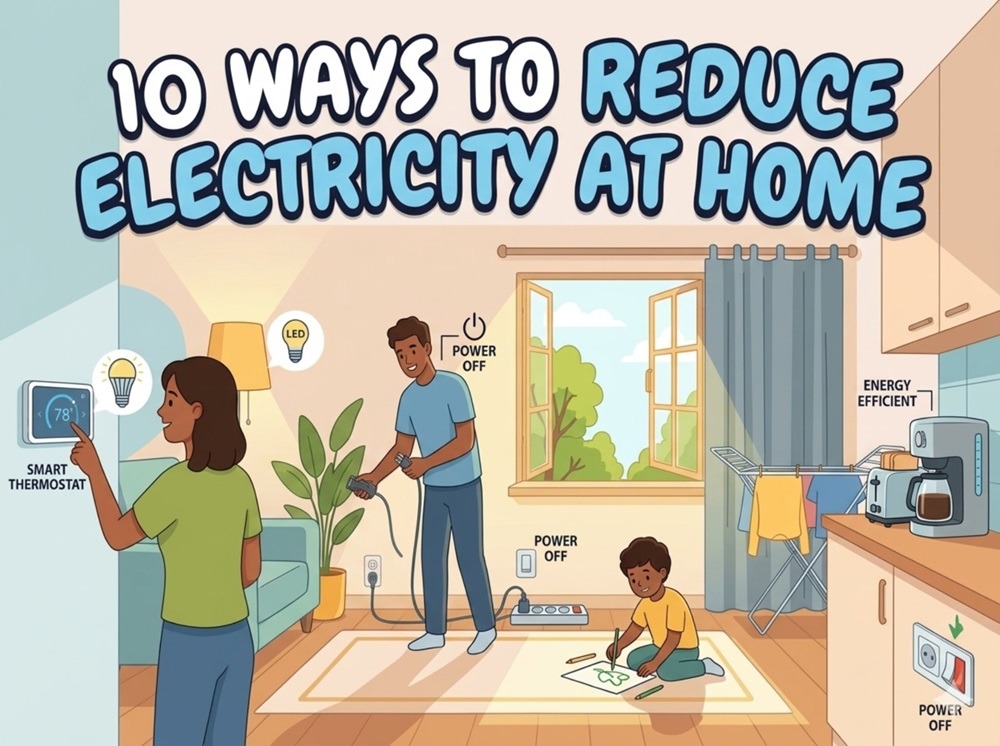
Electricity consumption in modern households continues to increase due to the growing number of electronic devices and appliances used every day. High electricity usage not only increases monthly utility bills but also contributes to environmental issues such as carbon emissions and resource depletion.
Fortunately, there are many practical strategies homeowners can use to reduce electricity consumption. From adopting energy-efficient habits to installing renewable energy systems, reducing power usage at home is easier than many people think.
This guide explores 10 effective ways to reduce electricity at home, explains how to save energy efficiently, highlights alternative sources of energy for homes, and shares tips to improve the energy rating of your house.
How to Save Energy at Home
Saving energy at home begins with understanding how electricity is used in daily life. The main areas of electricity consumption in households typically include lighting, heating and cooling systems, kitchen appliances, and electronic devices.
One of the easiest ways to reduce energy consumption is by developing energy-saving habits. Turning off lights when leaving a room, unplugging unused electronics, and minimizing unnecessary appliance usage can significantly reduce electricity bills.
Another effective strategy is optimizing natural resources. Using natural light during the day instead of artificial lighting reduces electricity consumption. Similarly, proper ventilation can help reduce dependence on air conditioning systems.
Households can also improve energy efficiency by investing in modern technology such as energy-efficient appliances, smart thermostats, and automated lighting systems. These technologies help monitor and optimize electricity usage, ensuring that energy is not wasted unnecessarily.
By combining smart habits with efficient technology, homeowners can significantly reduce electricity usage while maintaining comfort and convenience.
10 Effective Ways to Reduce Electricity at Home
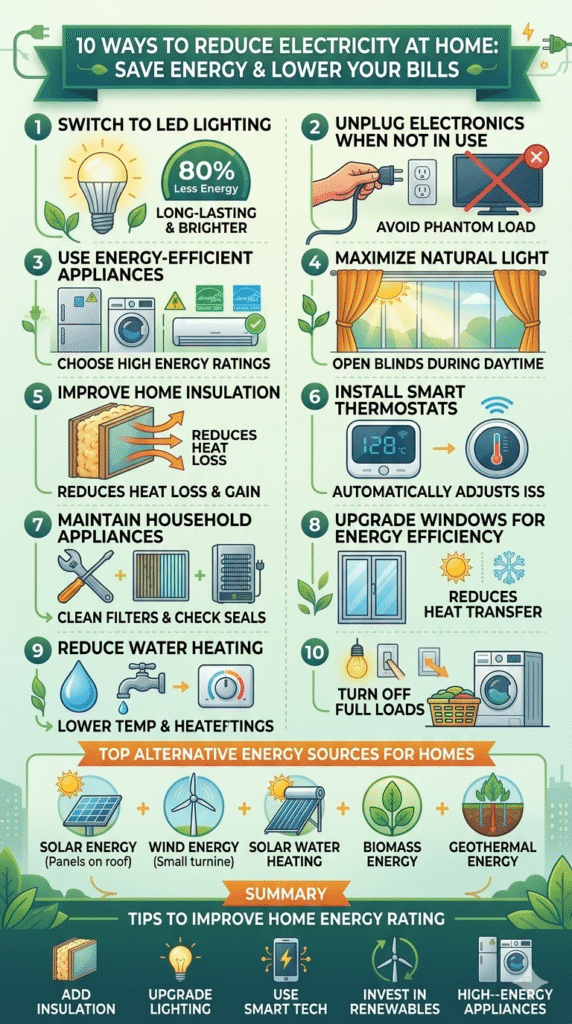
1. Switch to LED Lighting
Lighting accounts for a significant portion of household electricity consumption. Replacing traditional incandescent bulbs with LED lights can reduce energy usage by up to 80 percent while providing brighter and longer-lasting lighting.
2. Unplug Electronics When Not in Use
Many electronic devices continue to consume electricity even when turned off. This standby energy consumption, also known as phantom load, can increase electricity bills. Unplugging devices or using smart power strips can prevent this waste.
3. Use Energy-Efficient Appliances
Modern appliances are designed to consume less energy while delivering better performance. When purchasing appliances such as refrigerators, washing machines, or air conditioners, choose models with high energy efficiency ratings.
4. Maximize Natural Light
Using daylight instead of artificial lighting during daytime hours can significantly reduce electricity consumption. Large windows, skylights, and light-colored interior designs can help maximize natural lighting.
5. Improve Home Insulation
Proper insulation helps maintain indoor temperatures by reducing heat transfer. This means heating and cooling systems do not need to work as hard, resulting in lower electricity consumption.
6. Install Smart Thermostats
Smart thermostats automatically adjust heating and cooling settings based on daily routines and occupancy patterns. This prevents unnecessary energy usage and improves overall efficiency.
7. Maintain Household Appliances
Regular maintenance ensures appliances operate efficiently. Cleaning air conditioner filters, checking refrigerator seals, and servicing electrical systems can help reduce energy waste.
8. Upgrade Windows for Energy Efficiency
Energy-efficient windows, such as double-glazed windows, reduce heat loss during winter and heat gain during summer. This helps maintain indoor comfort while reducing the workload on heating and cooling systems.
9. Reduce Water Heating Electricity
Water heating is one of the largest energy expenses in many households. Lowering the thermostat on water heaters or installing solar water heaters can reduce electricity consumption.
10. Adopt Smart Energy Habits
Simple daily actions can make a big difference. Turning off unused appliances, running washing machines only with full loads, and using energy-saving modes on devices are effective ways to reduce electricity usage.
Top Alternative Sources of Energy for Homes
Switching to renewable energy sources is one of the most sustainable ways to reduce electricity costs and environmental impact.
Solar Energy
Solar power is the most popular renewable energy solution for homes. Rooftop solar panels convert sunlight into electricity, allowing homeowners to generate their own power and reduce reliance on the grid.
Wind Energy
Small residential wind turbines can generate electricity in areas with consistent wind conditions. While less common than solar systems, wind energy can be effective in rural locations.
Solar Water Heating
Solar water heaters use sunlight to heat water for household use. This significantly reduces electricity or gas consumption used for water heating.
Biomass Energy
Biomass systems generate energy using organic materials such as wood, agricultural waste, or biogas. Some homes use biomass energy for heating or cooking.
Geothermal Energy
Geothermal heating systems use underground heat to regulate indoor temperatures. Although installation costs are higher, geothermal energy systems are extremely efficient and environmentally friendly.
Tips to Improve the Energy Rating of Your Home
Improving your home’s energy rating helps reduce electricity costs and increases property value. Here are some effective strategies:
Upgrade Insulation
Adding insulation to walls, roofs, and floors helps maintain indoor temperatures and prevents energy loss.
Install Energy-Efficient Lighting
Replacing old lighting systems with LED lights improves energy efficiency and reduces electricity consumption.
Use Smart Home Technology
Smart devices allow homeowners to monitor electricity usage and control appliances remotely, reducing unnecessary energy consumption.
Invest in Renewable Energy Systems
Solar panels, solar water heaters, and other renewable technologies can significantly improve a home’s energy efficiency rating.
Choose High-Efficiency Appliances
Appliances with high energy ratings consume less electricity and contribute to better overall home energy performance.
Conclusion
Reducing electricity consumption at home is both financially beneficial and environmentally responsible. By adopting energy-efficient habits, upgrading appliances, and utilizing renewable energy sources, homeowners can significantly lower electricity usage.
Simple changes such as switching to LED lighting, improving insulation, and using smart home technology can lead to substantial energy savings over time. Additionally, investing in renewable energy solutions like solar power can further reduce reliance on traditional electricity sources.
By implementing these strategies, households can create a more sustainable living environment while enjoying lower electricity bills and improved energy efficiency.