




Choosing the right flooring can transform your home while supporting a more sustainable lifestyle. For homeowners planning an eco-friendly renovation, sustainable timber flooring in the UK offers a combination of natural beauty, durability and timeless design.
From reclaimed oak floors in Victorian terraces in London to responsibly sourced engineered wood in modern Manchester apartments, timber flooring can suit a wide range of British homes. The key is to choose materials that are responsibly sourced, durable, suitable for the room and designed to last.
Unlike flooring options that may be difficult to repair or reuse, some timber floors can be sanded, refinished and maintained for many years. Reclaimed timber can also give existing wood a second life, reducing the need for new raw materials.
However, not all wooden flooring is equally sustainable. Forest certification, manufacturing processes, adhesives, transportation, installation and maintenance all influence a product’s environmental impact.
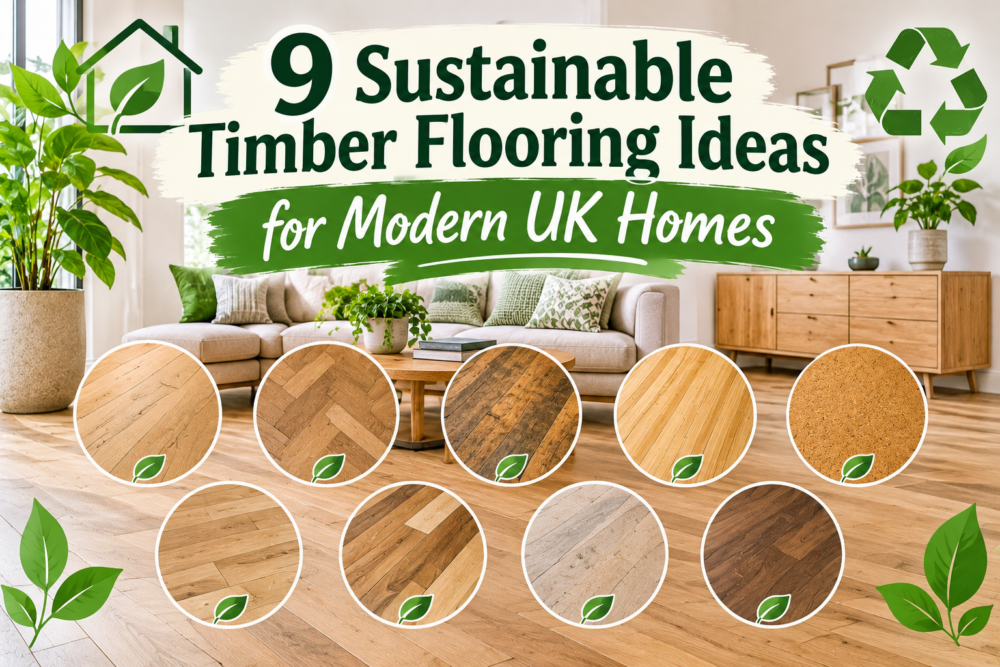
In this guide, we explore nine sustainable timber flooring ideas for modern UK homes, with practical tips for choosing the right style for your property.
What Is Sustainable Timber Flooring?
Sustainable timber flooring is wooden flooring made from responsibly sourced, reclaimed or recycled timber, with consideration given to its environmental impact, durability and end-of-life options.
It may include reclaimed hardwood, FSC- or PEFC-certified timber, engineered wood flooring made with responsibly sourced wood, and products using timber from verified UK sources.
When comparing options, look beyond descriptions such as “natural”, “eco-friendly” or “green”. Check the timber’s origin, certification, product construction, finish, expected service life and repairability.
The UK government recognises FSC, PEFC and Grown in Britain certification schemes as evidence under its Timber Procurement Policy, subject to the relevant requirements and product documentation. Homeowners can use certification and traceability information to make more informed purchasing decisions.
1. Reclaimed Oak Flooring for Characterful UK Homes
Reclaimed oak flooring is an excellent option for homeowners who want a distinctive interior with a strong connection to traditional British architecture.
Recovered from old buildings, warehouses, barns and other structures, reclaimed oak can feature natural grain patterns, colour variation and signs of its previous use. These characteristics make each floor visually distinctive.
Why choose reclaimed oak?
- Reuses existing materials: Gives timber another useful life instead of sending it for disposal.
- Adds character: Works well in both traditional and contemporary interiors.
- Can be long-lasting: Properly prepared and installed boards may remain in service for many years.
- Reduces demand for new timber: Reuse can avoid some of the environmental impacts associated with producing new flooring.
Where does reclaimed oak work best?
Reclaimed oak is particularly suitable for Victorian terraces in London, period homes in Bath and renovated farmhouses across the Cotswolds. It can also create a warm contrast in modern open-plan living spaces.
Before purchasing, ask about the timber’s previous use, moisture content, preparation, treatment and suitability for your subfloor. Reclaimed boards may need specialist grading and installation.
Best for: Period properties, rustic interiors and homeowners seeking a unique, reuse-focused flooring option.
2. FSC-Certified Oak Flooring for Timeless Interiors
If reclaimed timber is not suitable for your project, responsibly sourced new oak is another option worth considering.
Oak is valued for its grain, strength and versatility. FSC-certified oak flooring can help buyers identify products covered by an appropriate certification and supply-chain system.
Benefits of certified oak flooring
- Traceability: Relevant certification documentation helps verify sourcing claims.
- Classic appearance: Oak complements a wide range of interior styles.
- Repair potential: Depending on the construction and wear layer, some oak floors can be refinished.
- Versatility: Available in different shades, plank widths and finishes.
How to choose certified oak
When shopping for sustainable timber flooring in the UK, ask the supplier for the exact FSC claim and certificate details. Check that the product is covered by the supplier’s valid certification and that the claim appears on the relevant sales documentation.
FSC labels are not all identical: FSC 100%, FSC Mix and FSC Recycled represent different sourcing claims. Understanding the label helps you avoid assuming that every certified product contains only recycled or fully FSC-certified material.
Oak flooring can suit family homes in Surrey, renovated properties in Bristol and contemporary apartments in Birmingham.
Best for: Homeowners who prefer new timber but want documented evidence of responsible sourcing.
3. PEFC-Certified Timber Flooring for Responsible Sourcing
PEFC-certified timber flooring is another option for buyers looking for evidence of responsible forest management and supply-chain traceability.
PEFC stands for the Programme for the Endorsement of Forest Certification. Its certification system provides a framework for verifying timber sourcing and chain of custody.
Why consider PEFC-certified flooring?
- Helps buyers identify timber products covered by the relevant certification.
- Provides documented sourcing information.
- Offers options across different timber types and flooring styles.
- Can support more informed decisions about forest-based materials.
Where can you use it?
PEFC-certified timber may be available in engineered wood, solid wood and other flooring products, depending on the manufacturer.
For a family home in Leeds or a new-build property in Milton Keynes, compare PEFC-certified flooring with reclaimed timber and other responsibly sourced alternatives.
Remember that certification alone does not establish the environmental impact of the entire flooring product. Also consider durability, adhesives, manufacturing, transport and whether the floor can be repaired or reused.
Best for: Homeowners who want verified sourcing information when purchasing new timber flooring.
4. Engineered Oak Flooring for Modern UK Properties
Engineered oak flooring combines a real wood surface layer with a core made from multiple layers of wood-based material. This construction can offer greater dimensional stability than solid wood in suitable conditions.
It is a popular option for contemporary homes, apartments and renovation projects where installation requirements may influence the choice of flooring.
What makes engineered timber worth considering?
- Real wood appearance: The visible surface is genuine oak.
- Versatile installation: Some products can be installed as floating floors, glued down or fitted using other approved methods.
- Potential material efficiency: A relatively thin hardwood wear layer can provide the desired appearance while using a different core construction.
- Compatibility with selected underfloor heating systems: Some engineered products are designed for this use.
Is engineered timber sustainable?
It depends on the product. Check the origin of the wood in both the surface layer and the core, the adhesives used, the wear-layer thickness and the manufacturer’s repair and recycling guidance.
Not every engineered floor can be sanded repeatedly. The available refinishing options depend on the thickness of the real wood layer and the product specification.
For an apartment renovation in Manchester or a contemporary home in Reading, engineered oak can provide a practical balance of appearance and performance.
Before installing it over underfloor heating, confirm that both the flooring and installation system are approved for that application.
Best for: Modern homes, selected apartment renovations and projects requiring a real-wood finish with specific installation requirements.
5. Reclaimed Pine Flooring for a Rustic, Sustainable Finish
Reclaimed pine flooring is a useful option for homeowners who prefer lighter wood tones and a relaxed, traditional appearance.
Pine has been used in many older British buildings, and salvaged floorboards can sometimes be recovered from renovation and demolition projects.
Benefits of reclaimed pine
- Reuse of existing wood: Helps keep usable timber in circulation.
- Distinctive appearance: Knots, grain and aged finishes create visual character.
- Design flexibility: Can work with cottage, farmhouse, Scandinavian and industrial interiors.
- Potential for repair: Suitable boards can sometimes be repaired or refinished.
Where does reclaimed pine work well?
Reclaimed pine can complement cottages in Cornwall, older terraced houses in Sheffield and farmhouse-style interiors in rural Wales.
Pine is generally softer than oak, so it may show dents and scratches more readily. This can contribute to a lived-in appearance, but it may not suit every household.
Check that reclaimed boards are structurally sound, dry and free from significant insect damage or contaminants. Older coatings may also require specialist assessment before removal.
Best for: Rustic interiors, cottages and homeowners who appreciate the character of reused materials.
6. FSC-Certified Ash Flooring for a Light, Contemporary Look
Ash flooring can provide a lighter, more understated appearance than many darker hardwoods. Its grain can complement neutral interiors, natural fabrics and contemporary furniture.
Where available from appropriately certified sources, ash is worth comparing with oak and other timber options.
Why consider ash flooring?
- Light, versatile appearance: Can help create a bright, open feel.
- Distinctive grain: Adds natural detail without overwhelming a room.
- Design flexibility: Can suit modern and traditional interiors.
- Potential for long-term use: Appropriate products can provide durable flooring when correctly installed and maintained.
How to choose ash sustainably
Ask suppliers about the timber’s country of origin, certification, processing and availability. Check whether the exact flooring product is covered by an FSC or PEFC claim rather than relying on a general statement about the supplier.
Ash may suit modern homes in Edinburgh, renovated properties in Bristol and light-filled living spaces in London.
As with any hardwood, consider the floor’s finish, maintenance needs and suitability for the amount of foot traffic it will receive.
Best for: Bright interiors, contemporary renovations and homeowners seeking a lighter timber finish.
7. Responsibly Sourced Beech Flooring for Practical Living Spaces
Beech is a hardwood known for its relatively uniform appearance and fine grain. Depending on the product and availability, it can be an alternative to oak for certain interior flooring projects.
For UK homeowners, beech flooring can work in spaces where a clean, understated timber finish is desired.
Benefits of beech flooring
- Consistent appearance: Its fine grain can suit minimalist interiors.
- Natural warmth: Adds texture without dominating a room.
- Design versatility: Can complement a range of furniture and colour schemes.
- Potential for durability: Performance depends on the product, finish, installation and maintenance.
Is beech suitable for every room?
No. Like other timber floors, beech can respond to changes in humidity. It is generally better suited to controlled indoor environments than to locations with frequent moisture exposure.
When choosing beech flooring for a home in Birmingham or Newcastle, ask about its moisture stability, installation requirements and compatibility with the property’s heating system.
Prioritise responsibly sourced timber with reliable documentation and a durable finish.
Best for: Bedrooms, living rooms and other suitable indoor spaces where a subtle wood grain is preferred.
8. Sustainable Timber Parquet Flooring for Elegant Interiors
Parquet flooring uses small pieces of wood arranged in geometric patterns. Herringbone and chevron are two popular designs, while other patterns can create a more traditional or decorative effect.
Parquet can be made using reclaimed timber or responsibly sourced new wood, depending on the product.
Why choose sustainable parquet flooring?
- Long-lasting design: A well-maintained parquet floor can remain attractive for many years.
- Repair possibilities: Some systems allow individual blocks or sections to be repaired.
- Flexible appearance: Different wood species, shades and patterns create distinct effects.
- Reuse potential: Reclaimed parquet blocks may be suitable for reuse after professional inspection and preparation.
Where does parquet work best?
Herringbone oak flooring can suit period properties in London, Georgian-inspired interiors in Bath and contemporary townhouses in Manchester.
For a more circular approach, investigate reclaimed parquet blocks from reputable reclamation suppliers. Check whether the blocks are complete, dry and suitable for the intended subfloor.
If buying new parquet, verify timber sourcing and check the adhesive and finish specifications. The environmental impact depends on the complete product and installation system, not just the pattern.
Best for: Hallways, living rooms, period renovations and design-led interiors.
9. UK-Sourced Timber Flooring for a More Local Supply Chain
Timber grown and processed in the UK can be worth considering if you want to explore domestic sourcing and potentially reduce transport distances.
Species such as oak, ash and certain softwoods may be available from UK forestry and timber suppliers, depending on local supply and product specifications.
Why consider UK-sourced timber?
- Potentially shorter transport routes: Depending on where the timber is grown, processed and delivered.
- Traceable origin: Suppliers may provide information about the forest and processing location.
- Support for domestic forestry and processing: Buying from UK producers can contribute to local supply chains.
- Distinctive material choices: UK-grown species may offer different grain patterns and finishes.
What should you check?
A product described as British-made is not necessarily made from British-grown timber. Ask where the tree was grown, where the wood was processed and what documentation supports the claim.
The Grown in Britain scheme is one source of information about UK-grown timber and timber products. Check the precise certification or sourcing claim attached to the product.
For a renovation in the Cotswolds, a home in Yorkshire or a property in Scotland, compare suitable locally sourced options with certified imported timber and reclaimed wood.
Local sourcing does not automatically guarantee a lower environmental footprint, so consider manufacturing, drying, durability and transport across the full supply chain.
Best for: Homeowners interested in UK-grown timber, traceable sourcing and domestic supply chains.
How to Choose Sustainable Timber Flooring in the UK
Choosing the right flooring involves balancing environmental considerations with budget, comfort, durability and the requirements of your home.
Use this checklist before purchasing.
1. Check the timber’s source
Ask whether the timber is reclaimed, recycled, UK-grown or sourced from a certified forest. Request relevant documentation rather than relying only on marketing claims.
2. Compare FSC and PEFC certification
Both schemes provide recognised approaches to timber certification and supply-chain traceability. Confirm the exact product claim and whether the supplier’s certificate covers the flooring being sold.
3. Consider reclaimed flooring first
Where suitable reclaimed boards are available, reuse can help preserve existing resources. Check the material’s condition, preparation needs and installation costs before deciding.
4. Assess the flooring construction
Solid and engineered timber have different performance characteristics. Compare repairability, wear-layer thickness, installation requirements and expected service life.
5. Choose a suitable finish
Floor finishes affect appearance, maintenance, indoor emissions and repair options. Review product-specific technical information and follow installation and ventilation guidance.
6. Think about the UK climate
Indoor humidity can fluctuate across the UK, especially during colder months when heating is used. Timber needs appropriate acclimatisation, moisture control and installation according to the manufacturer’s instructions.
7. Check compatibility with underfloor heating
Not every timber floor is suitable for underfloor heating. Confirm the flooring’s approved temperature limits, installation method and moisture requirements before proceeding.
8. Prioritise durability and repair
A floor that lasts, can be maintained and is repairable may avoid repeated replacement. Ask whether individual boards or blocks can be repaired and what refinishing is possible.
9. Compare the full cost
Look beyond the price per square metre. Include subfloor preparation, underlay, adhesives, fitting, finishing, maintenance and potential repairs when comparing options.
Sustainable Timber Flooring Ideas for Different UK Homes
Different properties have different flooring requirements. Here are some combinations worth considering:
| UK property type | Flooring idea | Main consideration |
| Victorian terrace in London | Reclaimed oak or pine | Preserve period character and check the existing subfloor |
| Modern flat in Manchester | Engineered oak | Confirm acoustic requirements and installation rules |
| Cottage in Cornwall | Reclaimed pine or suitable oak | Assess moisture exposure and floor condition |
| Contemporary home in Birmingham | Certified oak or ash | Prioritise traceable sourcing and durable finishes |
| Georgian property in Bath | Reclaimed or responsibly sourced parquet | Check compatibility with the building’s original features |
| Family home in Leeds | Durable engineered timber | Consider foot traffic, maintenance and heating compatibility |
| Renovated property in Scotland | Certified or locally sourced timber | Account for indoor humidity and installation requirements |
These are starting points rather than fixed rules. The best flooring depends on the actual construction, room conditions, budget and intended use.
Conclusion
Sustainable timber flooring can bring warmth, character and long-term value to modern UK homes when the material is chosen carefully.
Reclaimed oak and pine are useful options for reusing existing resources. FSC- and PEFC-certified products can help buyers verify sourcing claims, while engineered oak may suit modern properties with specific installation requirements. Ash, beech, parquet and UK-sourced timber offer additional design and sourcing choices.
The most sustainable option is not always a particular wood species or flooring style. It is the product that combines responsible sourcing, suitable construction, durability, repairability and a well-planned installation.
Whether you are renovating a Victorian terrace in London, updating a flat in Manchester or improving a cottage in Cornwall, compare the complete flooring system rather than relying on labels alone.
Make your next renovation a more informed, sustainable choice: prioritise reuse where practical, verify timber sourcing and select flooring that is designed to last.
Write for SustainableTalks
Do you have expert insights on sustainable flooring, responsibly sourced timber, eco-friendly home renovations or sustainable interior design in the UK?
Sustainables Talks welcomes original, relevant contributions that help readers make informed choices about sustainable living.
If you would like to share your knowledge with our readers, explore our Write for Us page for more information about contributing to Sustainables Talks.
Frequently Asked Questions About Sustainable Timber Flooring in the UK
Reclaimed timber can be a strong option because it reuses existing materials. New FSC- or PEFC-certified timber may also be suitable. The best choice depends on sourcing, manufacturing, transport, durability, installation and the possibility of repair or reuse.
Costs vary according to the wood species, construction, grade, finish and installation method. Reclaimed timber may cost less or more than new flooring depending on availability and preparation requirements. Compare the total installed cost rather than the material price alone.
FSC and PEFC are separate forest certification systems. Both provide ways to verify certain sourcing and chain-of-custody claims. Check the exact label, certificate status and product documentation when purchasing timber flooring.
Reclaimed wood can reduce demand for newly harvested timber and avoid some waste. Its overall environmental benefits depend on the material’s previous use, preparation, transport, installation and expected service life.
Engineered timber can be a suitable sustainable option when it uses responsibly sourced materials, has a durable construction and offers appropriate repair options. Check the origin of its wood layers, adhesive composition, wear-layer thickness and expected lifespan.
Reclaimed oak, reclaimed pine and suitable certified timber can complement Victorian interiors. Before installation, inspect the existing floorboards and subfloor. Older properties may need repairs or moisture assessment before new flooring is fitted.
Some engineered timber floors are designed for use with underfloor heating, but not all products are suitable. Follow the manufacturer’s requirements for temperature, installation, moisture and heating operation.
UK-grown timber may have shorter transport distances and can support domestic forestry, but location alone does not determine environmental impact. Consider forest management, processing, drying, durability and the complete supply chain.
Its lifespan depends on wood species, product construction, wear-layer thickness, installation, moisture control, foot traffic and maintenance. Some solid wood floors can be refinished several times, while engineered flooring has limits based on its surface layer.
Use the cleaning products recommended by the manufacturer, avoid excessive moisture, maintain suitable indoor humidity and repair local damage where possible. Protecting the finish and addressing problems early can help extend the floor’s service life.

Author: Sustainable Talks
Talk Green. Think Change. Act Sustainably. 🌍 Ideas, stories & actions for a greener future.