

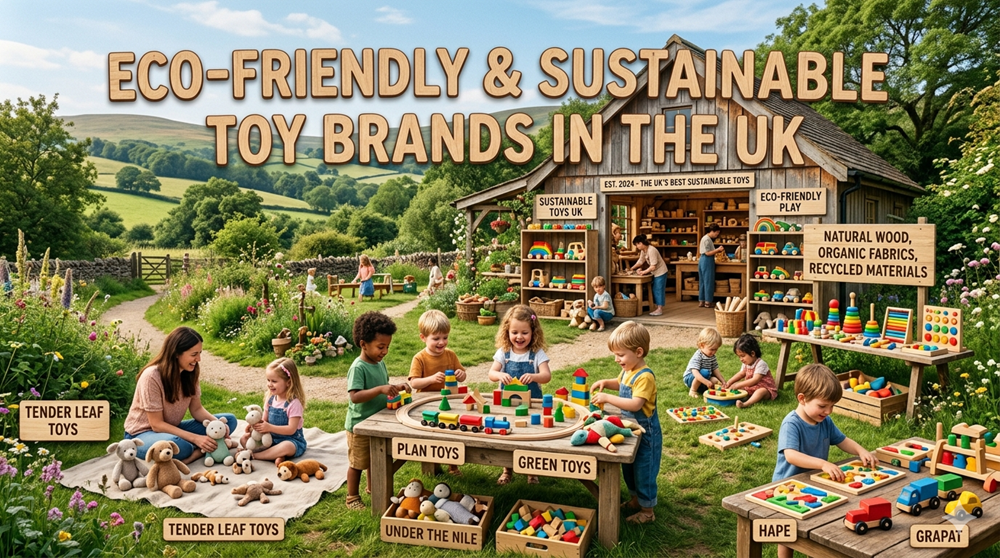
Walk into almost any UK toy shop and you’ll notice the shift. Wooden trains are back on the shelves next to recycled-plastic dinosaurs, and “FSC-certified” has become as common a label as “ages 3+”. For parents, grandparents, and gift-givers who care about where things come from and where they end up, this is genuinely good news — but it also raises a practical question: which of these brands actually deliver on their green claims, and which are simply riding the trend?
This guide brings together the most trusted eco-friendly and sustainable toy brands available to UK shoppers right now, organised by category, with honest pros, pricing guidance, and what to look for so you can buy with confidence rather than guesswork.
Why Sustainable Toys Are Worth Seeking Out
Toys aren’t a small corner of the plastic problem — they’re a significant part of it. The vast majority of toys sold globally are still made from conventional plastic, much of which is difficult or impossible to recycle and eventually ends up in landfill or the ocean. Add to that the chemical concerns around some plastic toys (BPA, phthalates, low-grade dyes) and it’s easy to see why more UK households are reconsidering what comes home in the toy box.
Choosing sustainable toys matters for a few concrete reasons:
- Lower environmental footprint. Toys made from FSC-certified wood, organic cotton, natural rubber, or recycled plastic place far less strain on forests, oceans, and fossil fuel resources than mass-produced plastic alternatives.
- Safer materials. Reputable eco brands tend to favour water-based paints, non-toxic finishes, and untreated natural materials — better for little hands and mouths.
- Built to last (and be passed on). Well-made wooden and natural toys typically outlive their plastic counterparts by years, which means less frequent replacement and a healthy market for hand-me-downs and resale.
- A quiet lesson for kids. Toys made thoughtfully, from materials that came from somewhere and will go somewhere, are a small but real way to model eco conscious living to the next generation.
If you’re building out a wider sustainable living routine at home, the toy box is one of the easier swaps to make — there’s now a mature market of UK-available brands doing this properly, which is exactly what this guide covers.
How to Spot a Genuinely Sustainable Toy (Not Just a Greenwashed One)
Before the brand list, a quick word on certifications, because “eco-friendly” is an unregulated term that anyone can print on packaging. Look out for:
- FSC (Forest Stewardship Council) – confirms wood comes from responsibly managed forests.
- PEFC – a similar forest-certification scheme, common among European wooden toy makers.
- GOTS (Global Organic Textile Standard) – relevant for organic cotton soft toys and dolls.
- EU Ecolabel / Blue Angel – broader environmental excellence labels, less common but a strong signal when present.
- B Corp certification – speaks to the wider business practices, not just materials.
Few brands hold every certification — they’re expensive and time-consuming to obtain — so one or two genuine labels, backed up by transparent sourcing information, is a realistic bar to look for.
Wooden & Natural Toys
Wooden toys are the heart of the sustainable toy market in the UK, and for good reason: a well-made wooden toy from a brand below can realistically survive two or three children and still get handed down again.
1. PlanToys
PlanToys is one of the longest-standing names in sustainable play, built almost entirely around reclaimed rubberwood — timber left over once a rubber tree stops producing latex, which would otherwise be burned or discarded. The brand pairs this with organic colour pigments, recycled packaging, and solar-powered manufacturing.
Pros:
- Genuinely circular use of waste rubberwood rather than virgin timber
- Strong focus on child development across age ranges, from sensory toys to educational sets
- Manufacturing is solar-powered, with a long-standing sustainability ethos rather than a recent rebrand
Pricing: Mid-to-premium — typically £15–£60 for most individual toys, with larger playsets going higher. Widely stocked through UK retailers including Natural Baby Shower.
2. Bigjigs Toys
A genuinely British success story: Bigjigs started as a husband-and-wife jigsaw business in Kent in 1985 and is still family-run today, designing and illustrating its award-winning toys at its UK headquarters. The brand has steadily expanded its FSC-certified range, covering everything from baby rattles to wooden railways.
Pros:
- Sourced from managed, replenishable forests as part of a structured replenishment programme
- FSC-certified lines use packaging made from 90% recycled cardboard printed with soy inks, and are entirely plastic-free
- Family-run British business with decades of track record, not a recent sustainability pivot
- Genuinely accessible pricing for a certified wooden toy brand
Pricing: Budget-to-mid-range — many pieces sit between £5 and £30, with larger sets (furniture, activity centres) reaching into the £200+ bracket.
3. Le Toy Van
Known for detailed dolls’ houses, play kitchens, and pretend-play sets, Le Toy Van builds sustainable, plastic-free toys and packaging using FSC-certified wood. The brand has made plastic-free packaging a core part of its identity, not an afterthought.
Pros:
- Wide range across roleplay categories — kitchens, dolls’ houses, market stalls, garages
- Plastic-free packaging across the collection
- Detailed, characterful designs that hold appeal well beyond toddlerhood
Pricing: Mid-to-premium — smaller accessories start under £20, with most core pieces falling in the £40–£100 range and dolls’ houses going considerably higher.
4. Haba Toys
A German brand widely available to UK shoppers, Haba makes wooden toys from beech and birch sourced from sustainably managed German forests, carrying the PEFC seal of approval. Known for chunky, toddler-safe construction sets and classic stacking toys.
Pros:
- PEFC certification on all wooden ranges
- Decades-long reputation for safety-first design, popular for the youngest age groups
- Easy to find via major UK retailers including Amazon UK
Pricing: Mid-range — most toys fall between £10 and £45.
5. Indigo Jamm
A smaller UK-based brand worth knowing if you want something a little more independent. Around 90% of Indigo Jamm’s toys are made using rubberwood, a by-product of the latex industry, finished with water-based paints. The company personally inspects its factories rather than outsourcing oversight.
Pros:
- Strong, verifiable use of waste rubberwood
- Hands-on factory inspection rather than a third-party-only sustainability claim
- Distinctive, characterful vehicle and animal designs
Pricing: Mid-range — typically £15–£40 per item.
6. Grimm’s
A German brand beloved in Waldorf and Montessori circles for its rainbow stacking toys and open-ended wooden sets, made from sustainably sourced wood and finished with non-toxic dyes. Designs are intentionally simple, built to support imaginative, screen-free play.
Pros:
- Iconic, long-lived designs that rarely go “out of date” for resale or hand-me-down
- Strong open-ended play value — toys aren’t tied to one narrow use
- Popular secondhand market thanks to durability
Pricing: Premium — rainbow stackers and large sets often run £40–£90+.
Eco-Friendly Toys (Recycled & Alternative Materials)
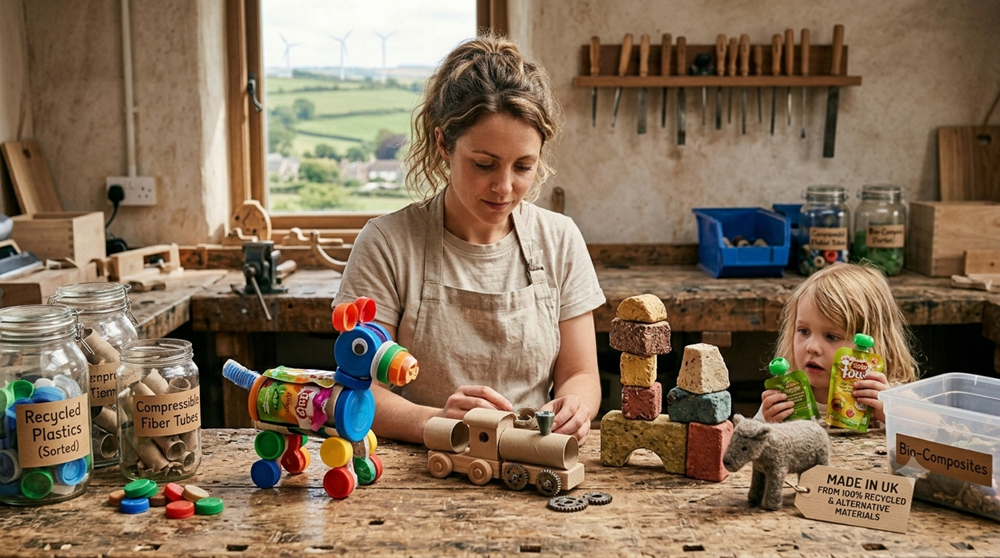
Not every sustainable toy is wood. This category covers brands turning recycled plastic, bamboo, and other alternative materials into genuinely durable, well-designed toys — useful for bath toys, outdoor play, and anything that needs to survive a splash.
7. Green Toys
An American brand widely stocked in the UK, Green Toys produces toys made entirely from 100% recycled plastic, primarily reclaimed milk jugs. It’s a useful option where wood isn’t practical — think bath toys, sand sets, and ride-on vehicles.
Pros:
- Closed-loop use of post-consumer recycled plastic rather than virgin material
- Dishwasher-safe and food-contact-safe, useful for bath and kitchen play sets
- No BPA, phthalates, or external coatings
Pricing: Budget-to-mid-range — most sets fall between £15 and £35.
8. Hape
One of the largest sustainable toy manufacturers globally, Hape is particularly notable for its bamboo ranges. Hape operates its own factory developing bamboo toys, supported by 16 acres of bamboo forest locally and a further 50 acres used to support production, with its parent company Toynamics having purchased an additional 413 acres of bamboo forest as a sustainable material source.
Pros:
- Large-scale, vertically integrated approach to sustainable material sourcing rather than relying solely on third-party suppliers
- Broad catalogue spanning baby toys, sandpits, and wooden railways
- Widely available across UK retailers
Pricing: Mid-range — typically £10–£80 depending on the set, with larger outdoor pieces like sandpits going higher.
9. Playpress
A UK-manufactured brand specialising in pop-out, build-your-own playsets made from sustainably sourced board rather than plastic or wood. Sets are made from 100% recyclable, biodegradable materials, entirely plastic-free, with the playboard bleach-free and sourced from sustainably managed forests in Finland. All inks and glue used are plant or water-based, food-safe, vegan, biodegradable, and ocean-friendly, and all sets are manufactured locally in the UK to minimise air miles.
Pros:
- Genuinely UK-manufactured, reducing shipping footprint
- Packaging is reused as part of the play scene itself — minimal waste by design
- Builds fine motor skills through assembly, with real educational value
Pricing: Budget-friendly — minisets start around £6, with the largest sets reaching roughly £25, making this one of the most accessible entry points into the category.
10. Keel Toys (Keeleco range)
For soft toys, Keeleco is one of the most established recycled-plastic plush ranges in the UK. The Keeleco collection includes over 480 products, with 85% of the entire Keel Toys collection made from 100% recycled materials, and the company has recycled over half a billion water bottles since the range launched.
Pros:
- Huge scale of plastic bottle diversion — a genuinely measurable impact
- Manufacturing partner has installed solar panels and heat-recovery systems, and the brand’s own UK headquarters runs on over 300 solar panels with a transitioning EV fleet
- Soft toys are a category where “eco-friendly” options were historically rare, making this a useful niche
Pricing: Budget-friendly — most Keeleco plush toys sit between £8 and £25.
Sustainable Toys (Ethics, Education & Slow Play)
This final category covers brands where sustainability is as much about how the toy is made and how it’s played with — slow, screen-free, built to be treasured — as the raw materials themselves.
11. Olli Ella
Started by two London sisters, Olli Ella focuses on craftsmanship and ethical production using sustainably sourced natural materials across both toys and home wear, including its well-known rattan baskets and storage pieces designed to be kept for years, not seasons.
Pros:
- Strong ethical production focus, not just material sourcing
- Designs straddle nursery décor and toy storage, useful for a wider eco friendly brands household setup
- High resale value thanks to timeless design
Pricing: Premium — most pieces range from £30 to £100+.
12. Raduga Grez
A Russian-made brand built entirely around slow living and minimalism: solid wood, non-toxic water-based paint, fully handmade pieces, and zero plastic in sight — even the packaging is cartons or canvas bags.
Pros:
- Genuinely handmade, small-batch production
- Strong aesthetic appeal for those wanting toys that double as nursery décor
- Open-ended stacking and building toys with long play value across ages
Pricing: Premium — typically £35–£90 depending on the set.
13. Janod
A French brand actively working through a structured sustainability plan: targeting the majority of its wooden and cardboard products to use FSC-certified materials, alongside water-based paints and vegetable-based inks on puzzles and games for easier recycling. Since 2020, the brand has removed plastic packaging from over a hundred products, and it partners with the World Wide Fund for Nature on reforestation and biodiversity projects.
Pros:
- Visible, dated sustainability targets rather than vague claims
- Active conservation partnerships beyond the product itself
- Strong puzzle, board game, and early-learning range
Pricing: Mid-range — typically £10–£50, available through UK stockists including Baby Mori.
14. Edx Education
Focused on STEM learning, Edx Education’s Green-n-Play® and Green-n-Learn® ranges are built from recycled and sustainable materials, aimed squarely at classrooms and home-learning setups rather than purely imaginative play.
Pros:
- Genuine educational focus alongside sustainability — useful for school-age children, not just toddlers
- Recycled plastics built for durability and repeated classroom use
- Good fit for families who want STEM toys without the usual cheap plastic packaging
Pricing: Mid-to-premium — kits start around £16 for smaller activity sets, rising to roughly £120 for larger bundles.
Secondhand & Toy-Sharing: The Most Sustainable Option of All
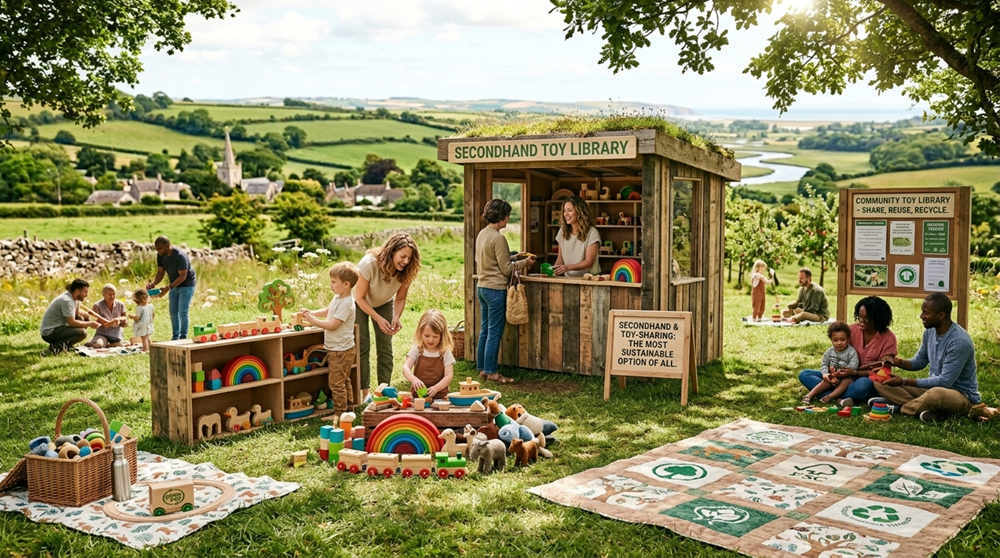
Worth a mention before you reach for your wallet: the single most sustainable toy is one that already exists. Buying secondhand keeps well-made toys (wooden brands especially) in circulation for years longer, and a handful of UK-focused resale marketplaces now specialise specifically in pre-loved toys, alongside local toy libraries and rotation services like Whirli that let children borrow rather than own. If budget or storage space is a bigger concern than brand-new packaging, this route is worth exploring before any of the brands above.
Frequently Asked Questions
Are eco-friendly toys more expensive than regular toys?
Often yes, particularly for premium wooden brands — but not always by much. Budget-friendly options like Bigjigs, Playpress, and Keeleco sit close to mainstream plastic toy pricing, while premium brands like Olli Ella or Raduga Grez cost more upfront but tend to last considerably longer and hold resale value, which can even out the cost over time.
What certifications should I actually look for?
FSC or PEFC for wooden toys, GOTS for organic textiles, and B Corp for brands where wider business ethics matter to you. One or two genuine certifications, with clear sourcing information on the brand’s own site, is a realistic and trustworthy standard.
Are wooden toys always more sustainable than plastic ones?
Not automatically — a wooden toy made from unsustainably logged timber, finished with solvent-based paint, isn’t necessarily better than a toy made from responsibly recycled plastic. Material certification and finish matter as much as the raw material itself.
Can I recycle broken wooden or eco-plastic toys in the UK?
Untreated solid wood can often go in household green waste or garden recycling once broken beyond repair, though painted or glued composite pieces usually can’t. Recycled-plastic toys generally follow the same limitations as standard plastic — check with your local council, as kerbside recycling rarely accepts toy-shaped plastic regardless of its origin material.
Where can I buy these brands in the UK?
Most are available through major UK retailers like John Lewis, Amazon UK, and Natural Baby Shower, as well as directly through brand websites and specialist independent toy shops. Smaller brands such as Indigo Jamm and Playpress are often easier to find direct from the brand or through dedicated eco-toy retailers.
Is it better to buy new sustainable toys or secondhand ones?
Secondhand is generally the lower-impact choice when the toy is good quality and complete, since it avoids new manufacturing entirely. Buying new from a genuinely sustainable brand makes most sense for items used heavily from birth (like teethers or first toys) where secondhand condition is harder to verify.
Final Recommendations
If you’re starting from scratch, here’s the practical shortlist:
- Best all-rounder for value: Bigjigs Toys — genuinely British, FSC-certified, and priced for everyday buying rather than occasional splurges.
- Best for babies and toddlers: Haba or PlanToys, both with decades of safety-first design behind them.
- Best budget entry point: Playpress, from roughly £6 a set, with zero-waste packaging built in.
- Best for soft toys: Keeleco, if you want plush without the usual virgin plastic filling.
- Best for heirloom-quality pieces: Le Toy Van or Olli Ella, if you’re buying something meant to be passed down.
None of these brands are perfect, and “sustainable” is always a matter of degree rather than an absolute claim — but each one above backs its marketing with verifiable sourcing, certification, or manufacturing practices, which is the realistic bar worth holding toy brands to in 2026.
Looking to make more of your home greener, one category at a time? Explore more reviews and guides on Sustainable Stalks for honest, well-researched recommendations across eco-friendly brands, sustainable living, and eco-conscious choices for every room in the house.

Author: Sustainable Talks
Talk Green. Think Change. Act Sustainably. 🌍 Ideas, stories & actions for a greener future.