
Most parents shopping for kids’ clothes are stuck choosing between two extremes: clothing that’s “safe” but boring, or clothing that’s exciting but loaded with synthetic dyes, plastic-based fabrics, and questionable manufacturing. Hahaha, a Los Angeles-based kids’ streetwear label, was built to close that gap. Every piece is made from GOTS-certified organic cotton, manufactured entirely in Downtown LA, and designed around a simple idea: let kids customize what they wear instead of outgrowing it after one wash cycle of excitement.
This is what makes Hahaha one of the more interesting names in sustainable kids clothing right now, and exactly why it’s the focus of this feature.
The Story Behind the Smile: Meet Hahaha
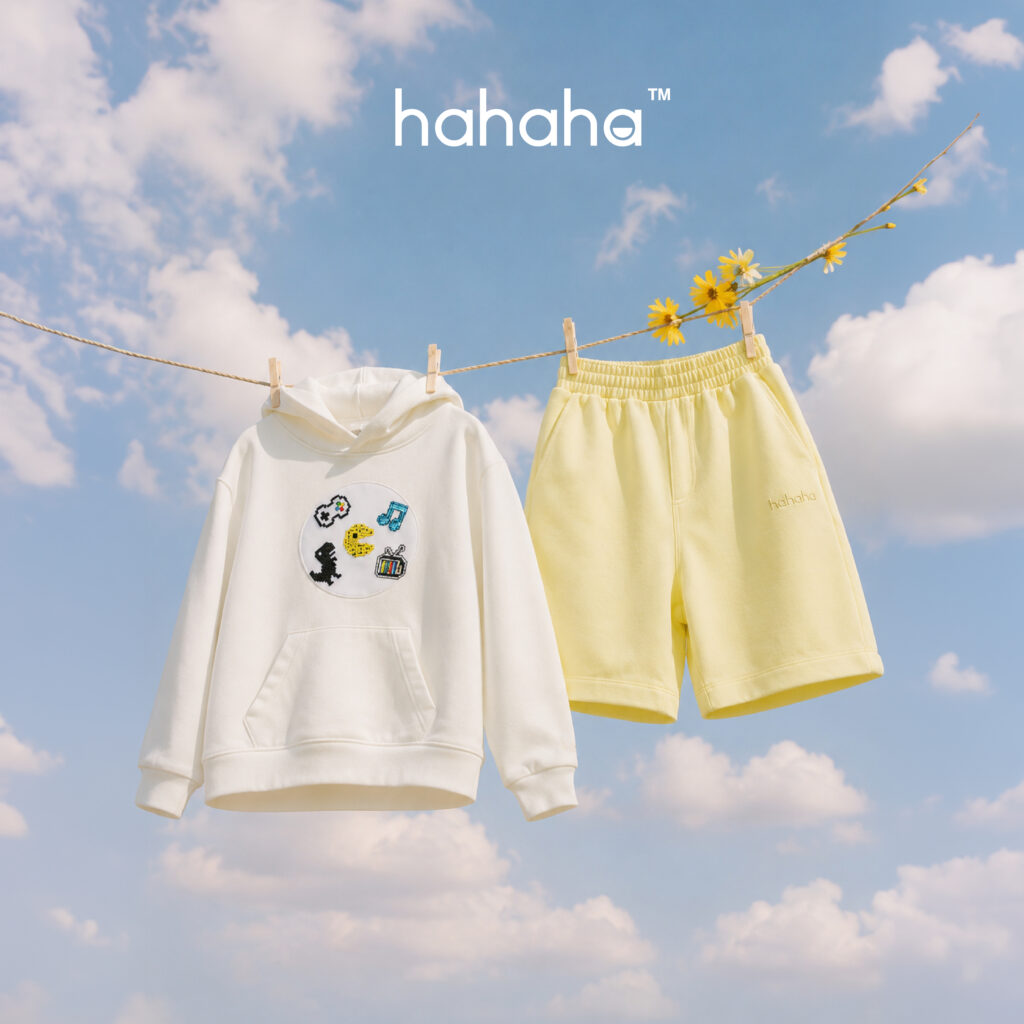
Hahaha is a Los Angeles kids’ streetwear brand built around one core product innovation: a hook-and-loop patch panel sewn directly into the chest of every hoodie, tee, and zip-up jacket. Instead of buying a new character t-shirt every time a kid’s favorite show or hero changes, parents buy one garment, and kids swap embroidered patches in and out whenever the mood strikes.
The brand designs for ages 3 to 12, manufactures everything through its production partner in Downtown LA, and has built its entire identity around a simple promise: organic materials parents can verify, and creative freedom kids actually want.
The recognition has followed quickly. Hahaha has been ranked the #1 organic kids’ clothing brand by Sustainably Kind Living and placed in the top 10% of sustainable brands globally by Sustainable Jungle, earning a 100% Product Performance score in that assessment. For a relatively young label, that’s a strong signal that the sustainability claims aren’t just marketing language.
The Patch System: Where Sustainability Meets Play
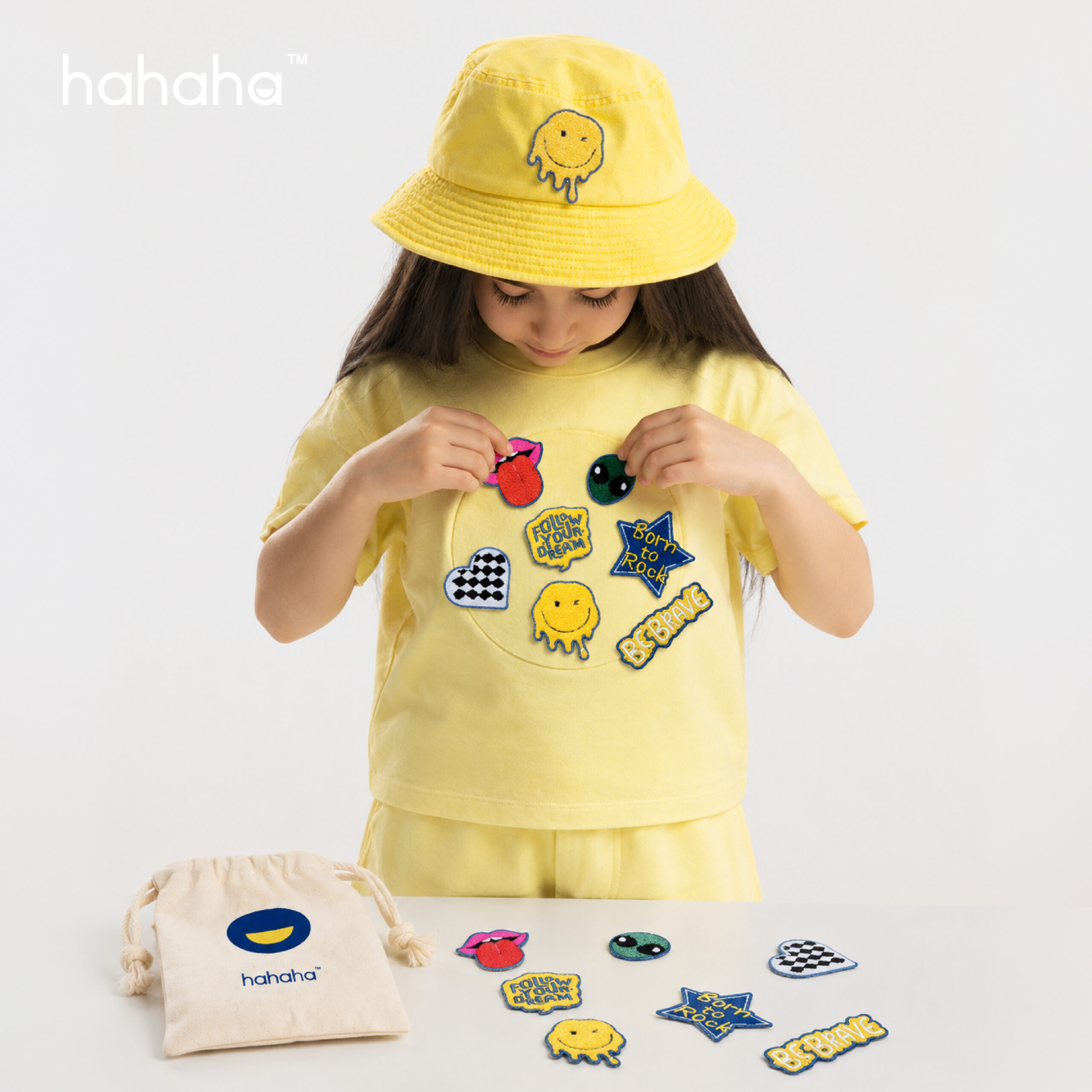
The detail that sets Hahaha apart from other eco-friendly kids clothing brands isn’t a fabric spec, it’s a design choice. Every customizable top has a circular hook-and-loop zone built into the chest. Kids buy patch packs, themed sets of 5-6 embroidered patches, and swap them in and out whenever they want a new look.
There are over 29 patch collections, spanning cultural heritage themes, pop culture and retro nostalgia, animals and fantasy creatures, sports and cars, seasonal occasions, and LA-inspired designs. A child can wear a dinosaur to school on Monday and a rocket scientist patch by Friday, all on the same hoodie.
This isn’t just a fun feature. It’s a direct answer to one of fast fashion’s biggest drivers of waste: kids outgrow their interests faster than they outgrow their clothes. A character tee gets shelved the moment the show goes out of rotation. A Hahaha hoodie just gets a new patch.
Why Hahaha Is a Genuine Win for the Environment
A lot of brands say “eco-friendly.” Few back it with verifiable, third-party certification covering the entire supply chain. Here’s where Hahaha actually delivers.
GOTS Certification: More Than a Label
This is the detail most parents miss when shopping for organic kids’ clothing: the word “organic” by itself only describes how the cotton was farmed. It says nothing about what happens to that cotton afterward. Untreated “organic” cotton can still be bleached with chlorine, dyed with heavy metals, or finished with formaldehyde-based, wrinkle-resistant coatings, none of which is required to appear on the label.
Hahaha’s cotton carries the Global Organic Textile Standard (GOTS) certification, the highest textile certification in the world, under Transaction Certificate #GOTS-CUC-03-TC-1033552. GOTS governs the entire chain from cotton field to finished garment, prohibiting toxic dyes, formaldehyde, and heavy metals, with independent auditing at every stage. That’s the difference between a marketing claim and documented proof.
Lower Carbon Footprint Through Local Manufacturing
Most “organic” kids’ clothing is grown organically in one country, processed in another, and sewn in a third, racking up emissions at every leg of the journey. Hahaha cuts and sews every garment in Los Angeles through its production partner, Euphoric Colors. That means a dramatically shorter, more transparent supply chain, fewer shipping emissions, and a manufacturing process parents are explicitly invited to visit in person.
Designed Against Disposability
Fast fashion for kids is arguably worse than fast fashion for adults, since children’s clothing turns over even faster as kids grow and trends shift. Hahaha’s swappable patch system directly targets this churn. One hoodie can serve a dozen different “looks” across months or years, which means fewer garments purchased, fewer garments discarded, and less textile waste overall. It’s a sustainability strategy built into the product itself, not just the fabric.
Why Hahaha Is Safe for Kids
Environmental responsibility and child safety turn out to be the same conversation when you’re talking about what touches a child’s skin every day.
Built for Sensitive, Developing Skin
A child’s skin is roughly 30% thinner than an adult’s, which means it absorbs substances more readily and more quickly. Children’s livers and kidneys are also still developing, so their bodies are less equipped to process chemical exposure over time. Small, repeated exposures from clothing can accumulate in ways that simply don’t apply the same way to adults.
This is precisely why Hahaha’s garments carry OEKO-TEX Standard 100 certification, meaning every piece has been independently tested for more than 350 harmful substances, including formaldehyde, heavy metals, pesticide residues, and phthalates. There are no stain-resistant coatings, no wrinkle-free chemical finishes, and no flame-retardant treatments on everyday wear, just certified organic cotton, tested and verified.
A Practical Fit for Sensitive Skin and Sensory Needs
Organic cotton is breathable, soft, and free of the synthetic finishes that commonly irritate sensitive skin or trigger reactions in kids with eczema or sensory sensitivities. Because Hahaha skips harsh chemical treatments entirely, the fabric stays closer to its natural, untreated state, which tends to be gentler against the skin from the very first wear, without the “scratchy until the tenth wash” problem common in synthetic-blend kids’ clothing.
Traceable From Field to Finished Garment
Because manufacturing happens entirely in Los Angeles under one roof, there’s a level of traceability that’s rare in children’s apparel. Parents aren’t relying on a vague “ethically made” claim; they’re looking at a documented certificate number and a manufacturing partner that’s open to visits. For parents who want to actually verify what’s behind a label rather than take it on faith, that transparency matters.
Why Hahaha Has Become a First Choice for Parents
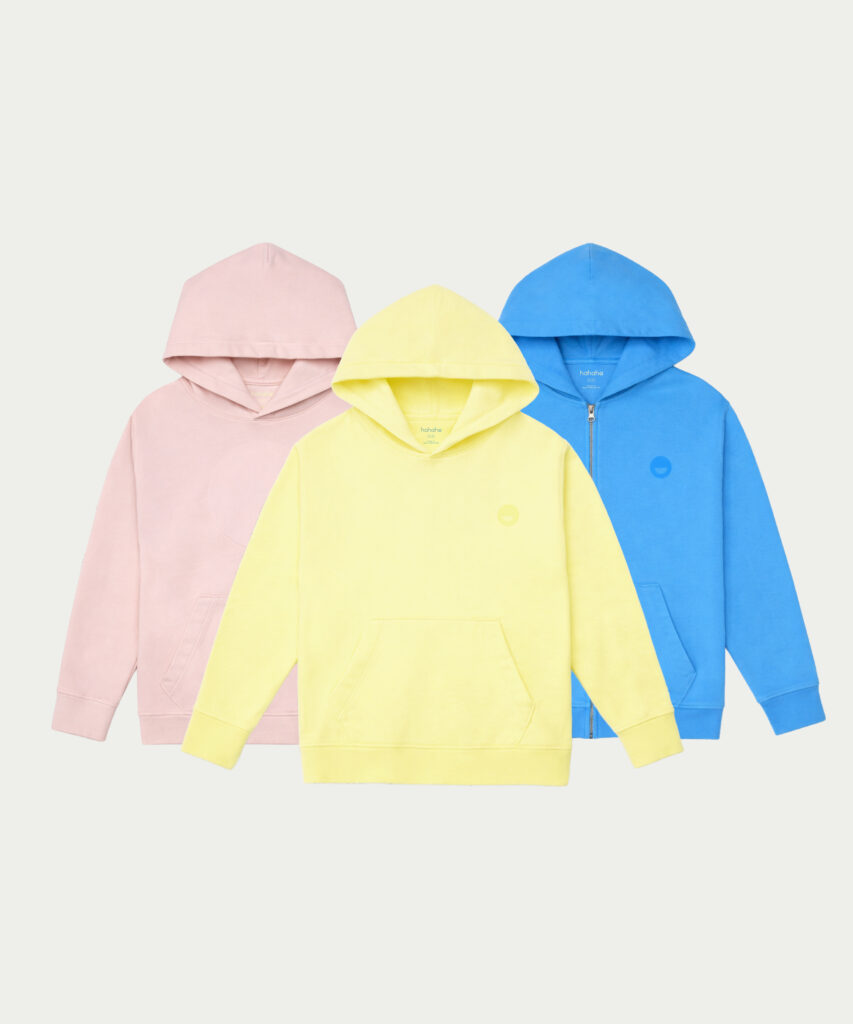
Parents researching sustainable kids clothing tend to run into the same dead end: brands that are either safe-but-plain or fun-but-questionable. Hahaha’s appeal comes from refusing to pick one.
It Solves Two Different Problems at Once
Parents want safety, certifications, traceability, and clean materials they don’t have to take on faith. Kids want self-expression, the ability to make an outfit feel like theirs. Hahaha’s patch system gives kids creative control over their clothing while keeping every material decision firmly in GOTS- and OEKO-TEX-certified territory. Nobody has to compromise.
It Reduces the Need to Keep Buying
Because one garment can be restyled indefinitely with new patches, parents naturally buy less over time, fewer character tees, fewer single-use novelty items, fewer pieces that end up forgotten in a drawer after a few wears. That’s a meaningful win for household budgets and for textile waste simultaneously.
Third-Party Recognition Builds Trust
Independent validation matters more to parents than brand copy ever will. Hahaha’s #1 ranking from Sustainably Kind Living and its top-10% global ranking with a 100% Product Performance score from Sustainable Jungle give parents an outside confirmation that the sustainability and safety claims hold up under scrutiny, not just brand-authored marketing.
A Story Parents Recognize
Hahaha’s own framing leans into a feeling a lot of parents remember: that one outfit from childhood you wore until it had to be peeled off you, because it looked good and felt good at the same time. The brand isn’t trying to make kids’ clothing more sustainable by making it less appealing. It’s trying to make the sustainable option the one kids actually want to wear.
FAQs About Hahaha Organic Cotton Kids Clothing
What does GOTS-certified organic cotton actually mean?
GOTS (Global Organic Textile Standard) certification covers the entire supply chain, from how the cotton is farmed to how the finished garment is dyed and processed. It prohibits toxic dyes, formaldehyde, and heavy metals, and every stage is independently audited. It’s a stronger guarantee than an unverified “organic” label alone.
Is Hahaha clothing safe for kids with sensitive skin or eczema?
Yes. Every garment is OEKO-TEX Standard 100 certified, tested for over 350 harmful substances including formaldehyde, heavy metals, and phthalates. There are no stain-resistant or wrinkle-free chemical finishes, which makes the fabric gentler for sensitive or reactive skin.
Where is Hahaha clothing made?
Every piece is cut and sewn entirely in Los Angeles through the brand’s production partner, Euphoric Colors. Nothing is outsourced overseas, which supports fair labor practices and lowers the supply chain’s carbon footprint.
What age range does Hahaha design for?
Hahaha’s clothing is sized for kids roughly 3 to 12 years old.
How does the patch system work?
Customizable hoodies, tees, and zip-up jackets have a built-in hook-and-loop panel on the chest. Patch packs come in themed collections of 5-6 embroidered designs that kids can swap in and out anytime, no sewing required.
Does Hahaha’s approach actually reduce waste?
Yes, in a meaningful way. Instead of buying a new character t-shirt every time a kid’s interests shift, families can restyle one garment repeatedly with different patches, cutting down on how many garments get purchased and discarded over time.
Is Hahaha more expensive than fast-fashion kids clothing?
Like most GOTS-certified, domestically manufactured organic clothing, Hahaha sits at a higher price point than mass-market fast fashion. The trade-off is verified material safety, ethical manufacturing, and a product designed to be reused and restyled rather than replaced.
Ready to Make the Switch?
If you’re tired of choosing between “safe” and “exciting” when it comes to your kid’s wardrobe, Hahaha proves you don’t have to. GOTS-certified organic cotton, made entirely in Los Angeles, with a patch system that lets your child’s personality lead the way, one hoodie, endless looks.
Check out Hahaha’s full sustainable listing on Sustainable Talks here, explore our full Sustainable Listings directory to discover more eco-friendly, parent-approved brands, or shop the collection directly at hahaha.la.

Author: Sustainable Talks
Talk Green. Think Change. Act Sustainably. 🌍 Ideas, stories & actions for a greener future.