

Introduction
Gardening is a wonderful way to connect with nature, grow your own food and create a relaxing outdoor space. However, conventional gardening practices can sometimes contribute to plastic waste, excessive water use, habitat loss and the depletion of natural resources.
The good news is that creating a greener garden does not require a complete makeover. Small changes, such as switching to peat-free compost, collecting rainwater, reusing plant pots and choosing wildlife-friendly plants, can make a meaningful difference over time.
For UK gardeners, eco-friendly gardening products offer practical ways to care for plants while making more thoughtful use of resources. Whether you maintain a large garden, grow vegetables in raised beds or keep a few pots on a balcony, there are sustainable options to suit different spaces and budgets.
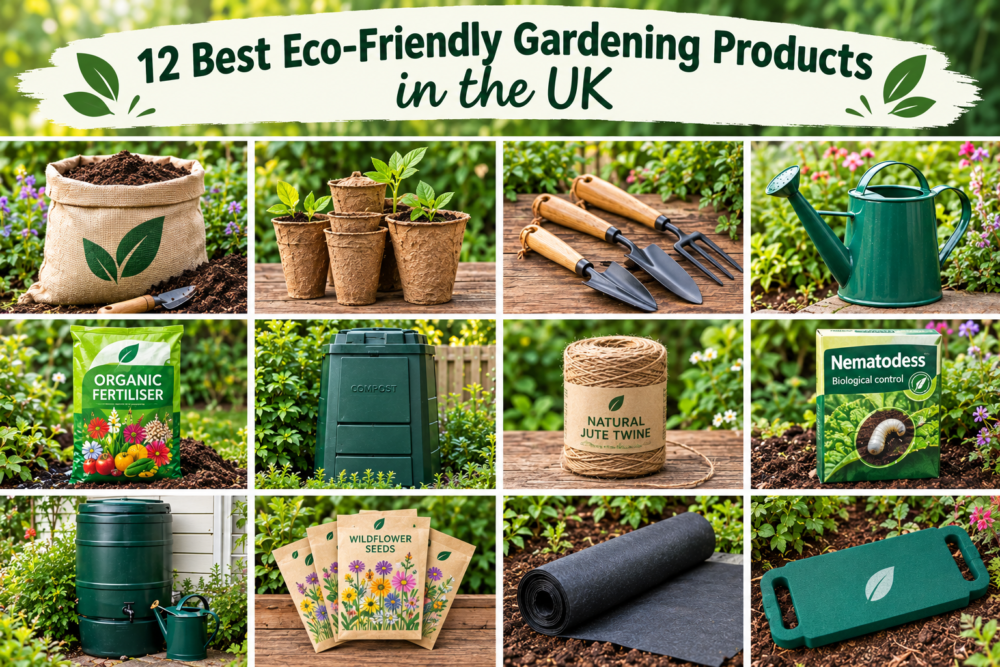
In this guide, we explore 12 of the best eco-friendly gardening products in the UK, including products from established garden brands and practical alternatives to conventional gardening supplies.
What Makes a Gardening Product Eco-Friendly?
An eco-friendly gardening product helps reduce environmental impact through its materials, manufacturing, lifespan or intended use. The most suitable option depends on your gardening needs and the resources available to you.
Here are some features to look for:
- Peat-free ingredients: Help protect peatlands, which store carbon and support distinctive wildlife habitats.
- Recycled or reusable materials: Reduce demand for virgin resources and unnecessary waste.
- Water efficiency: Help collect rainwater or deliver water directly to plant roots.
- Wildlife-friendly design: Support pollinators and other beneficial garden visitors.
- Natural resource recycling: Turn kitchen scraps and garden waste into useful compost.
- Durability and repairability: Reduce the need to replace gardening equipment frequently.
The Royal Horticultural Society (RHS) recommends peat-free compost, home composting, water conservation and gardening practices that support wildlife as important steps towards more sustainable gardening. Read the RHS wildlife gardening advice..
1. Peat-Free Compost — Best for Sustainable Plant Growing
Recommended brands: Melcourt, RocketGro, Dalefoot and Fertile Fibre.
Peat-free compost is one of the easiest changes to make when building a more sustainable garden. Traditional peat extraction damages peatland habitats and releases stored carbon. Choosing suitable peat-free growing media helps reduce demand for newly extracted peat.
Several UK brands offer peat-free compost for different gardening tasks. Melcourt’s SylvaGrow range, RocketGro, Dalefoot and Fertile Fibre are options worth exploring for seed sowing, container gardening and general planting.
Why choose peat-free compost?
- Helps protect peatland ecosystems.
- Supports more responsible gardening practices.
- Available in blends designed for different plants and growing conditions.
- Can be used for seeds, pots, containers and vegetable growing, depending on the formulation.
What to check before buying
Not every compost labelled “natural” or “organic” is peat-free. Look for an explicit peat-free statement on the packaging and choose a blend suitable for your plants.
You can also look for the Responsible Sourcing Scheme logo, which helps consumers assess the environmental credentials of growing media. The RHS provides a useful guide to choosing peat-free compost. Explore the RHS peat-free compost guide..
Best for: Gardeners who want to improve their soil and grow plants while reducing reliance on peat-based products.
2. A Home Compost Bin — Best for Reducing Garden Waste
A compost bin allows you to recycle suitable kitchen scraps and garden waste instead of throwing everything away. Over time, the material breaks down into compost that can improve soil structure and support plant growth.
You can choose from a traditional outdoor compost bin, a wooden slatted composter or a compact model suited to a smaller garden. The best option depends on how much waste your household produces and how much space you have.
Benefits of a compost bin
- Turns suitable garden waste into a useful soil improver.
- Reduces the amount of organic waste sent for disposal.
- Helps retain nutrients within your garden.
- Reduces the need to purchase some soil improvers.
- Provides habitat for a range of small garden creatures.
What to look for
Choose a durable bin with sufficient capacity for your household. Good airflow, suitable moisture levels and a mix of green and brown materials help the composting process.
Suitable materials can include fruit and vegetable peelings, grass clippings, dry leaves and small amounts of shredded cardboard. Avoid adding meat, fish and cooked food to a conventional garden compost heap unless your system is specifically designed to handle them.
Best for: Homeowners and gardeners who regularly produce kitchen scraps and garden waste.
3. A Water Butt — Best for Saving Water
Collecting rainwater is a practical way to reduce reliance on mains water for garden irrigation. A water butt connects to a suitable rainwater downpipe and stores water collected from your roof.
During drier periods, the stored water can be used for watering ornamental plants, containers and many garden crops.
Why install a water butt?
- Collects rainwater that would otherwise run off the roof.
- Reduces demand for mains water during dry spells.
- Provides a convenient water source near the garden.
- Can be used in both small and large outdoor spaces.
What to consider before buying
Choose a capacity that matches your roof area, rainfall, available space and watering requirements. Models with a secure lid, tap and overflow connection are generally practical choices.
Keep the container securely covered to prevent children and wildlife from falling in, and maintain it according to the manufacturer’s instructions.
Best for: Gardeners who want to use rainwater more efficiently and reduce their reliance on mains water.
4. Reusable and Recycled Plant Pots — Best for Sustainable Container Gardening
Plastic pots are common in gardening, but they can become waste when they crack or are discarded after a single growing season. Reusing pots is often the simplest solution. When you need replacements, consider durable recycled-plastic pots, terracotta containers or other reusable alternatives.
Brands such as elho offer planters made with recycled materials, while terracotta pots can last for many years when handled carefully.
Why choose reusable plant pots?
- Reduces the need to purchase new containers regularly.
- Gives existing pots a longer useful life.
- Offers options for balconies, patios, greenhouses and windowsills.
- Can reduce waste when pots are maintained and reused.
What to consider before buying
Check the recycled content, durability, drainage holes and expected lifespan. Some alternatives, including terracotta and fibre pots, have different weight, watering and durability requirements.
You do not need to replace every plastic pot in your garden. Clean and reuse suitable pots first, and replace broken ones only when necessary.
Best for: Container gardeners, balcony gardeners and anyone who grows plants from seed.
5. A Wormery — Best for Small-Space Composting
A wormery uses composting worms to process suitable food scraps into nutrient-rich castings and liquid that may be used as a plant feed when appropriately collected and diluted.
It can be useful for households that produce food waste but lack the space for a large outdoor compost bin.
Benefits of a wormery
- Processes suitable fruit and vegetable scraps.
- Works in some small gardens, patios and sheltered outdoor spaces.
- Produces worm castings that can improve growing media.
- Encourages household waste reduction.
What to consider before buying
Choose a system with adequate ventilation, drainage and access for harvesting the castings. Follow the manufacturer’s guidance on acceptable food scraps, temperature and moisture.
Avoid overfeeding the worms and do not assume that liquid collected from a wormery is ready to apply directly to every plant.
Best for: Flat dwellers with suitable outdoor space, small households and gardeners who want to recycle kitchen scraps.
6. Wildflower Seeds — Best for Supporting Pollinators
Wildflowers can bring colour and biodiversity to a garden while providing food sources for bees, butterflies and other insects.
A suitable wildflower seed mix can help you create a small patch of flowers, a wildlife-friendly border or a mini meadow. For UK gardens, choose seeds suited to your local conditions and consider native species where appropriate.
Why plant wildflowers?
- Can provide nectar and pollen for pollinating insects.
- Adds colour and seasonal interest.
- Offers an alternative to intensively managed lawn areas.
- Can help create a more varied garden habitat.
What to check before buying
Choose a reputable supplier that clearly identifies the species in the mix. Consider whether the seeds are suitable for your soil, sunlight and intended planting area.
Avoid introducing invasive species or using generic seed mixes without checking their contents. Native wildflower mixes may be particularly suitable for wildlife-focused projects.
Best for: Gardeners who want to encourage pollinators and create more wildlife-friendly outdoor spaces.
7. A Bee Hotel or Insect House — Best for Garden Biodiversity
A well-designed bee hotel can provide nesting opportunities for certain solitary bee species. Other insect shelters may provide refuge for selected beneficial invertebrates.
However, not every insect house is useful. Poorly designed products can remain unoccupied or become difficult to maintain, so quality and placement matter.
Benefits of a suitable bee hotel
- Provides nesting spaces for some solitary bees.
- Can be useful in gardens with limited natural nesting sites.
- Offers an educational way to observe insect behaviour.
- Complements a wider wildlife-friendly gardening approach.
What to consider before buying
Choose a well-made product with appropriately sized, smooth nesting tubes or holes. Position it in a sheltered, sunny location and follow expert advice on cleaning and replacing nesting materials.
A bee hotel is not a substitute for planting flowers. Providing a variety of suitable flowering plants, avoiding unnecessary pesticides and maintaining natural habitat are equally important.
Best for: Gardeners who want to support solitary bees and learn more about local wildlife.
8. Solar-Powered Garden Lights — Best for Outdoor Lighting
Solar-powered garden lights use small solar panels to charge their batteries during daylight hours. They can illuminate paths, patios, borders and seating areas without needing a mains electricity connection.
Their environmental benefits depend on the product’s manufacturing, battery lifespan, energy performance and how long it remains in use.
Why consider solar garden lights?
- Use sunlight as their charging source.
- Can reduce the need for mains-powered outdoor lighting.
- Are available in path lights, spotlights and decorative designs.
- Can be installed in suitable locations without electrical wiring.
What to look for
Choose durable lights with replaceable batteries where possible. Check the manufacturer’s guidance on weather resistance and expected battery life.
Use outdoor lighting selectively. Excessive lighting can disturb nocturnal wildlife, so consider low brightness, timers and directing light towards paths rather than into trees or neighbouring habitats.
Best for: Gardeners who want practical pathway lighting while limiting unnecessary electricity use and light pollution.
9. Reusable Garden Hand Tools — Best for Long-Term Gardening
Durable hand tools are essential for everyday gardening. A well-made trowel, hand fork, pruning tool or weeder can last for years with proper care.
Rather than buying a large collection of inexpensive tools, choose a small set that meets your actual gardening needs.
Why invest in durable tools?
- Reduces the frequency of replacement.
- Helps avoid unnecessary material waste.
- Can provide better comfort and performance.
- Allows damaged components to be replaced on repairable models.
What to consider before buying
Look for strong, corrosion-resistant metal parts and comfortable handles made from durable materials. Check whether replacement handles or spare parts are available.
Clean tools after use, dry metal components and sharpen cutting tools as recommended by the manufacturer. You can also look for second-hand tools in good condition.
Best for: Beginners and experienced gardeners who want reliable equipment for regular use.
10. A Drip Irrigation Kit — Best for Targeted Watering
A drip irrigation system delivers water slowly to the soil near plant roots. Depending on the setup, it can help reduce unnecessary watering of paths and bare soil.
It is particularly useful for raised beds, greenhouses, vegetable plots and container gardens that require regular watering.
Benefits of drip irrigation
- Delivers water close to plant roots.
- Can reduce evaporation compared with some watering methods.
- Makes it easier to automate watering schedules.
- Helps maintain more consistent soil moisture when correctly designed.
What to look for
Choose a kit suited to the size and layout of your garden. Reusable components, replaceable connectors and repairable tubing can help extend the system’s lifespan.
Check for leaks and blocked emitters regularly. Watering requirements vary by plant, soil type and weather, so adjust the system rather than relying on a fixed schedule all year.
Best for: Vegetable gardeners, greenhouse owners and people who maintain multiple containers.
11. Organic Mulch — Best for Improving Soil and Retaining Moisture
Mulch is a layer of material spread over the soil surface. Organic mulches, such as leaf mould, suitable composted bark and well-rotted garden compost, can help improve soil conditions when used appropriately.
Mulching can reduce evaporation, suppress some weeds and add organic matter as the material breaks down.
Why use organic mulch?
- Helps the soil retain moisture.
- Can reduce weed growth.
- Adds organic matter as suitable materials decompose.
- Makes borders and beds easier to maintain.
What to consider before buying
Choose mulch according to your plants and soil conditions. Use well-rotted material where appropriate and avoid piling mulch directly against plant stems or tree trunks.
Where possible, make use of your own garden compost or fallen leaves. This can reduce packaging and transportation associated with purchased materials.
Best for: Gardeners who want healthier soil, lower maintenance and more efficient water use.
12. Natural and Wildlife-Conscious Pest Control — Best for Managing Garden Pests
Pests are a normal part of gardening, but they do not always require chemical treatment. Wildlife-conscious pest management focuses on prevention, monitoring and using the least harmful effective method.
Options include physical barriers, hand removal, companion planting and encouraging natural predators.
Why choose wildlife-conscious pest control?
- Helps reduce unnecessary pesticide use.
- Can protect beneficial insects and other wildlife.
- Encourages a balanced garden ecosystem.
- Supports more targeted responses to pest problems.
What to consider before buying
Start by identifying the pest and assessing the damage. Use barriers such as suitable netting or protective collars where appropriate, ensuring they do not trap wildlife.
If a treatment is necessary, choose a product authorised for the intended use in the UK and follow its label carefully. Avoid assuming that products described as natural or organic are automatically harmless to bees, pets or other wildlife.
Best for: Gardeners who want to protect plants while minimising harm to beneficial organisms.
Comparison Table: 12 Eco-Friendly Gardening Products
| Product | Main environmental benefit | Best suited to |
| Peat-free compost | Reduces reliance on extracted peat | Pots, seeds and planting |
| Compost bin | Recycles suitable organic waste | Medium and large gardens |
| Water butt | Collects rainwater for irrigation | Gardens with roof drainage |
| Reusable plant pots | Reduces container waste | Pots, patios and balconies |
| Wormery | Processes suitable food scraps | Small-space composting |
| Wildflower seeds | Supports pollinator-friendly planting | Borders and mini meadows |
| Bee hotel | Provides nesting spaces for some solitary bees | Wildlife-friendly gardens |
| Solar garden lights | Uses sunlight to charge lighting batteries | Paths and patios |
| Durable hand tools | Reduces frequent tool replacement | Everyday gardening |
| Drip irrigation kit | Supports targeted watering | Beds, greenhouses and pots |
| Organic mulch | Helps retain moisture and improve soil | Borders and vegetable beds |
| Wildlife-conscious pest control | Helps reduce unnecessary pesticide use | Vegetable and ornamental gardens |
How to Make Your UK Garden More Sustainable
Buying eco-friendly gardening products is a useful first step, but the way you garden also matters.
Start with the changes that make the most sense
You do not need to buy all 12 products at once. Begin by choosing one or two improvements that address your biggest needs, such as reducing water use or recycling garden waste.
Make your own compost where possible
Use suitable kitchen and garden waste to produce compost at home. This helps recycle nutrients and can reduce the need for purchased soil improvers. Make sure your composting method suits the waste you intend to process.
Save rainwater
Install a water butt if your property has a suitable downpipe and enough space. Water plants when they need it, preferably during cooler parts of the day, and adjust watering according to rainfall and soil moisture.
Grow plants that support wildlife
Choose a variety of flowers that provide nectar and pollen across the growing season. Leave some natural habitat where practical, and avoid unnecessary pesticide applications.
Reuse before replacing
Keep using pots, tools, seed trays and other gardening equipment while they remain safe and functional. Repair damaged items when practical, and consider second-hand purchases before buying new.
Buy the right product for the job
An eco-friendly product is only useful if it works for your garden. Select compost suitable for your plants, irrigation equipment suited to your layout and wildlife products designed to provide a genuine habitat benefit.
Final Thoughts
Creating a more sustainable garden is about making thoughtful decisions over time rather than buying every product marketed as eco-friendly.
Peat-free compost, home composting, rainwater collection, reusable plant pots and wildlife-friendly planting are excellent places to start. Durable tools, efficient irrigation and carefully selected pest-control methods can also help reduce waste and resource use.
The most effective approach is to choose products that solve a genuine gardening problem, last as long as possible and support the needs of your garden’s plants and wildlife.
Whether you are growing vegetables in a small raised bed or maintaining a large garden, even a few practical changes can help you move towards greener outdoor living.
Want to Share Your Sustainable Gardening Expertise?
Are you an eco-friendly gardening brand, sustainable product business, horticulture professional or writer with practical advice for greener living?
Sustainables Talks welcomes relevant contributions that help readers discover sustainable products, environmentally conscious businesses and practical ways to live more sustainably.
Visit our Write for Us page to learn more about contributing articles and sharing your expertise with our audience.
Help us inspire more people to grow greener gardens and make thoughtful choices for the planet.
Frequently Asked Questions
Some useful choices include peat-free compost, compost bins, water butts, reusable plant pots, wildflower seeds, durable hand tools and wildlife-friendly pest-control products. The best options depend on your garden’s size and needs.
Peat-free compost helps reduce demand for peat extracted from peatlands, which are important carbon stores and wildlife habitats. Choose a suitable blend for your plants and follow the manufacturer’s watering and feeding instructions.
Reuse existing pots, make compost from suitable garden waste, collect rainwater, save seeds where appropriate and choose durable tools. Growing plants suited to your local conditions can also help reduce maintenance.
Solar lights use sunlight to charge their batteries, potentially reducing mains electricity use. Their overall environmental impact depends on manufacturing, battery life, durability and disposal, so choose repairable products where possible.
Grow a range of suitable flowering plants, provide flowers across the seasons, reduce unnecessary pesticide use and maintain habitats where wildlife can shelter. A bee hotel can complement these measures but should not replace suitable flowers and natural habitat.
No. Homemade compost is useful as a soil improver and for many established plants, but it may vary in nutrients, pH and texture. Seedlings and plants with specialised growing requirements may need a purpose-made growing medium.

Author: Sustainable Talks
Talk Green. Think Change. Act Sustainably. 🌍 Ideas, stories & actions for a greener future.