


Sustainable fashion in the UK has moved well past its “beige and hemp” reputation. In 2026, the brands leading the space are producing clothes that look sharp, feel considered, and back up their green claims with real evidence — certifications, repair programmes, transparent supply chains, and durable design. Whether you’re building a capsule wardrobe or just trying to shop with a lighter footprint, here’s what’s worth knowing.
Why Sustainable Fashion Matters in the UK
Fashion is one of the most resource-intensive industries on the planet, and the UK is one of the biggest consumers of clothing in Europe. A few reasons this matters right now:
- Environmental impact. Textile production is a major contributor to global carbon emissions, water use, and microplastic pollution. Every garment bought secondhand, repaired, or made to last reduces that footprint.
- Fast fashion’s hidden cost. Cheap, quick-turnaround clothing often comes with poor labour conditions, synthetic fabrics that shed microplastics, and a “wear a few times, bin it” lifecycle that fills landfills.
- Shifting consumer values. UK shoppers are increasingly asking where their clothes come from and how long they’ll last, not just how cheap or trendy they are. Brands are responding with more transparency around materials and manufacturing.
- Circularity is going mainstream. Repair services, resale platforms, and rental schemes are no longer niche — they’re becoming standard offerings, even among premium brands.
- Buying local matters too. UK-based or UK-manufacturing brands cut down on shipping emissions and support domestic textile jobs and skills.
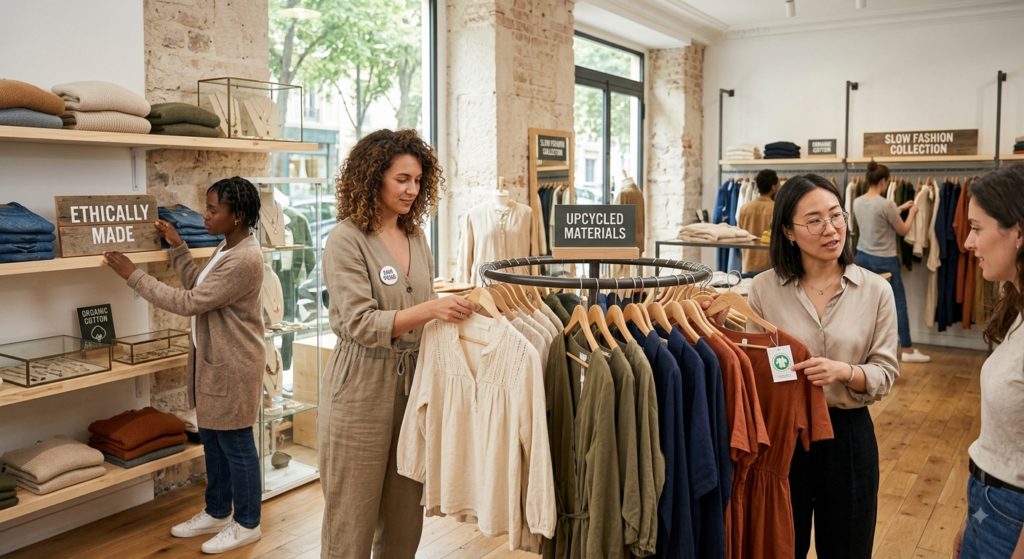
5 Sustainable Fashion Brands in the UK (2026)
1. Patagonia
Though US-founded, Patagonia has a strong UK presence and one of the most credible sustainability track records in the industry. The brand donates a share of sales to environmental causes, offers a lifetime repair guarantee, and runs the Worn Wear programme, which lets customers buy and sell secondhand Patagonia gear. It’s a strong pick for anyone who wants durable, outdoor-ready pieces that also work for everyday city wear.
2. Stella McCartney
Stella McCartney remains one of the clearest examples that luxury and sustainability aren’t mutually exclusive. The brand avoids leather and fur entirely, invests in innovative alternative materials, and has pushed sustainability reporting further than most names at its price point. It’s a good fit for shoppers who want high fashion without the usual environmental trade-offs.
3. People Tree
One of the longest-running names in UK ethical fashion, People Tree has built its reputation on Fair Trade partnerships and organic materials. It focuses on timeless, everyday pieces rather than fast-moving trends, making it a solid entry point for anyone new to sustainable shopping.
4. Veja
Veja fills a gap a lot of sustainable brands miss: footwear. Its trainers use organic cotton, wild rubber from the Amazon, and recycled materials, and the brand is transparent about its supply chain from sourcing to production. A strong choice if you want your sustainability efforts to extend below the ankle.
5. Finisterre
Based in St Agnes, Cornwall, Finisterre has built a strong evidence base for its sustainability claims, including B Corp certification and its “Lived & Loved” repair and resale programme. It’s particularly well suited to anyone who wants durable outdoor and coastal-inspired clothing built to be mended rather than replaced.
Key Features That Make the Best Sustainable Fashion Brands in the UK (2026)
The strongest brands in this space tend to share a combination of the following:
- Certifications that mean something — B Corp status, GOTS organic certification, or Fair Trade partnerships, rather than vague “eco-friendly” marketing language.
- Transparent supply chains — clear information on where materials come from and who makes the clothes.
- Repair and resale programmes — options like Patagonia’s Worn Wear or Finisterre’s Lived & Loved that extend a garment’s life instead of encouraging replacement.
- Durable, timeless design — clothing built for longevity rather than chasing seasonal trends, so it stays in rotation for years.
- Responsible materials — organic, recycled, or low-impact fabrics used in place of virgin synthetics.
- Honest impact reporting — brands that publish real data on emissions, water use, or waste, rather than relying on green-sounding buzzwords.
How to Choose the Right Sustainable Brand?
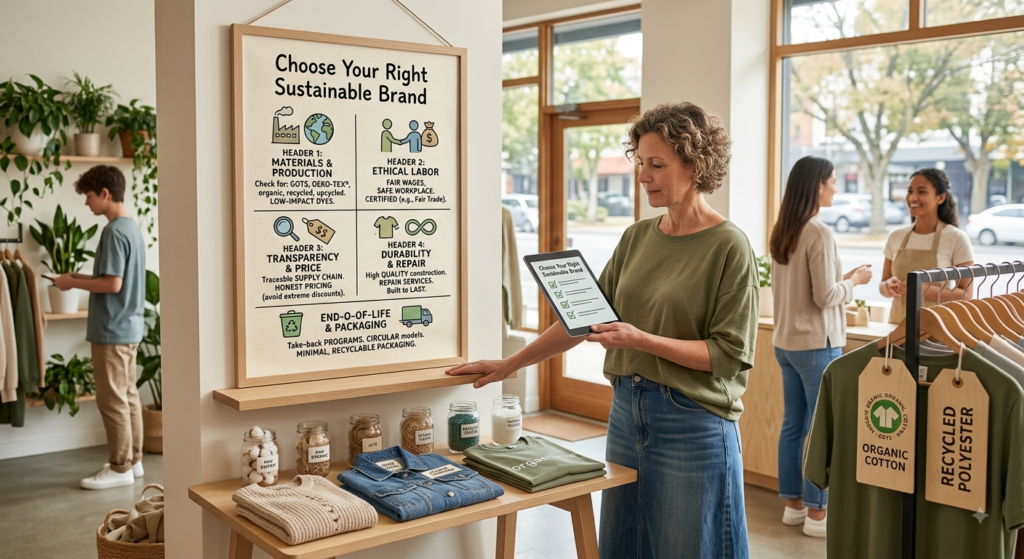
With so many brands claiming to be “sustainable,” it helps to have a simple checklist:
- Look for third-party certification. B Corp, GOTS, Fair Trade, or Soil Association labels are harder to fake than marketing copy.
- Check what happens at end of life. Does the brand offer repairs, resale, or recycling — or is it a one-and-done purchase?
- Read the materials list. Organic cotton, recycled polyester, Tencel, and natural fibres are generally better than virgin synthetics.
- Consider your actual needs. The most sustainable choice is often the one you’ll wear for years, not the most “on brand” ethical label.
- Factor in price versus cost-per-wear. Sustainable pieces often cost more upfront but last far longer, which can make them cheaper over time.
- Don’t ignore secondhand and rental. Platforms for resale or clothing rental can be just as sustainable — sometimes more so — than buying new, even from an ethical brand.
FAQ
Is sustainable fashion more expensive than fast fashion?
Often, yes, in upfront price. But because sustainable garments are usually built to last longer, the cost-per-wear can end up lower over time.
What makes a fashion brand genuinely “sustainable,” not just marketed that way?
Look for verifiable evidence: recognised certifications, published sustainability reports, transparent supply chains, and concrete programmes like repair or take-back schemes — not just words like “eco” or “green” on a label.
Are UK-made clothes automatically more sustainable?
Not automatically, but manufacturing closer to home tends to reduce shipping emissions and can make supply chains easier to trace and audit.
Can I be sustainable and still buy from big-name brands?
Yes — several larger and luxury brands, including some listed above, have made real sustainability investments. The key is checking their actual practices rather than assuming size or price rules it out.
Is secondhand shopping better than buying new from a sustainable brand?
Buying secondhand generally has an even lower environmental footprint than buying new, since it requires no additional resources to produce. Many sustainable brands now support this directly through their own resale programmes.
How can I tell if a brand is “greenwashing”?
Be cautious of vague claims without evidence, a small “conscious” or “eco” collection buried within an otherwise fast-fashion catalogue, or a lack of any published data on materials, labour, or emissions.

Author: Sustainable Talks
Talk Green. Think Change. Act Sustainably. 🌍 Ideas, stories & actions for a greener future.