



Swimwear is one of the smallest items in your wardrobe, yet it’s also one of the least eco-friendly. Most swimsuits and bikinis are made from virgin nylon or polyester, both derived from crude oil and both notorious for shedding microplastics into rivers and oceans every time they’re washed or worn in the water.
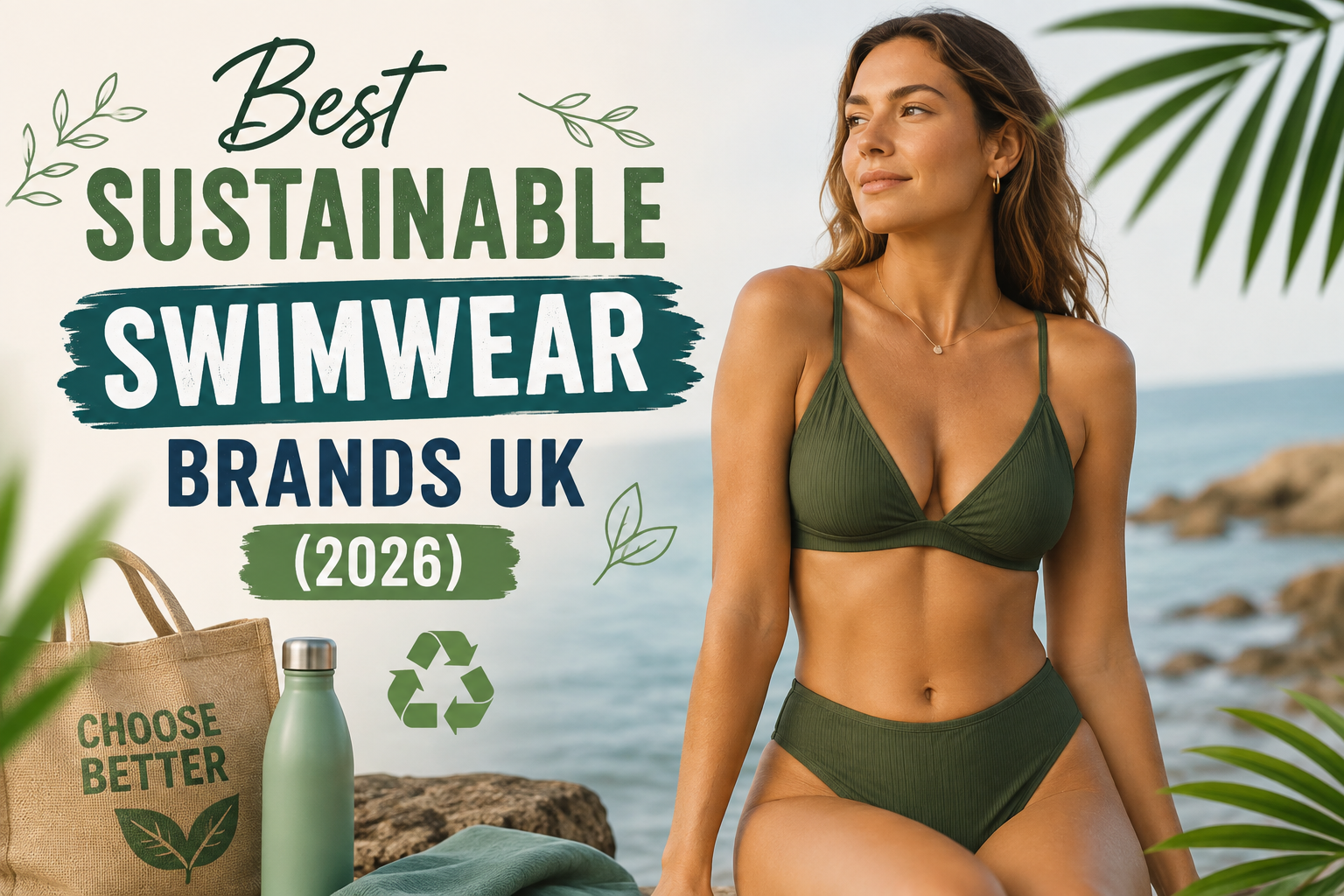
The good news: a growing wave of UK-based swimwear brands has built entire collections around regenerated fabrics, low-impact dyes and ethical, small-batch production. This guide rounds up the best sustainable swimwear brands in the UK for 2026, explains how to tell real sustainability from greenwashing, breaks down the eco-materials actually used in swimwear, and shows you how to choose — and wash — a swimsuit that lasts.
Best Sustainable Swimwear Brands UK
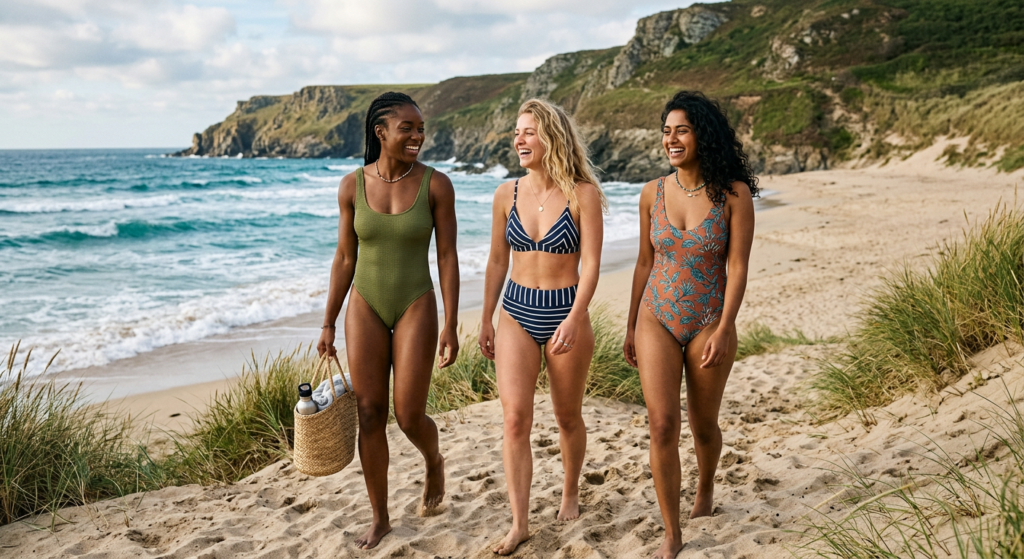
Here’s a snapshot of some of the standout UK-based (or UK-available) sustainable swimwear brands worth knowing in 2026.
| Brand | Known For | Key Sustainable Material | Made In |
| Paper London | Elevated, timeless swim silhouettes | 100% regenerated fibres (ECONYL®, REPREVE®) | UK/EU |
| Hunza G | Iconic signature crinkle one-size swimwear | Recycled crinkle nylon, biodegradable packaging | UK |
| Zigi Swim | Adjustable, fit-focused swimwear | ECONYL® regenerated nylon | UK |
| Soso Swim | Minimalist swimsuits and bikinis, pre-loved resale | Regenerated nylon, recycled plastic bottles | UK |
| Finisterre | Cornwall-born surf and swim brand | Recycled polyester | UK |
| Stay Wild Swim | Bold prints, adjustable fits | ECONYL® regenerated nylon | UK |
| Davy J | Ocean-plastic swimwear pioneer | ECONYL® from ocean waste and fishing nets | UK |
| Batoko | Colourful, affordable recycled swimwear | 100% recycled plastic bottles | UK |
| Casa Raki | Luxury, artisanal print-led swimwear | ECONYL® regenerated nylon | UK/EU |
How to use this table: If softness and stretch matter most to you, look for ECONYL®-based brands like Zigi Swim, Davy J or Stay Wild Swim. If budget and bold colour are the priority, Batoko and Soso Swim’s resale range are worth a look. If you want an investment piece built to be passed down, Hunza G and Paper London lead that category.
How To Know If Swimwear Is Really Sustainable
“Eco-friendly” and “sustainable” aren’t regulated terms, so brands can use them loosely. Here’s how to separate genuine sustainability from marketing spin.
Check for third-party certification.
Look for labels like GRS (Global Recycled Standard), OEKO-TEX® Standard 100, or a named regenerated fibre such as ECONYL® or REPREVE® with a traceable supply chain. A vague “eco fabric” claim with no certification is a red flag.
Look for a stated recycled-content percentage.
Genuinely transparent brands tell you exactly how much of the fabric is recycled (e.g. “78% recycled nylon, 22% elastane”) rather than just saying a garment is “made from recycled materials.”
Assess the whole lifecycle, not just the fabric.
True sustainability considers manufacturing location and labour practices, packaging (biodegradable or recycled mailers vs. single-use plastic), dye processes (low-impact or waterless dyeing), and end-of-life options such as take-back or resale schemes.
Be wary of “greenwashing” language.
Phrases like “conscious collection,” “eco-inspired,” or “made with care for the planet” often accompany products with no real sustainability credentials. If a brand can’t answer what percentage is recycled and who made it, treat the sustainability claim with caution.
Durability counts as sustainability.
A swimsuit that lasts five seasons has a lower environmental cost per wear than one that pills or loses shape after a summer, even if the second one used a slightly “greener” fabric on paper.
Common Eco-Friendly Materials Used for Sustainable Swimwear
Almost all sustainable swimwear is built around a handful of recurring materials. Here’s what they are and how they compare.
| Material | What It’s Made From | Key Benefit | Best For |
| ECONYL® | Regenerated nylon from fishing nets, carpet waste and industrial plastic | Infinitely recyclable, soft, stretchy, chemically identical to virgin nylon | Fitted swimwear, luxury and print-led pieces |
| REPREVE® | Recycled polyester made from plastic bottles | Strong UV and chlorine resistance, holds colour well | Performance and athletic swimwear |
| Recycled polyamide/polyester (generic rPET) | Post-consumer plastic bottles and textile waste | Widely available, cost-effective, durable | Everyday and budget-friendly swimwear |
| Organic cotton | Grown without synthetic pesticides | Breathable, biodegradable | Linings, cover-ups, low-stretch pieces |
| Hemp | Fast-growing plant fibre needing little water | Naturally antibacterial, UV-resistant, biodegradable | Blended fabrics, resort and cover-up wear |
| Recycled tyre rubber (neoprene alternative) | Reclaimed rubber from tyres | Reduces demand for petroleum-based neoprene | Wetsuits |
A quick way to remember the difference: ECONYL® (regenerated nylon) tends to offer the softest, most premium feel and can be recycled indefinitely, while REPREVE® and other recycled polyesters are generally more resistant to chlorine, sun and repeated wear, making them a practical choice for pool and performance swimwear.
Neither is perfect — like all synthetic fabrics, regenerated nylon and polyester still shed microplastics in the wash, which is why proper care (covered below) matters as much as the fibre choice itself.
What To Look For When Choosing Sustainable Swimwear
Use this checklist when comparing swimwear brands or individual pieces.
Fabric composition and certification.
Prioritise garments with a named, certified regenerated fibre and a clear recycled-content percentage over vague “eco” claims.
Fit and construction quality.
Reinforced seams, quality elastane blends and proper lining reduce the chance you’ll need to replace the piece after one season — the single biggest lever for reducing your swimwear footprint.
Size inclusivity.
Brands offering a genuinely wide size range reduce returns and reduce the chance of a garment going unworn or discarded due to poor fit.
Packaging and shipping.
Biodegradable mailers, recycled or recyclable packaging, and minimal single-use plastic are good signs of an end-to-end sustainability approach.
Dyeing process.
Low-impact or waterless dyes reduce water pollution and energy use compared to conventional dyeing.
Brand transparency.
Look for brands that openly share where and how garments are made, rather than only listing “designed in the UK” without disclosing the manufacturing country.
End-of-life options.
Take-back schemes, repair services or resale platforms (like Soso Swim’s pre-loved range) extend a garment’s life well beyond a single owner.
Price versus cost-per-wear.
A more expensive, better-made swimsuit worn for five summers is often the lower-impact — and lower-cost-per-wear — choice compared to a cheaper piece replaced annually.
How to Wash Swimsuits Sustainably
Even the most sustainably made swimsuit will shed microplastics and degrade faster if it’s cared for poorly. Follow these steps to extend its life and reduce environmental impact.
- Rinse in cold water immediately after wearing. Chlorine, salt water, sunscreen and sand all accelerate fabric breakdown, so a quick cold rinse straight after swimming removes most residue before it sets in.
- Hand wash rather than machine wash. Hand washing in cold water with a mild, sulphate-free detergent is gentler on elastane fibres and produces far less microfibre shedding than a washing machine cycle.
- If you must machine wash, use a microfibre-catching bag or filter. A washing bag such as a Guppyfriend, or an in-line microfibre filter, captures shed plastic fibres before they reach waterways.
- Avoid the tumble dryer. Heat breaks down elastane and speeds up fabric fatigue — always air dry swimwear flat or on a hanger, out of direct, prolonged sun.
- Skip fabric softener. Softener coats synthetic fibres and reduces their elasticity and moisture-wicking properties over time.
- Rotate between two swimsuits. Giving elastane fibres 24 hours to recover between wears helps the garment retain its shape for longer.
- Store dry and out of direct sunlight. UV exposure and damp storage both degrade fabric colour and elasticity faster than normal wear.
FAQ: Sustainable Swimwear UK
What is the most sustainable fabric for swimwear?
ECONYL® (regenerated nylon) and REPREVE® or other GRS-certified recycled polyesters (rPET) are currently considered the most sustainable widely available swimwear fabrics, since both are made from waste materials and significantly reduce reliance on virgin, petroleum-based fibres.
Is ECONYL® better than recycled polyester?
It depends on priorities. ECONYL® offers a softer feel, superior stretch and can be recycled indefinitely without quality loss, while recycled polyester tends to be more resistant to chlorine and UV exposure, making it well suited to frequent pool or performance use.
Are sustainable swimsuits more expensive?
Generally yes, sustainable swimwear tends to cost more upfront than fast-fashion alternatives, largely due to certified materials, ethical manufacturing and smaller production runs. However, better construction usually means a longer lifespan, which lowers the effective cost per wear.
Can sustainable swimwear still shed microplastics?
Yes. Regenerated nylon and recycled polyester are still synthetic fibres, so they can shed microplastics in the wash. Using a microfibre-catching bag, hand washing, and avoiding the tumble dryer all help reduce this.
How do I know if a UK swimwear brand is greenwashing?
Check whether the brand names a specific certified fabric with a recycled-content percentage, discloses where garments are manufactured, and provides evidence of third-party certification (such as GRS or OEKO-TEX®). Vague terms like “eco-conscious” or “conscious collection” without further detail are common greenwashing signals.
What UK swimwear brands use ECONYL®?
Several UK-based brands use ECONYL® regenerated nylon, including Paper London, Zigi Swim, Davy J, Stay Wild Swim and Casa Raki.
How long does sustainable swimwear last?
With proper care — cold rinsing after wear, hand washing, air drying and rotating between suits — well-made sustainable swimwear made from ECONYL® or recycled polyester can typically last several seasons, compared to a single season for lower-quality, cheaply made pieces.

Author: Sustainable Talks
Talk Green. Think Change. Act Sustainably. 🌍 Ideas, stories & actions for a greener future.