




Introduction
When it comes to making your daily routine more sustainable, even small choices can make a difference. One simple switch you might consider is replacing liquid hand soap or body wash with a traditional soap bar.
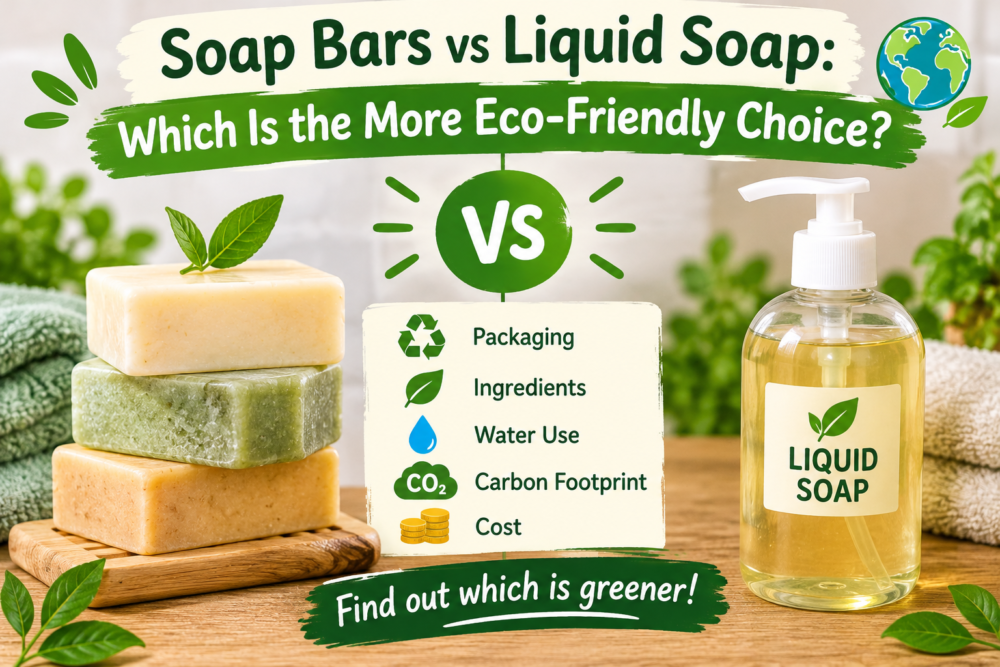
Both soap bars and liquid soap can keep your skin clean, but they differ in packaging, ingredients, transportation, storage and how much product people use. Soap bars are often sold in cardboard packaging or without packaging, while liquid soap usually comes in plastic bottles or refillable containers. However, the environmental impact of either option depends on how it is manufactured, packaged, transported and used.
So, soap bars vs liquid soap: which is the more eco-friendly choice?
In this guide, we compare the two options across packaging waste, water consumption, ingredients, carbon emissions, hygiene, cost and convenience to help UK consumers make an informed decision.
What Is the Difference Between Soap Bars and Liquid Soap?
Before comparing their environmental impact, it helps to understand how these products differ.
What Are Soap Bars?
Soap bars are solid cleansing products traditionally made by combining fats or oils with an alkali through a process called saponification. They are generally compact, easy to store and often sold in paper or cardboard packaging.
Some solid cleansing bars are marketed as soap-free bars or syndet bars, which use synthetic cleansing agents rather than traditional soap. These products can have different formulations and environmental characteristics.
Popular options include traditional soap bars, handmade soaps, fragrance-free bars and solid body cleansers.
What Is Liquid Soap?
Liquid soap is a liquid cleansing product sold in bottles, refill pouches or larger containers. Traditional liquid soap is made using a different saponification process from solid soap, while many liquid hand washes and body washes are formulated with synthetic surfactants.
Liquid products may contain water, cleansing agents, moisturisers, fragrances, preservatives and other ingredients. Their exact composition depends on the product.
Liquid soap is convenient for bathrooms, kitchens, workplaces and public facilities, particularly when used with a pump dispenser.
1. Packaging: Which Option Creates Less Waste?
Packaging is one of the clearest differences between soap bars and liquid soap.
Soap Bars
Many soap bars come in paper or cardboard packaging, while some brands sell them with minimal packaging or no outer packaging at all.
Potential benefits include:
- Less reliance on plastic packaging.
- Lightweight packaging that may be recyclable through appropriate local facilities.
- Less packaging material for some products.
- Easier storage and transport because of their compact shape.
However, not every soap bar is plastic-free. Some come in plastic wrappers, decorative boxes or multiple layers of packaging. Always check the packaging before purchasing.
Liquid Soap
Liquid soap commonly comes in plastic bottles with pumps, caps and labels. These components can make recycling more complicated, particularly when they use different materials.
Refillable liquid soap systems can reduce packaging waste, especially when the original dispenser is reused many times. Large refill containers may also use less packaging per unit of product than several small bottles.
However, refill pouches are not always recyclable through ordinary household recycling collections.
Winner: Soap bars, in many cases.
A minimally packaged soap bar will often create less packaging waste than a conventional liquid soap bottle. Refillable liquid soap can narrow the difference if the dispenser is reused regularly and the refill packaging is managed appropriately.
2. Water Consumption: Which Uses Less Water?
Water consumption is an important consideration when evaluating personal care products, but it is not as straightforward as comparing a solid product with a liquid one.
Soap Bars
Soap bars are concentrated solid products and generally do not contain the large amount of water found in many liquid cleansers. This can reduce the weight and volume of the product during manufacturing and transportation.
However, water is still required to wash your hands or body, and water may be used during manufacturing.
Liquid Soap
Many liquid soaps and body washes contain a substantial proportion of water. This makes the finished product heavier and can increase the resources needed to transport it.
Water is also used during handwashing, rinsing and product manufacturing. The amount used depends on the formulation and how people use the product.
Winner: Soap bars, generally for product transport and formulation.
Solid bars usually require less water in the finished product. However, this does not automatically mean they have a lower total water footprint throughout their life cycle. Ingredient sourcing, manufacturing and consumer habits also matter.
3. Carbon Footprint: Which Has a Lower Environmental Impact?
A product’s carbon footprint includes emissions from raw materials, manufacturing, packaging, transportation and disposal.
Soap Bars
Soap bars are usually lighter and more compact than an equivalent supply of liquid cleansing products. This can make transportation more efficient.
Their packaging may also require fewer resources, especially when brands use simple cardboard wrappers or minimal packaging.
Nevertheless, the carbon footprint of a bar depends on its ingredients. For example, the sourcing of certain vegetable oils can have significant environmental implications.
Liquid Soap
Liquid soap is generally heavier because of its water content and packaging. Plastic bottles, pumps and refill systems also contribute to its environmental footprint.
On the other hand, concentrated liquid soap and refill systems can reduce packaging and transportation impacts compared with frequently purchasing small bottles.
Winner: Soap bars often have the advantage.
A simple, minimally packaged soap bar is often a sensible lower-impact choice. However, a comprehensive comparison would require life-cycle assessment data for the specific products being compared.
4. Ingredients: Are Soap Bars More Natural?
The ingredients used in a product can have a considerable environmental impact. It is important to look beyond whether a product is solid or liquid.
Soap Bars
Traditional soap bars may contain oils such as olive oil, coconut oil or other vegetable oils. Some formulations include shea butter, fragrances, colourants or moisturising ingredients.
Potential advantages include:
- Simple formulations with relatively few ingredients.
- Options made with certified organic or responsibly sourced ingredients.
- Products available without added fragrance or colourants.
However, a natural ingredient is not automatically sustainable. Palm oil, coconut oil and other agricultural ingredients have environmental impacts that depend on how they are grown and sourced.
Liquid Soap
Liquid soaps and body washes may contain surfactants, moisturisers, fragrances, preservatives and other ingredients designed to maintain product stability and performance.
Some products use readily biodegradable surfactants or ingredients from responsibly managed sources. Others may contain ingredients that require closer scrutiny.
Preservatives are often necessary in water-containing products to prevent microbial growth and maintain product safety.
Winner: It depends on the formulation.
Neither format is automatically more environmentally friendly because of its ingredients. Look for transparent ingredient lists, credible sourcing information and evidence supporting environmental claims.
5. Water and Energy Used During Handwashing
Your washing habits can influence the environmental impact of both soap bars and liquid soap.
For everyday handwashing, the amount of water used, how long the tap runs and whether hot water is required can all affect the overall footprint.
A few practical habits can help:
- Wet your hands briefly before applying soap.
- Turn off the tap while lathering.
- Use only the amount of soap needed.
- Rinse efficiently without leaving the tap running unnecessarily.
- Avoid using hot water when it is not needed for the task.
For hand hygiene, follow NHS guidance on washing your hands properly, including using soap and water and washing for around 20 seconds.
Winner: Neither format automatically wins.
Efficient washing habits can be more important than the difference between a bar and a liquid product.
6. Cost: Which Is Better for Your Budget?
Price is another factor when deciding which product to use regularly.
Soap Bars
Soap bars are often affordable and can provide many washes when stored properly. They are available in budget supermarkets, pharmacies, independent shops and specialist sustainable beauty stores.
Potential benefits include:
- Low purchase prices for basic options.
- Compact storage.
- No need for a dispenser when the bar is used directly.
- Availability in multipacks that can reduce the cost per bar.
However, premium handmade or specialist bars can cost considerably more than conventional liquid soap.
Liquid Soap
Liquid soap is available in a wide range of price points. Budget bottles can be inexpensive, while premium products and refillable systems may cost more initially.
The cost per use depends on how much product is dispensed, the size of the bottle and whether refills are available.
Pump dispensers can sometimes release more product than needed, which increases consumption and cost.
Winner: Soap bars often offer good value.
Basic soap bars can be economical, but compare the price per wash rather than the purchase price alone. A well-designed refill system may also offer good value over time.
7. Hygiene: Are Soap Bars as Effective as Liquid Soap?
A common concern is whether a shared soap bar is less hygienic than liquid soap.
For ordinary handwashing, both bar soap and liquid soap can effectively remove dirt and microbes when used correctly.
The Centers for Disease Control and Prevention (CDC) notes that bar soap and liquid soap can both be used for handwashing. Proper washing technique is more important than choosing one format solely because of hygiene concerns.
For households, a bar can be stored in a clean, well-draining soap dish that allows it to dry between uses. This helps prevent it from sitting in standing water and becoming soft.
Liquid soap can be convenient in shared bathrooms, workplaces and other settings where dispensers are preferred.
Winner: Both can be suitable.
Choose a product that suits your household and use it correctly. In healthcare and other settings with specific infection-control requirements, follow the applicable hygiene guidance.
8. Convenience and Storage
Convenience matters because a sustainable product is more likely to become part of your routine when it works for your lifestyle.
Soap Bars
Soap bars are compact and easy to pack for travel. They can also be useful in bathrooms with limited storage space.
However, they need a suitable place to dry between uses. A soap dish with drainage or a travel case that allows drying can help extend their useful life.
Liquid Soap
Liquid soap is convenient for people who prefer a pump dispenser. It can be easier to use for children, people with certain mobility limitations or households that prefer a no-touch dispenser.
Refillable bottles can also look neat on a bathroom or kitchen counter and reduce the need to replace the entire dispenser.
Winner: It depends on your needs.
Soap bars are often easier to transport and store, while liquid soap can be more convenient for certain households and shared spaces.
9. Which Option Is Better for Travel?
Travel is another area where solid and liquid products differ.
Soap bars are compact and do not need a liquid container, making them convenient for holidays, gym bags and camping trips. A reusable travel case can help keep a bar contained between uses.
Liquid soap can be carried in travel-sized bottles, subject to applicable airline liquid restrictions, or purchased at your destination. However, smaller bottles may create more packaging waste per amount of product.
Winner: Soap bars, in many cases.
A solid bar can be a convenient travel option, especially if it is stored properly and used until it is finished.
10. How to Choose a More Sustainable Soap
Whether you prefer a bar or liquid soap, a few simple checks can help you make a more informed decision.
Look for Minimal Packaging
Choose a bar in simple paper packaging or an unwrapped option when practical. If you prefer liquid soap, consider a refillable dispenser and check whether refill packaging can be recycled locally.
Check Ingredient Sourcing
Look for transparent information about oils, fragrances and other ingredients. Where relevant, consider credible certifications and sourcing information rather than relying solely on terms such as “natural” or “green”.
Buy Only What You Need
Avoid purchasing multiple products that you will not finish. Choosing a product that suits your skin and daily routine helps reduce waste.
Consider Concentrated Products
Some liquid cleansing products are concentrated and require less product per wash. Compare their directions for use, packaging and refill options before deciding.
Choose a Product You Can Use Efficiently
Use enough soap to clean effectively without dispensing excessive amounts. Store bar soap properly so it does not dissolve unnecessarily between uses.
Soap Bars vs Liquid Soap: Comparison Table
| Factor | Soap bars | Liquid soap |
| Packaging | Often minimal or paper-based | Commonly plastic bottles or refill containers |
| Water in finished product | Usually very little | Often a substantial proportion |
| Transport | Generally lightweight and compact | Often heavier due to water and packaging |
| Cost | Often economical | Varies; refills may offer savings |
| Ingredient sustainability | Depends on formulation and sourcing | Depends on formulation and sourcing |
| Hygiene | Effective with correct use and storage | Effective with correct use |
| Travel | Compact and convenient | Requires suitable containers |
| Waste reduction | Strong potential with minimal packaging | Strong potential with reusable dispensers and refills |
Final Verdict: Soap Bars or Liquid Soap?
For many consumers in the UK, soap bars are the more eco-friendly choice, particularly when they are minimally packaged, made with responsibly sourced ingredients and used efficiently.
Their compact format can reduce packaging requirements and transportation weight. They can also be an affordable option for everyday handwashing and bathing.
However, liquid soap should not automatically be ruled out. A refillable dispenser, concentrated formulation and responsibly sourced ingredients can make liquid soap a reasonable choice, especially when it suits your household’s needs.
The most sustainable option is one that combines thoughtful ingredient sourcing, minimal packaging, efficient use and good hygiene.
If you want to make a simple change towards a greener bathroom, try a minimally packaged soap bar and see whether it suits your routine. If you prefer liquid soap, start by reusing your dispenser and exploring refill options.
Small, consistent decisions can help reduce unnecessary waste without making everyday life less convenient.
Want to Share Your Sustainable Living Expertise?
Are you a sustainable personal-care brand, eco-friendly business owner or writer with practical advice on reducing household waste?
Sustainable Talks welcomes relevant contributions that help readers discover greener products, sustainable brands and practical ways to live more responsibly.
Visit our Write for Us page to learn more about contributing an article and sharing your expertise with our sustainability-focused audience.
Together, we can help more people make informed choices for a healthier home and a greener planet.
Frequently Asked Questions
Soap bars often have an advantage because they are compact and may require less packaging. However, the overall environmental impact depends on the ingredients, manufacturing process, packaging and how the product is used.
They can. Many bars are sold in paper or cardboard packaging or without outer packaging. Liquid soap can also reduce plastic waste when used with refillable dispensers and appropriately recyclable refill packaging.
Not necessarily. Both can be effective for everyday handwashing when used correctly. Store bar soap in a clean, well-draining dish, and follow appropriate hygiene guidance for shared or specialised settings.
It depends on the product and how it is used. A bar can last a long time when kept dry between uses, while liquid soap may last longer if a dispenser delivers controlled amounts. Compare the cost and number of uses rather than relying on product format alone.
Not automatically. Natural ingredients can still have environmental impacts related to farming, land use, sourcing and processing. Look for transparent ingredient information and credible evidence supporting sustainability claims.
Choose a product with transparent ingredients, use a durable dispenser, refill it when practical and avoid buying more than you need. Check local recycling guidance for the packaging.
Many bar soaps are suitable for both purposes, but suitability depends on the formulation and your skin. If you have sensitive skin or a specific skin concern, choose an appropriate product and seek professional advice when necessary.

Author: Sustainable Talks
Talk Green. Think Change. Act Sustainably. 🌍 Ideas, stories & actions for a greener future.