




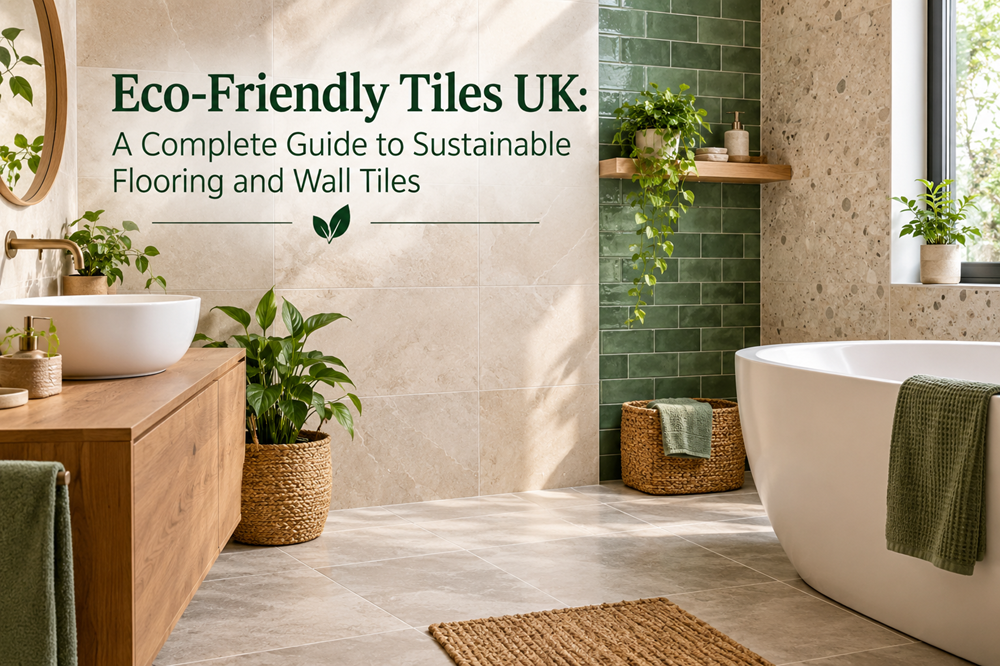
Choosing sustainable materials for your home is becoming increasingly important for UK homeowners. From furniture and insulation to paint and flooring, there are now more ways to reduce environmental impact without compromising on style.
Eco-friendly tiles are one option worth considering. They can be used in kitchens, bathrooms, hallways, utility rooms, living spaces and outdoor areas, while some types incorporate recycled or reclaimed materials.
But what actually makes a tile environmentally friendly? Are ceramic and porcelain tiles sustainable? And which options should you consider when renovating a UK home?
This guide explains everything you need to know about eco-friendly tiles in the UK, including sustainable materials, recycled tiles, manufacturing, durability, maintenance, and responsible disposal.
What Are Eco-Friendly Tiles?
Eco-friendly tiles are tiles designed, manufactured, sourced, used or disposed of in ways that can reduce their environmental impact compared with less sustainable alternatives.
There is no single material that automatically makes a tile “eco-friendly”. Sustainability can depend on several factors, including:
- The raw materials used
- How those materials are sourced
- Manufacturing processes
- Energy consumption during production
- Recycled or reclaimed content
- Product lifespan
- Transportation distance
- Maintenance requirements
- Packaging
- End-of-life disposal or reuse
For example, a tile containing recycled glass may make use of waste materials, while a durable ceramic or porcelain tile may have a long service life.
When choosing sustainable tiles UK homeowners should therefore look beyond marketing claims and consider the entire lifecycle of the product.
Why Choose Sustainable Tiles for Your UK Home?
Tiles are popular because they are durable, versatile and relatively easy to maintain. Choosing a more sustainable product can complement a wider environmentally conscious approach to home improvement.
Potential benefits include:
1. Recycled Materials
Some sustainable tiles incorporate materials that would otherwise become waste. Recycled glass, reclaimed ceramic and other recovered materials can be incorporated into tile products.
2. Long Product Lifespan
Durability is an important part of sustainability. A tile that remains functional for many years may not need to be replaced as frequently as a shorter-lived flooring or wall covering.
3. Easy Maintenance
Many hard tiles can be cleaned with relatively simple methods, reducing the need for specialist maintenance products.
4. Design Flexibility
Eco-friendly tiles are available in numerous colours, patterns, textures and finishes. Sustainable choices do not necessarily mean compromising on interior design.
5. Potential for Reuse
Some tiles can potentially be salvaged during renovation and reused, depending on their condition and how they were originally installed.
Which Tiles Are the Most Sustainable?
There is no universal “most sustainable” tile because environmental performance depends on the material, manufacturer, production process, transportation, installation and lifespan.
However, several categories are commonly considered when looking for sustainable tile options.
Recycled Glass Tiles
Recycled glass tiles are made partly or entirely using recovered glass. They can be particularly interesting for homeowners looking to incorporate recycled content into kitchens and bathrooms.
They are available in a wide range of colours and finishes and can create a distinctive decorative surface.
Potential advantages include:
- Use of recycled material
- Attractive decorative finishes
- Resistance to moisture
- Suitability for bathrooms and kitchens
- Variety of colours and designs
Always check the manufacturer’s specifications to determine the percentage and type of recycled content.
Reclaimed Tiles
Reclaimed tiles are tiles recovered from previous buildings, renovations or demolition projects and given another use.
Because they already exist, reclaimed products can be an appealing choice for homeowners looking to avoid purchasing newly manufactured materials.
They can also add character to period properties and traditional interiors.
Before buying reclaimed tiles, check:
- Condition
- Quantity available
- Dimensions
- Previous use
- Suitability for your intended location
- Whether they require specialist cleaning or preparation
Recycled Ceramic Tiles
Some manufacturers produce tiles containing recycled ceramic material. This can help incorporate manufacturing waste or recovered material into new products.
If recycled content is important to you, look for clear information from the manufacturer rather than relying solely on terms such as “green” or “sustainable”.
Natural Stone Tiles
Natural stone is a naturally occurring material and can be extremely durable. However, that does not automatically make every stone tile a sustainable choice.
Extraction, processing, transportation and quarrying practices can all affect environmental impact.
For a more informed choice, consider:
- Where the stone was sourced
- How far it has travelled
- The quarry’s environmental practices
- Durability
- Maintenance requirements
- Whether reclaimed stone is available
Ceramic and Porcelain Tiles
Ceramic and porcelain tiles are manufactured from mineral-based raw materials and can offer long service lives.
Their sustainability depends heavily on manufacturing processes, energy use, transportation and product longevity.
Choosing a durable product from a manufacturer that provides transparent environmental information can be more useful than judging sustainability based solely on the tile material.
Are Ceramic Tiles Eco-Friendly?
Ceramic tiles can be an eco-friendly option, but not every ceramic tile has the same environmental impact.
Ceramic tiles are generally made from natural mineral-based materials and can be durable and long-lasting. Their environmental impact is influenced by factors such as raw material sourcing, manufacturing energy, recycled content and transportation.
When shopping for eco-friendly ceramic tiles UK, look for manufacturers that provide information about:
- Recycled content
- Manufacturing processes
- Energy efficiency
- Environmental certifications
- Product durability
- Packaging
- Responsible sourcing
A long-lasting ceramic tile that remains in place for decades may offer advantages over materials that need frequent replacement.
Are Porcelain Tiles Eco-Friendly?
Porcelain tiles can be a sustainable flooring or wall-covering option when they are durable, responsibly manufactured and used for a long period.
Porcelain is a type of ceramic tile produced using refined materials and firing at high temperatures. Its manufacturing process can require significant energy, so it is important not to assume that porcelain is automatically a low-impact product.
However, its durability can be an important sustainability factor.
When comparing eco-friendly porcelain tiles, consider the complete product lifecycle rather than looking at material type alone.
Questions to ask suppliers include:
- Does the product contain recycled material?
- Where is it manufactured?
- What environmental certifications does it have?
- How durable is it?
- What information does the manufacturer provide about production?
- Is the packaging recyclable?
Are Recycled Tiles a Good Option?
Yes, recycled tiles can be a good option for homeowners who want to incorporate recovered materials into their interiors.
The term “recycled tiles” covers several different products, including tiles made with recycled glass, recycled ceramics and other recovered materials.
Their environmental benefits can vary depending on how much recycled content they contain and how they are manufactured.
Before purchasing, check the product specification for:
- Percentage of recycled content
- Type of recycled material
- Manufacturing location
- Certifications
- Installation requirements
- Expected lifespan
Recycled tiles can be particularly effective when combined with other sustainable renovation decisions.
What Are the Best Sustainable Tiles for Bathrooms?
The best sustainable bathroom tile depends on your priorities, budget, design and installation requirements.
Good options to investigate include:
Recycled Glass Tiles
These can work well for decorative bathroom walls and splashback areas because of their moisture-resistant characteristics.
Recycled Ceramic Tiles
These can provide a conventional tile appearance while incorporating recovered ceramic material.
Reclaimed Tiles
Reclaimed tiles can provide character, although you should confirm that the particular product is suitable for a wet environment.
Durable Ceramic or Porcelain Tiles
A long-lasting tile from a manufacturer with transparent environmental practices can also be a practical sustainable choice.
For bathroom flooring, always check whether the tile’s slip resistance and technical specifications are appropriate for the intended application.
What Are the Best Eco-Friendly Kitchen Tiles?
Kitchens experience frequent foot traffic, spills, food splashes and cleaning, so durability and ease of maintenance are particularly important.
Options worth considering include:
- Recycled glass tiles
- Recycled ceramic tiles
- Reclaimed tiles
- Durable ceramic tiles
- Porcelain tiles
- Responsibly sourced natural stone
For a kitchen floor, prioritise durability and slip resistance alongside sustainability.
For splashbacks and walls, appearance, moisture resistance and ease of cleaning may be more important.
The most sustainable choice is not necessarily the tile with the highest recycled content. A product that is durable, correctly installed and maintained for many years can also contribute to a lower-impact renovation.
Eco-Friendly Floor Tiles UK: What Should You Look For?
When searching for eco-friendly floor tiles UK, consider the following factors.
Durability
Choose tiles designed for the level of traffic in the room.
A hallway or kitchen floor generally needs different performance characteristics from a lightly used bathroom.
Recycled Content
If recycled materials are important to you, check the manufacturer’s exact percentage rather than relying on broad sustainability claims.
Manufacturing
Look for companies that provide information about energy use, waste reduction and manufacturing practices.
Transportation
Products manufactured closer to their destination may reduce transportation requirements, although transportation is only one part of a product’s overall environmental impact.
Packaging
Consider whether packaging can be recycled and whether the manufacturer has taken steps to minimise unnecessary packaging.
Certifications
Environmental certifications and independently verified product information can make sustainability claims easier to evaluate.
How to Choose Sustainable Tiles for Your UK Home
Choosing sustainable tiles doesn’t have to be complicated. Follow these steps.
Step 1: Decide Where the Tiles Will Be Used
Determine whether you need tiles for:
- Bathroom floors
- Bathroom walls
- Kitchen floors
- Kitchen splashbacks
- Hallways
- Utility rooms
- Living areas
- Outdoor spaces
Step 2: Identify the Required Performance
Think about:
- Foot traffic
- Moisture exposure
- Slip resistance
- Cleaning requirements
- Temperature changes
- Expected lifespan
Step 3: Compare Materials
Compare recycled glass, reclaimed, recycled ceramic, ceramic, porcelain and natural stone based on both environmental and practical considerations.
Step 4: Check Sustainability Claims
Ask manufacturers for specific information rather than relying on vague claims.
Step 5: Consider Longevity
A durable product that remains attractive and functional for many years can reduce the need for replacement.
Step 6: Plan Installation Carefully
Even a sustainable tile can result in unnecessary waste if too many tiles are purchased or installation creates excessive offcuts.
Measure carefully and discuss cutting and layout with your installer.
What Makes a Tile Environmentally Friendly?
A tile’s environmental performance can be influenced by several factors.
Recycled Content
Using recycled materials can reduce reliance on newly extracted resources.
Responsible Raw Materials
Responsible sourcing can help reduce environmental impacts associated with extraction.
Efficient Manufacturing
Manufacturers that reduce energy consumption, water use and production waste can potentially lower the environmental impact of their products.
Durability
Long-lasting products may reduce replacement frequency.
Low Maintenance
Tiles that require relatively simple cleaning can reduce the need for specialist products.
Recyclability or Reuse
Tiles that can be reused or responsibly processed at the end of their life can contribute to a more circular approach.
Sustainable Tiles vs Traditional Tiles: What’s the Difference?
The difference is not always obvious from appearance.
Traditional tiles may use conventional raw materials and manufacturing processes, while sustainable tile products may incorporate:
- Recycled materials
- Reclaimed materials
- More responsible sourcing
- Manufacturing waste reduction
- Improved production efficiency
- Environmental certifications
- Recyclable packaging
However, “traditional” does not automatically mean unsustainable, and “eco-friendly” does not automatically mean low-impact.
The best way to compare products is to look at specific information about materials, production, transportation, durability and end-of-life options.
Sustainable Tile Trends in the UK
Sustainable interiors are increasingly focused on combining environmental considerations with timeless design.
Some trends worth exploring include:
Recycled Glass
Colourful recycled glass tiles can create eye-catching kitchen splashbacks and bathroom features.
Reclaimed and Vintage Tiles
Reclaimed tiles can bring unique character to traditional and contemporary interiors.
Natural-Looking Designs
Tiles inspired by stone, wood and natural textures can create a connection with nature while offering the practical characteristics of tile.
Neutral and Timeless Colours
Choosing a design that remains attractive for years can help avoid unnecessary replacement simply because a trend has changed.
Large-Format Tiles
Larger tiles can sometimes reduce the number of grout joints, although their suitability depends on the room and installation requirements.
How to Maintain Eco-Friendly Tiles
Buying sustainable tiles is only one part of the process. Proper maintenance can help extend their useful life.
Clean Regularly
Remove dirt before it becomes difficult to clean.
Avoid Unnecessary Harsh Chemicals
Use cleaning products appropriate for the specific tile material and follow the manufacturer’s guidance.
Repair Where Possible
If an individual tile becomes damaged, replacing the affected tile may be preferable to replacing an entire surface.
Protect High-Traffic Areas
Entrance mats and appropriate furniture protection can reduce wear on tiled floors.
Maintain Grout
Keeping grout clean and in good condition can help maintain the overall surface.
How Can You Recycle Old Tiles in the UK?
Old tiles can sometimes be reused, donated, recycled or repurposed rather than immediately sent to general waste.
The best option depends on the tile type, condition and facilities available in your area.
Reuse Them
Good-quality tiles can potentially be reused in another room or renovation project.
Donate or Sell Them
If you have usable surplus tiles, consider offering them to local reuse networks, community projects or other homeowners.
Repurpose Them
Broken tiles can sometimes be used creatively for:
- Garden edging
- Mosaic projects
- Decorative features
- Plant pot decoration
- DIY furniture projects
Check Local Recycling Facilities
Some recycling or waste facilities accept construction and renovation materials, but accepted materials vary by location.
Always check your local council’s current guidance before transporting construction waste to a recycling facility.
How to Reduce Tile Waste During a Renovation
Sustainable renovation involves more than buying eco-friendly materials.
You can reduce tile waste by:
- Measuring the area accurately
- Planning the tile layout before purchasing
- Buying the appropriate quantity
- Reusing existing tiles where possible
- Keeping spare tiles for future repairs
- Choosing designs that minimise unnecessary cutting
- Separating construction waste appropriately
Keep a small number of spare tiles after installation. If a tile becomes damaged several years later, having matching replacements can prevent the need to replace a larger area.
Questions to Ask Before Buying Eco-Friendly Tiles
Before purchasing, ask the supplier or manufacturer:
- What materials are used to make the tile?
- Does it contain recycled content?
- What percentage of the material is recycled?
- Where is the product manufactured?
- How durable is the tile?
- Does the manufacturer provide environmental information or certifications?
- What type of maintenance does it require?
- Is the packaging recyclable?
- Can the tiles be reused or recycled at the end of their life?
- Is the tile suitable for my intended application?
These questions can help separate specific sustainability information from vague environmental marketing.
Final Thoughts: Choosing Eco-Friendly Tiles for a Sustainable Home
Choosing eco-friendly tiles in the UK is about looking beyond appearance and price.
Consider the materials used, recycled content, manufacturing process, sourcing, transportation, durability, maintenance and end-of-life options.
Recycled glass and recycled ceramic tiles can help incorporate recovered materials into your home, while reclaimed tiles can give existing materials a second life. Durable ceramic and porcelain tiles can also be considered when their long service life and manufacturing impacts are taken into account.
Most importantly, don’t rely solely on the word “eco-friendly“. Look for transparent information and compare products based on their complete lifecycle.
With careful research and thoughtful installation, your flooring and wall choices can become part of a broader approach to creating a more sustainable UK home.
Make Your Next Home Improvement More Sustainable
At Sustainable Talks, we explore practical ideas for making everyday living more environmentally responsible.
From sustainable home improvements and eco-friendly materials to greener lifestyle choices, discover more guides and ideas on Sustainable Talks.
Explore more sustainable living ideas:
https://sustainablestalks.com/
Frequently Asked Questions About Eco-Friendly Tiles UK
Eco-friendly tiles are tiles designed, manufactured, sourced or used with environmental considerations in mind. They may contain recycled or reclaimed materials, come from manufacturers using resource-efficient processes, or offer long-term durability.
There is no single tile that is always the most sustainable. Reclaimed and recycled tiles can reduce the need for new raw materials, while durable ceramic and porcelain tiles can offer long service lives. The overall environmental impact depends on sourcing, manufacturing, transportation, installation and lifespan.
Ceramic tiles can be an environmentally conscious choice when they are durable, responsibly manufactured and used for a long period. Look for manufacturers that provide clear information about recycled content, energy use and environmental practices.
Porcelain tiles can be a sustainable option because of their durability and long potential service life. However, they are manufactured using high-temperature processes, so manufacturing energy and sourcing should also be considered.
Yes. Recycled tiles can help incorporate recovered materials into a renovation. Check the percentage and type of recycled content and compare the manufacturer’s environmental information before buying.
Recycled glass, recycled ceramic, reclaimed tiles and durable ceramic or porcelain tiles can all be options depending on the bathroom application. Always check technical specifications such as moisture suitability and slip resistance.
Recycled glass, recycled ceramic, reclaimed, ceramic and porcelain tiles can all work in kitchens. For floors, prioritise durability and slip resistance. For splashbacks, moisture resistance, cleaning and design may be more important.
materials vary between councils. Check your local authority’s current recycling and construction-waste guidance before disposal.

Author: Sustainable Talks
Talk Green. Think Change. Act Sustainably. 🌍 Ideas, stories & actions for a greener future.