




Christmas is a time of joy, generosity, and togetherness—but in the UK, it’s also one of the most waste-heavy periods of the year. From single-use wrapping paper to plastic decorations and packaging, households generate thousands of tonnes of extra waste every December. According to UK environmental studies, a large portion of Christmas waste ends up in landfill, where it can take decades (or longer) to break down.
The good news? Celebrating a plastic-free Christmas doesn’t mean sacrificing festive cheer. Across cities like London, Manchester, Birmingham, Bristol, Leeds, and Edinburgh, more families are embracing greener traditions that are stylish, meaningful, and better for the planet.
This guide explores practical, realistic ways to enjoy a plastic-free Christmas, helping you create a warmer, more sustainable home while reducing waste and environmental impact.
Why a Plastic-Free Christmas Matters in the UK
Plastic pollution is a growing concern across the UK. During the festive season alone:
- Millions of metres of plastic wrapping paper are used once and thrown away
- Cheap plastic decorations often break and can’t be recycled
- Toy packaging contributes heavily to household waste
By choosing plastic-free alternatives, households in cities like Nottingham, Sheffield, Cardiff, and Glasgow are helping reduce landfill waste, lower carbon emissions, and protect local ecosystems.
A plastic-free Christmas is not about perfection—it’s about making better choices where possible.

1. Rethinking Christmas Decorations: Natural & Reusable Alternatives
Plastic decorations dominate shop shelves, but traditional Christmas décor didn’t rely on plastic at all.
Plastic-Free Decoration Ideas:
- Dried orange slices, cinnamon sticks, and pinecones for garlands
- Wooden, metal, or glass baubles instead of plastic
- Evergreen branches from local markets or gardens
- Fabric bunting that can be reused year after year
In cities like Bath and York, many homes now blend heritage-style decorations with modern interiors, proving sustainability can be timeless and elegant.
💡 Tip: Store decorations carefully so they last for many Christmases, reducing the need to buy new items each year.
2. Choosing a Sustainable Christmas Tree
One of the biggest Christmas decisions is the tree—and plastic trees, while reusable, are often made from non-recyclable PVC.
Greener UK-Friendly Options:
- Real, responsibly sourced trees from local UK farms
- Potted living trees that can be replanted after Christmas
- Creative alternatives made from wood, books, or branches
Many households in Surrey, Kent, and Oxfordshire now rent living Christmas trees, returning them to be replanted after the festive season—an increasingly popular UK trend.
3. Plastic-Free Gift Wrapping That Still Looks Beautiful
Traditional wrapping paper often contains plastic coatings or glitter, making it unrecyclable. In the UK alone, vast amounts of wrapping paper are discarded every year.
Plastic-Free Wrapping Ideas:
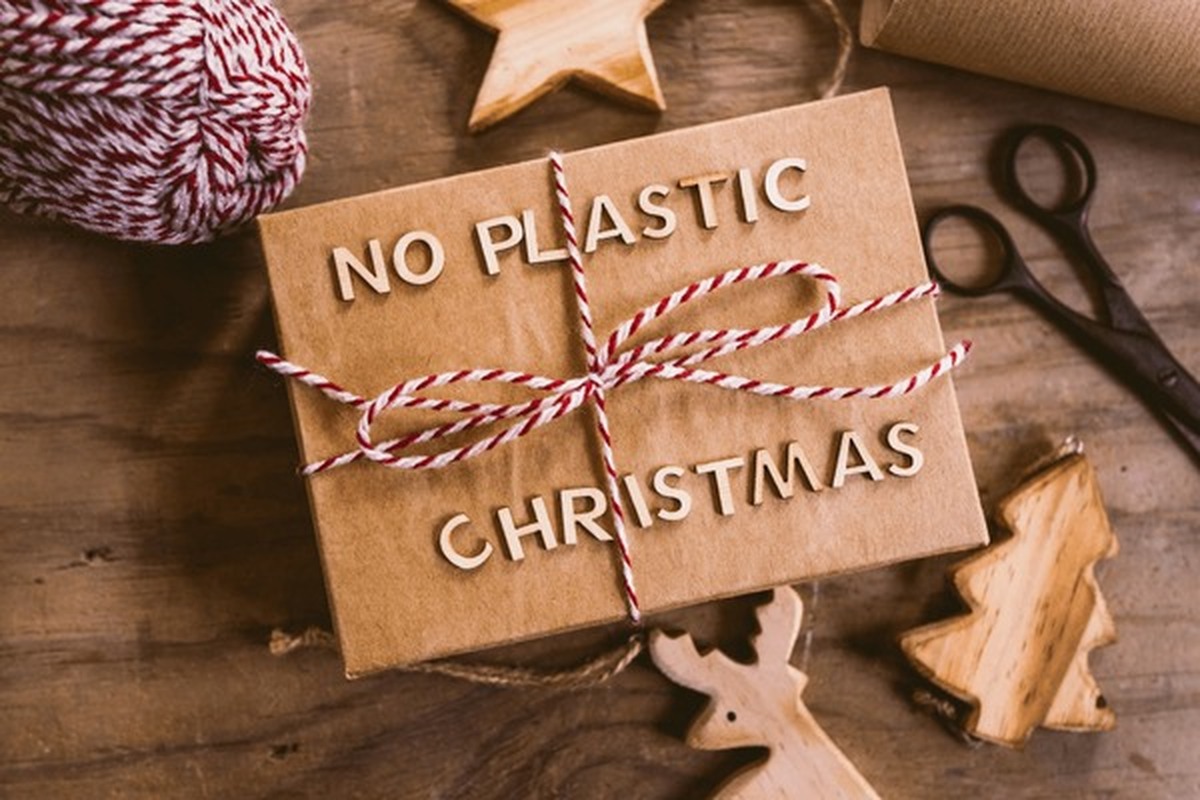
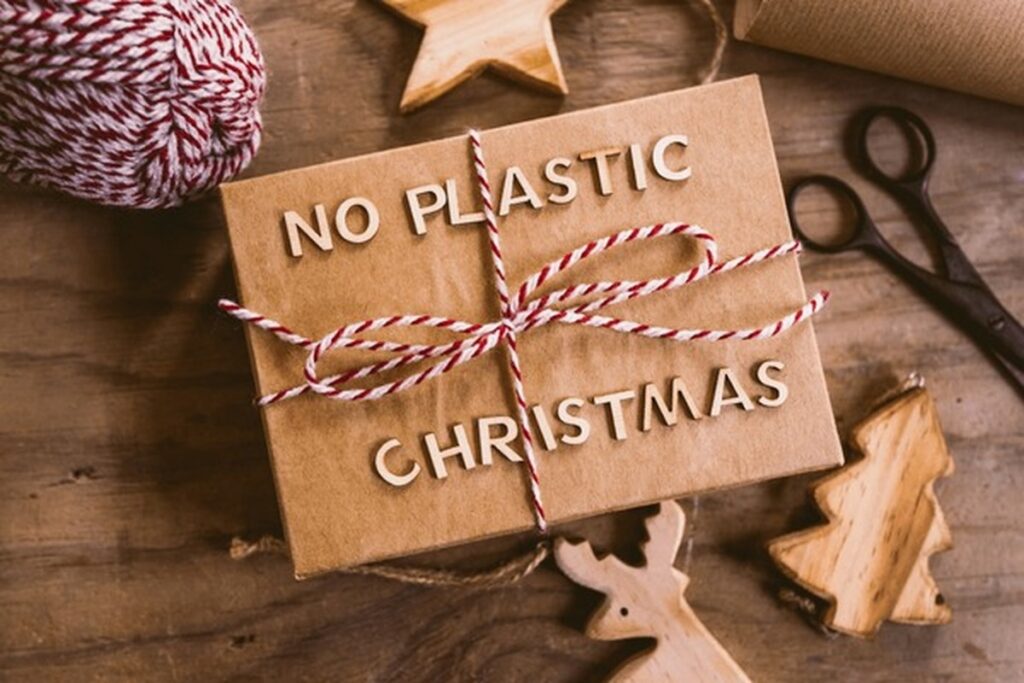
- Brown kraft paper with string or twine
- Fabric wrapping (Furoshiki) using scarves or tea towels
- Old maps, newspapers, or sheet music
- Reusable gift bags made from fabric
In creative hubs like Brighton and Bristol, reusable wrapping has become a festive tradition, with families swapping and reusing materials each year.

4. Thoughtful, Plastic-Free Christmas Gifts
Sustainable gifting is one of the most impactful ways to reduce Christmas plastic waste.
Plastic-Free Gift Ideas Popular in the UK:
- Experiences (theatre tickets, workshops, spa days)
- Handmade gifts from local artisans in cities like Leeds or Birmingham
- Books, puzzles, or board games with minimal packaging
- Refillable candles, soaps, or skincare in glass or metal containers
Shopping locally not only reduces packaging waste but also supports independent UK businesses.
5. Creating Plastic-Free Christmas Traditions at Home
Traditions are what make Christmas special—and many can be completely plastic-free.
Greener Tradition Ideas:
- Baking Christmas treats together instead of buying packaged snacks
- Making handmade decorations as a family activity
- Hosting a “no-plastic” Christmas dinner challenge
- Writing handwritten Christmas cards instead of plastic-coated designs
Families in Cambridge and Reading are increasingly choosing experience-based traditions that focus on time together rather than material consumption.
6. Sustainable Christmas Table Settings & Dining
Christmas dinner is central to the celebration, but it can also generate significant waste.
Plastic-Free Table Tips:
- Use real plates, cutlery, and cloth napkins
- Avoid plastic crackers—make reusable or DIY alternatives
- Decorate tables with candles, greenery, and seasonal fruit
In cities like Chester and Durham, many households are reviving traditional table settings that feel festive without relying on disposable items.
7. Reducing Plastic Waste in Christmas Food & Shopping
Food packaging is a major contributor to plastic waste during Christmas.
UK-Friendly Tips:
- Shop at local butchers, greengrocers, and bakeries
- Bring reusable bags and containers
- Plan meals carefully to reduce food waste
- Freeze leftovers instead of using cling film
In urban areas such as London and Manchester, zero-waste shops are thriving during the festive season, offering plastic-free alternatives for Christmas essentials.
8. Eco-Friendly Christmas Cards & Communication
Many Christmas cards are glittered or plastic-coated, making them unrecyclable.
Sustainable Card Options:
- Recycled paper cards
- Plantable seed cards
- Handmade cards
- Digital greetings for extended networks
Schools and community groups in Milton Keynes and Luton have embraced card-swapping and recycling schemes to reduce seasonal waste.
9. Teaching Children the Value of a Plastic-Free Christmas
Christmas is a powerful opportunity to teach children about sustainability.
Child-Friendly Ideas:
- DIY craft decorations using recycled materials
- Storytelling about traditional Christmas celebrations
- Involving children in food prep and gift-making
Parents in Leicester and Coventry report that children often enjoy making decorations and gifts more than receiving plastic toys.
10. Planning Ahead for a Greener Christmas Every Year
A plastic-free Christmas is easier when planned in advance.
Simple Planning Tips:
- Keep a “Christmas sustainability box” for reusable items
- Buy decorations gradually rather than last-minute
- Repair and reuse before replacing
- Set realistic goals—not everything must be plastic-free at once
Across the UK, from Liverpool to Newcastle, households are finding that small changes each year lead to lasting habits and a more meaningful festive season.
Final Thoughts: A Greener Christmas Starts at Home
Celebrating a plastic-free Christmas is not about giving things up—it’s about choosing traditions that reflect care for the planet, your community, and future generations. Whether you live in London, Birmingham, Manchester, Bristol, or a small UK town, every household can make choices that reduce waste and create a more sustainable festive season.
By embracing natural decorations, thoughtful gifting, reusable wrapping, and meaningful traditions, you can enjoy a Christmas that feels warmer, calmer, and far more rewarding.
A greener Christmas doesn’t just protect the environment—it brings us back to what the season is truly about.