





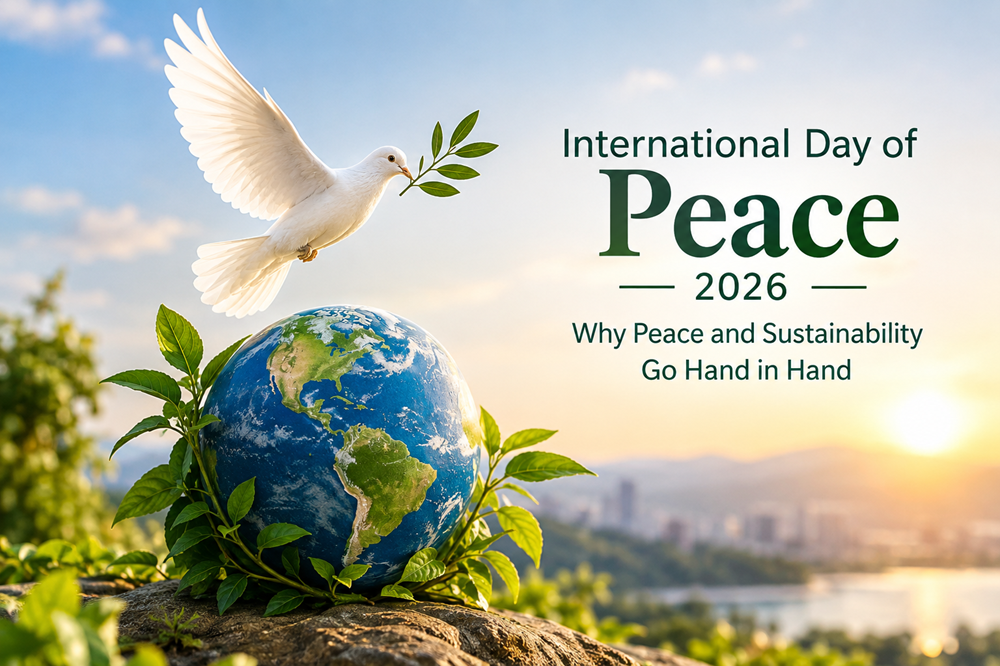
Every year on 21 September, people around the world observe the International Day of Peace, a United Nations observance dedicated to strengthening the ideals of peace among nations and communities.
In 2026, the theme is “Invest in Peace – For Everyone, Everywhere, Every Day.” The theme highlights the role of everyday people, communities, volunteers and organisations in creating safer, more inclusive and peaceful societies.
At first, peace and sustainability may seem like two separate subjects. One is associated with conflict prevention and cooperation, while the other focuses on the environment and responsible use of resources. In reality, they are closely connected.
A sustainable future requires cooperation, fairness, access to resources and resilient communities. Similarly, peaceful societies create better conditions for people to protect nature, improve their communities and work towards long-term sustainable development.
For Sustainable Talks, International Day of Peace is an opportunity to explore how everyday sustainable choices can contribute to stronger, more resilient communities.
What Is the International Day of Peace?
The International Day of Peace is observed every year on 21 September.
The United Nations General Assembly established the day in 1981. In 2001, 21 September was unanimously designated as a day of non-violence and cease-fire.
The day encourages people to reflect on peace and consider practical ways to promote understanding, cooperation and non-violence.
The United Nations describes peace as more than simply the absence of war. It also relates to safety, dignity, opportunity and cooperation in everyday life.
When is International Day of Peace 2026?
International Day of Peace 2026 takes place on Monday, 21 September 2026.
The 2026 theme is:
“Invest in Peace – For Everyone, Everywhere, Every Day.”
The theme focuses attention on people taking action in their own communities and becoming what the UN describes as “everyday architects of peace.”
What Does Peace Have to Do With Sustainability?
Peace and sustainability are interconnected because environmental and social challenges rarely exist in isolation.
Communities need access to essentials such as clean water, food, energy, housing and healthy environments. When resources are poorly managed or unequally accessible, social tensions can increase.
Sustainable development can help communities build resilience by encouraging responsible resource management, protecting ecosystems and supporting long-term economic and social wellbeing.
The United Nations has previously highlighted the relationship between sustainable development and peace, including the importance of responsible natural-resource management in reducing potential sources of conflict.
This means sustainability is not only about recycling, renewable energy or reducing household waste. It can also be about creating communities that are more resilient, cooperative and prepared for future challenges.
7 Ways Sustainability Can Support a Culture of Peace
1. Protect and Share Natural Resources Responsibly
Water, food, forests, soil and other natural resources are essential to human wellbeing.
Using resources responsibly helps reduce unnecessary waste and supports their availability for future generations.
At home, simple actions can include:
- Reducing household water waste
- Avoiding unnecessary food waste
- Choosing durable products
- Reusing items instead of replacing them
- Supporting responsible and sustainable businesses
- Recycling correctly where local facilities allow
Small choices become more meaningful when they are adopted by communities.
2. Support Sustainable Communities
A sustainable community is not simply one with more recycling bins or green spaces.
It is also a community where people can participate, cooperate and access resources responsibly.
Community gardens, repair groups, local environmental projects, food-sharing schemes and neighbourhood clean-ups can all encourage people to work together.
These activities can create opportunities for people with different backgrounds and experiences to meet around a shared goal.
3. Choose Cooperation Over Waste
The idea of sharing can be an important part of sustainable living.
Instead of every household purchasing products that are rarely used, communities can explore:
- Tool-sharing schemes
- Community libraries
- Clothing swaps
- Repair cafés
- Car-sharing
- Community gardens
- Local food-sharing initiatives
Sharing can reduce consumption while creating opportunities for people to connect with one another.
4. Make Climate Action Part of Everyday Life
Climate change is an environmental issue, but its consequences can also affect communities, livelihoods, food systems and access to resources.
The United Nations has previously connected climate action with peace and international stability, highlighting how climate-related pressures can contribute to displacement, resource pressures and social tensions.
Individuals can contribute through practical actions such as:
- Walking, cycling or using public transport where practical
- Reducing household energy consumption
- Improving home insulation
- Choosing renewable energy where available
- Reducing food waste
- Buying fewer but longer-lasting products
- Supporting local environmental initiatives
No single action can solve climate change, but collective action can contribute to broader change.
5. Support Ethical and Responsible Businesses
Our purchasing decisions can influence the businesses and practices we support.
When shopping, consumers can ask questions such as:
Where was this product made?
What materials were used?
How long is it likely to last?
Can it be repaired or recycled?
Does the company provide meaningful information about its environmental claims?
Making informed purchasing decisions can encourage greater transparency and responsible production.
Sustainability should not simply be about buying more “eco-friendly” products. Sometimes the most sustainable option is to use what you already own for longer.
6. Create More Inclusive Green Spaces
Parks, community gardens, trees and natural areas can contribute to healthier and more enjoyable neighbourhoods.
Green spaces can provide opportunities for recreation, community activities and connection with nature.
Community gardening is one example of an activity that combines environmental action with social interaction.
People can grow food, learn new skills, share knowledge and work together while improving a local space.
7. Practise Peace in Everyday Conversations
Peace begins with more than large international agreements.
It can also be reflected in how people communicate with family members, colleagues, neighbours and online communities.
Practical steps include:
- Listening before responding
- Respecting differences
- Avoiding unnecessary hostility
- Checking information before sharing it
- Challenging misinformation responsibly
- Giving others space to express different perspectives
- Choosing constructive conversations over personal attacks
The UN has encouraged people to take everyday actions such as listening to different voices, challenging discriminatory language, reporting bullying and checking facts before sharing information online.
Why Sustainable Development Matters for Peace
The relationship between sustainability and peace becomes particularly important when looking at the wider Sustainable Development Goals (SDGs).
The UN has noted that the SDGs cover areas including poverty, hunger, health, education, climate change, gender equality, water, sanitation, energy, environmental protection and social justice. These areas are interconnected with the conditions needed for peaceful societies.
For example, access to clean water is both an environmental and human-development issue.
Food security is connected to agriculture, climate and economic resilience.
Quality education can help people gain knowledge and opportunities.
Climate action can strengthen resilience to environmental pressures.
These connections demonstrate why sustainability should be considered more broadly than individual environmental choices.
International Day of Peace and the Sustainable Development Goals
International Day of Peace can be connected to several Sustainable Development Goals, including:
SDG 3: Good Health and Well-Being
Healthy communities need safe environments, access to essential services and conditions that support physical and social wellbeing.
SDG 4: Quality Education
Education can help people understand sustainability, human rights, environmental challenges and peaceful cooperation.
SDG 6: Clean Water and Sanitation
Responsible water management is essential for both environmental sustainability and human wellbeing.
SDG 11: Sustainable Cities and Communities
Sustainable communities can incorporate green spaces, resilient infrastructure, responsible resource use and inclusive public spaces.
SDG 12: Responsible Consumption and Production
Reducing waste and making more responsible purchasing decisions can help conserve resources.
SDG 13: Climate Action
Climate action can contribute to more resilient communities and help address environmental pressures.
SDG 16: Peace, Justice and Strong Institutions
SDG 16 directly focuses on peaceful and inclusive societies, access to justice and effective institutions.
These goals demonstrate that environmental sustainability, social wellbeing and peace are interconnected rather than separate issues.
How Can You Celebrate International Day of Peace in the UK?
International Day of Peace does not have to involve a large event.
People across the UK can mark the day through simple community and sustainability activities.
Organise a Local Clean-Up
Bring neighbours, friends or colleagues together to clean a local park, street, beach or community area.
Plant Something
Planting trees, flowers or vegetables can be a simple way to contribute to local biodiversity.
If you have limited outdoor space, consider growing herbs or pollinator-friendly plants in containers.
Host a Community Meal
A shared meal can bring people together while providing an opportunity to explore sustainable food choices.
Consider choosing seasonal ingredients, reducing food waste and buying locally where practical.
Organise a Clothing or Book Swap
Instead of buying something new, exchange items you no longer need.
This extends product life and can reduce unnecessary consumption.
Start a Repair Project
Have a broken item at home?
Before throwing it away, see whether it can be repaired.
You could also organise or attend a local repair event.
Take a Digital Peace Break
Spend some time away from online arguments and misinformation.
Use the day to read, walk, spend time outdoors or have a meaningful conversation with someone in your community.
10 Sustainable Actions for International Day of Peace
If you want to mark International Day of Peace with practical action, try these ten ideas:
- Pick up litter in your local area.
- Donate unwanted items instead of throwing them away.
- Start a small community garden project.
- Reduce food waste for the day.
- Choose walking, cycling or public transport where practical.
- Repair something instead of replacing it.
- Have a screen-free conversation with family or friends.
- Learn about a sustainability issue affecting your community.
- Support a responsible local organisation or community initiative.
- Share a positive message about peace and sustainability.
The goal is not perfection. It is participation.
Peace Begins With Everyday Choices
International Day of Peace provides an opportunity to think beyond the idea that peace is created only through international agreements.
Peace can also be shaped through everyday decisions.
How we communicate.
How we treat other people.
How we use resources.
How we respond to environmental challenges.
How we participate in our communities.
How we choose what to buy.
Sustainability asks us to think about the long-term consequences of our actions. Peace asks us to consider how our actions affect other people and communities.
Together, these ideas encourage a more responsible approach to the world we share.
What Can Businesses Do for International Day of Peace?
Businesses can also connect peace with sustainability.
Companies can use International Day of Peace as an opportunity to review how their operations affect people, communities and the environment.
Practical ideas include:
- Supporting local community projects
- Reducing operational waste
- Reviewing supply-chain practices
- Improving transparency
- Supporting employee volunteering
- Creating inclusive workplaces
- Reducing unnecessary resource consumption
- Supporting environmental initiatives
- Encouraging respectful workplace communication
- Sharing reliable information rather than misinformation
A company’s sustainability strategy can therefore extend beyond environmental targets to include people, communities and responsible business practices.
Peace and Sustainability: A Shared Responsibility
The 2026 International Day of Peace theme, “Invest in Peace – For Everyone, Everywhere, Every Day,” puts emphasis on everyday action.
That idea fits naturally with sustainable living.
Sustainability also depends on everyday choices repeated by individuals, families, businesses and communities.
We may not be able to solve every global challenge ourselves, but we can influence the environments in which we live and participate.
We can reduce waste.
We can use resources responsibly.
We can support community projects.
We can listen to others.
We can challenge misinformation.
We can protect nature.
We can make more informed choices.
And we can encourage cooperation rather than division.
Frequently Asked Questions About International Day of Peace
When is International Day of Peace?
International Day of Peace is observed annually on 21 September. The United Nations established the day to strengthen the ideals of peace among nations and peoples.
What is the theme of International Day of Peace 2026?
The 2026 theme is “Invest in Peace – For Everyone, Everywhere, Every Day.” It highlights everyday action and the role of communities and individuals in building peace.
When was International Day of Peace established?
The United Nations General Assembly established International Day of Peace in 1981. In 2001, 21 September was established as an annual day of non-violence and cease-fire.
Why is sustainability important for peace?
Sustainability can contribute to resilient communities by supporting responsible resource management, environmental protection and long-term social and economic wellbeing. The UN has highlighted links between sustainable development, climate action, natural resources and peace.
How can I celebrate International Day of Peace?
You can celebrate by participating in community activities, helping others, learning about peace and sustainability, reducing waste, supporting local environmental projects, volunteering or simply encouraging respectful and constructive conversations.
How are climate change and peace connected?
Climate-related pressures can affect resources, livelihoods, food security and communities. The United Nations has highlighted climate change as a factor that can affect peace and security, making climate action an important part of building resilient communities.
Final Thoughts
International Day of Peace is a reminder that creating a better future is a shared responsibility.
Peace and sustainability are not separate ambitions. Both require cooperation, responsibility, respect and long-term thinking.
This 21 September 2026, consider taking one small action for your community and the planet.
Plant something.
Repair something.
Waste less.
Help someone.
Listen to someone.
Support your local community.
And make sustainability part of your everyday approach to creating a more peaceful and resilient world.
At Sustainable Talks, we believe that positive change starts with informed choices—and every small action can contribute to a more sustainable future.
Happy International Day of Peace 2026. 🕊️🌱

Author: Sustainable Talks
Talk Green. Think Change. Act Sustainably. 🌍 Ideas, stories & actions for a greener future.