


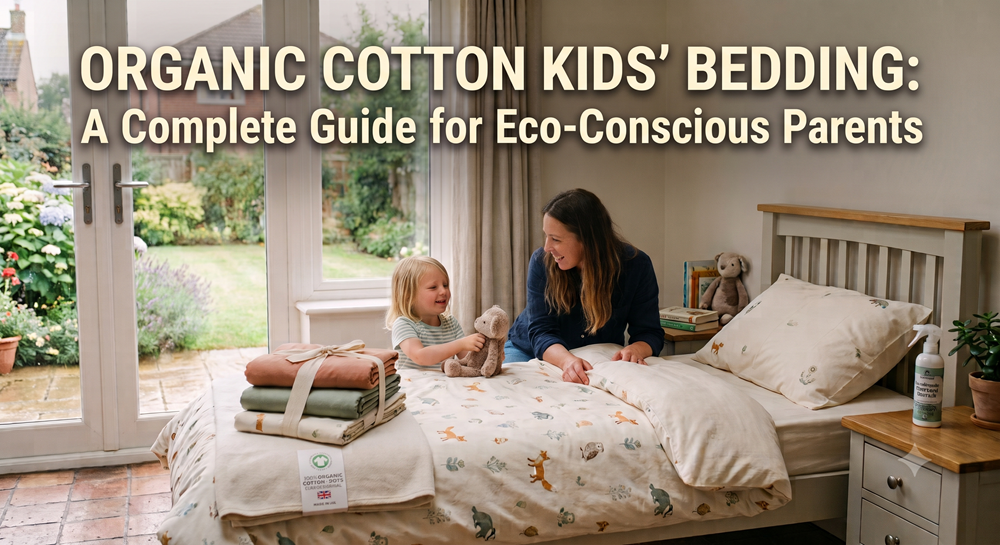
Creating a comfortable and sustainable bedroom for your child starts with choosing the right bedding. From soft sheets to cosy duvet covers, children’s bedding plays an important role in their everyday comfort and bedtime routine. For parents who want to make more environmentally responsible choices, organic cotton kids’ bedding is an option worth exploring.
Organic cotton bedding combines the familiar feel of cotton with farming and production practices designed to meet recognised organic standards. It is available in a wide range of colours, patterns, and sizes, making it easier to create a child-friendly bedroom without overlooking sustainability.
But what should UK parents look for when buying organic cotton bedding? How can you identify trustworthy certifications, choose the right size, and care for bedding so it lasts?
This guide explores everything you need to know about organic cotton kids’ bedding in the UK, from its benefits and certifications to practical buying and care tips.
What Is Organic Cotton Kids’ Bedding?
Organic cotton kids’ bedding is made using cotton grown according to recognised organic agricultural standards. Depending on the applicable certification, these standards restrict or prohibit certain synthetic pesticides, genetically modified seeds, and other inputs used in conventional farming.
The cotton is then spun, woven or knitted, and manufactured into products such as:
- Children’s bed sheets
- Duvet covers
- Pillowcases
- Cot sheets
- Toddler bedding
- Children’s blankets and mattress protectors
Organic cotton can feel similar to conventional cotton, but its environmental and agricultural credentials depend on the specific farming, processing, and certification practices behind the finished product.
Parents should also remember that organic cotton does not automatically mean every part of a bedding product is organic or sustainably produced. Checking the product description and relevant certifications can help you understand what you are buying.
Benefits of Organic Cotton Bedding for Children
Choosing bedding for children involves more than selecting an attractive design. Comfort, practicality, durability, and environmental impact all matter. Here are some potential benefits of organic cotton bedding.
1. Comfortable for Everyday Use
Cotton is widely used in bedding because it can feel soft and comfortable against the skin. Organic cotton bedding can be a practical choice for children who prefer natural-feeling fabrics.
However, softness depends on several factors, including the type of cotton, fabric construction, finishing treatments, and washing. Organic certification alone does not guarantee a particular level of softness.
2. Breathable and Suitable for Different Seasons
Cotton fabrics can allow air to move through the material and absorb moisture. This makes cotton bedding a popular choice for bedrooms throughout the year.
For UK families, the right bedding should suit the season and the temperature of the child’s bedroom. Lightweight sheets may work well in warmer weather, while suitable duvets and blankets can provide additional warmth during colder months.
Parents should choose bedding appropriate to the child’s age and follow safe-sleep guidance, particularly for babies and young toddlers.
3. A More Environmentally Considered Choice
Organic farming standards are intended to encourage agricultural practices with restrictions on certain synthetic inputs and requirements relating to organic production.
Some organic cotton systems may support soil health and biodiversity, depending on the farming methods used. Nevertheless, the overall environmental impact of bedding also depends on water use, manufacturing, dyes, transport, packaging, and how long the product remains in use.
For a more sustainable purchase, look beyond the word “organic” and consider the full product lifecycle.
4. Durable Enough for Children’s Bedrooms
Children’s bedding often needs to withstand regular washing, spills, stains, and everyday wear. A well-made cotton product can be durable, but longevity depends on fabric quality, stitching, construction, and care.
Look for reliable product specifications and follow the manufacturer’s washing instructions to help extend the bedding’s useful life.
5. More Informed Purchasing Decisions
Organic cotton bedding can encourage parents to think more carefully about the materials and production methods behind everyday household products.
By checking certifications, material composition, and manufacturer information, families can make choices that better reflect their sustainability priorities.
What Certifications Should UK Parents Look For?
Certifications can help parents understand whether a product meets particular environmental, social, or chemical-management standards. However, different certifications cover different parts of the supply chain.
Global Organic Textile Standard (GOTS)
The Global Organic Textile Standard, commonly known as GOTS, is one of the best-known certifications for organic textiles.
GOTS addresses organic fibre content and includes environmental and social criteria throughout relevant stages of textile processing and manufacturing. Parents should check whether the finished product is certified and what label grade applies.
Organic Content Standard (OCS)
The Organic Content Standard verifies the presence and traceability of organically produced materials in a product.
It focuses primarily on organic material content and chain of custody. It does not cover every environmental or social aspect of textile manufacturing in the same way as GOTS.
OEKO-TEX® STANDARD 100
OEKO-TEX® STANDARD 100 tests textile products for specified harmful substances according to its certification requirements.
It is important to understand that OEKO-TEX® STANDARD 100 is not an organic cotton certification. A product may be tested for harmful substances without being made from organic cotton.
What Should You Check?
Before buying, look for:
- The exact certification name
- The certified product or manufacturer
- The organic fibre content
- The material composition
- Relevant product-care information
- Clear information about dyes, finishes, and manufacturing
A certification logo should be supported by verifiable information rather than used as the only reason to trust a product.
How to Choose the Best Organic Cotton Kids’ Bedding in the UK
With so many colours, patterns, and materials available, choosing children’s bedding can feel overwhelming. These factors can help simplify the decision.
1. Choose the Correct Bedding Size
UK bedding sizes vary according to the bed, cot, or mattress. Before ordering, measure the mattress and check the manufacturer’s size guide.
Common sizes may include:
- Cot and cot-bed sheets
- Toddler bed sheets
- Single duvet covers
- Small double or other child-sized bedding, where appropriate
Do not assume that every product labelled “kids’ bedding” will fit a standard UK single bed.
2. Check the Material Composition
Look carefully at the product label. Some bedding may be made from 100% organic cotton, while other products may contain blends of cotton and other fibres.
If organic cotton is important to your purchase, check how much of the product is made from certified organic fibre.
3. Consider Fabric Construction and Feel
Different cotton fabrics have different textures and weights. Percale, sateen, jersey, and muslin, for example, can offer different sleeping experiences.
Think about your child’s preferences, the bedroom temperature, and how frequently the bedding will be washed.
4. Look for Practical, Washable Designs
Children’s bedding needs to be easy to clean. Choose products with clear washing instructions and practical closures.
Machine-washable designs can make everyday care easier, particularly when children are prone to spills or accidents.
5. Consider Safe-Sleep Requirements
Bedding should be appropriate for a child’s age and developmental stage.
For babies, parents should follow current NHS and other recognised UK safe-sleep guidance. Loose bedding, pillows, duvets, and other soft items may not be suitable for young babies.
Always check age recommendations and use products designed for the intended age group.
6. Think About Longevity
A sustainable purchase should ideally remain useful for as long as possible. Neutral colours, durable stitching, and adaptable designs may help bedding last through changing preferences.
For growing children, consider whether a product can be reused, passed on, or recycled when it is no longer needed.
7. Compare Value Rather Than Just Price
Organic cotton bedding can cost more than some conventional alternatives. However, price alone does not establish quality or sustainability.
Compare fabric composition, certifications, construction, size, care requirements, and expected lifespan before making a decision.
Types of Organic Cotton Bedding for Kids
Different bedding products serve different purposes. Understanding the options can help you build a comfortable and practical sleep environment.
Organic Cotton Bed Sheets
Organic cotton fitted sheets are designed to cover the mattress and provide a comfortable sleeping surface. Check the mattress depth and the sheet’s elastic fit before buying.
Organic Cotton Duvet Covers
Duvet covers protect the duvet and can change the look of a child’s bedroom. Look for suitable UK sizes, secure fastenings, and easy-care fabrics.
Organic Cotton Pillowcases
Pillowcases are available in different sizes and designs. They should be suitable for the child’s age and used according to safe-sleep recommendations.
Organic Cotton Cot Sheets
Cot sheets are designed for babies’ and young children’s mattresses. A properly fitted sheet is important, and parents should follow current safe-sleep advice when selecting cot bedding.
Organic Cotton Toddler Bedding
Toddler bedding may include smaller sheets, blankets, and duvet products. Always check the age range and product safety guidance before introducing new bedding.
How to Care for Organic Cotton Kids’ Bedding
Proper care can help bedding remain comfortable and useful for longer. Always follow the manufacturer’s instructions first.
Wash According to the Care Label
Check the recommended temperature and washing method. Washing at the correct temperature can help protect the fabric and reduce unnecessary wear.
Use Suitable Detergent
Choose a detergent appropriate for the fabric and your child’s needs. If your child has particularly sensitive skin, consider discussing suitable laundry products with a qualified healthcare professional.
Avoid Unnecessary Washing Damage
Overloading the washing machine, using excessive detergent, or choosing unsuitable drying methods may shorten the life of bedding.
Wash similar colours together and avoid harsh treatment unless the care label permits it.
Dry Thoroughly
Dry bedding according to the manufacturer’s instructions. Make sure it is fully dry before storing or putting it back on the bed.
Treat Stains Promptly
Children’s bedding can collect food stains, drink spills, and other marks. Treat stains according to the fabric’s care instructions, and test any cleaning method on an inconspicuous area when appropriate.
Store Bedding Carefully
Keep clean bedding in a dry, well-ventilated place. Avoid storing it while damp, as moisture can encourage unpleasant odours and mould growth.
How to Make a Child’s Bedroom More Sustainable
Organic cotton bedding is only one part of an eco-conscious children’s bedroom. Small changes can make a difference over time.
Buy Fewer, Better-Quality Products
Instead of buying large quantities of bedding, consider choosing a smaller collection of versatile, durable products.
Choose Timeless Designs
Simple patterns and colours may remain suitable as your child grows and their preferences change.
Reuse and Donate Where Appropriate
If bedding is clean, safe, and in good condition, consider passing it on to another family or donating it through a suitable organisation.
Reduce Unnecessary Packaging
Look for brands that provide clear packaging information and avoid excessive packaging where practical.
Follow the Product’s Full Lifecycle
Consider how the product was made, how long it may last, how it can be cared for, and what options are available when it is no longer usable.
Frequently Asked Questions About Organic Cotton Kids’ Bedding UK
Is organic cotton bedding better for children?
Organic cotton bedding can be a comfortable and environmentally considered option for children. Its suitability depends on the fabric, construction, certifications, care requirements, and whether the product is appropriate for the child’s age.
Is organic cotton softer than conventional cotton?
Not necessarily. Softness depends on the fibre, weave, finishing, and manufacturing process. Organic certification does not automatically guarantee a softer fabric.
Is organic cotton bedding worth the price?
It may be worth considering if you value organic fibre production, recognised certifications, durable construction, and long-term use. Compare the product’s quality and credentials rather than relying on price alone.
What is the best certification for organic cotton bedding?
GOTS is a widely recognised organic textile certification that covers organic fibre requirements and additional processing criteria. Other certifications, such as OCS and OEKO-TEX® STANDARD 100, address different aspects of textile production and testing.
Can organic cotton bedding be machine washed?
Many organic cotton bedding products can be machine washed, but the correct temperature and method depend on the specific product. Always follow the care label.
Is organic cotton bedding suitable for babies?
Some organic cotton products are designed for babies, but organic status does not automatically establish safe-sleep suitability. Choose age-appropriate products and follow current UK safe-sleep guidance.
Final Thoughts
Choosing organic cotton kids’ bedding in the UK can be a practical step towards creating a more comfortable and thoughtfully designed children’s bedroom. Organic cotton offers an option for parents who want to consider fibre production, textile quality, and sustainability together.
The best choice is not necessarily the most expensive product or the one with the most environmental claims. Instead, look for suitable sizing, reliable product information, recognised certifications, durable construction, and care instructions that fit your family’s lifestyle.
With careful purchasing and regular maintenance, children’s bedding can remain useful, comfortable, and better aligned with your household’s sustainability goals.

Author: Sustainable Talks
Talk Green. Think Change. Act Sustainably. 🌍 Ideas, stories & actions for a greener future.