





Introduction: The Problem With Waste in Glasgow
Glasgow households throw away an enormous amount of rubbish every year, and much of it never needed to exist in the first place. Between overflowing kerbside bins, single-use packaging from supermarket shops, and confusing recycling rules that change from one postcode to the next, starting a zero waste lifestyle can feel overwhelming for the average family. Add in Scotland’s damp climate, tenement flats with limited storage, and the temptation of convenience food wrapped in plastic, and it’s easy to see why so many well-intentioned households give up before they get started.
Yet the appetite for sustainable living in Glasgow is real. Community fridges, refill shops in Dennistoun and Govanhill, and local zero-waste markets have sprung up across the city precisely because people want an alternative to the throwaway culture. The problem isn’t a lack of motivation — it’s a lack of a clear, practical starting point. This guide breaks down zero waste living in Glasgow into five manageable solutions, weighing up the pros and cons of each so you can decide what actually fits your household, your budget, and your street.
1. Shopping at Local Refill and Zero-Waste Shops
One of the most direct ways to cut plastic from your kitchen is to shop where products come without packaging at all. Glasgow is home to a growing number of refill shops, including Locavore in Govanhill and Partick, Zero Waste Market in Dennistoun, and The Good Choice in Mount Florida, all of which let you bring your own jars, bottles, and bags to fill with grains, pulses, oils, and household cleaning products. This approach supports plastic-free shopping in the truest sense, since nothing new ever enters your home in single-use packaging.
Pros:
- Genuinely eliminates packaging waste rather than just recycling it
- Supports independent, community-focused Glasgow businesses
- Often cheaper per gram for staples like rice, pasta, and lentils bought in bulk
- Encourages mindful, less impulsive shopping habits
Cons:
- Refill shops are concentrated in certain neighbourhoods, so travel time adds up if you don’t live nearby
- Requires remembering to bring containers, which takes adjustment
- Product range is narrower than a full supermarket shop
- Slightly more expensive for some specialty items compared to discount supermarkets
2. Mastering Glasgow’s Household Recycling and Composting System
Eco-friendly living doesn’t require perfection overnight — understanding what Glasgow City Council actually collects is a huge first step. Getting your grey, blue, purple, and brown bins sorted correctly, and using your local recycling centre for items like batteries, electricals, and textiles, prevents recyclable material from being sent to landfill by mistake. Food waste caddies and garden composting also divert a significant portion of household rubbish away from general waste.
Pros:
- Free to use once you have the correct bins, no extra spending required
- Reduces landfill contribution immediately with minimal lifestyle change
- Council collections are already built into your council tax
- Composting food scraps creates useful soil for balconies, gardens, or allotments
Cons:
- Bin collection schedules and rules vary by building type (tenements often share bins, which causes confusion)
- Contamination from incorrect sorting means whole bins can be rejected
- Composting requires outdoor space or a dedicated caddy, which flat-dwellers may lack
- Doesn’t reduce the amount of waste generated in the first place, only its disposal method
3. Choosing Reusables Over Single-Use Products
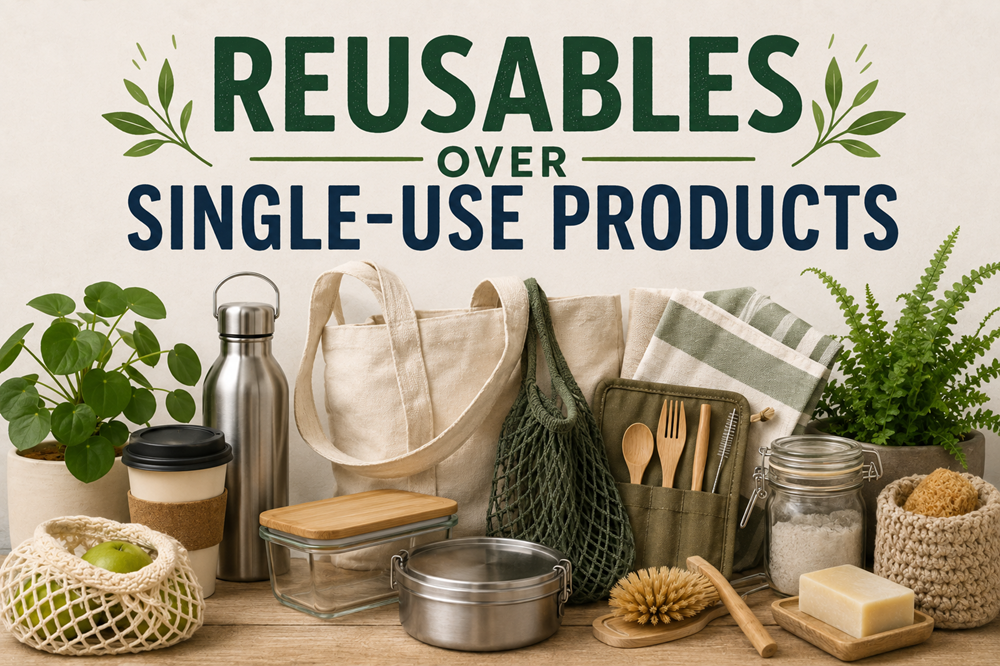
Swapping disposable items for reusable alternatives — beeswax wraps instead of cling film, a refillable water bottle instead of bought bottled water, cloth shopping bags, and reusable coffee cups — is one of the simplest ways to shrink your household’s plastic footprint. Many Glasgow cafés now offer small discounts for customers who bring their own cup, and the city’s tap water is safe and pleasant to drink straight from the mains.
Pros:
- Low ongoing cost after the initial purchase
- Immediately reduces single-use plastic and packaging waste
- Widely available in supermarkets, so no special trip required
- Small, gradual swaps are easy to introduce one at a time
Cons:
- Upfront cost for quality reusable items can be a barrier for some households
- Requires remembering to carry items when leaving the house
- Reusable products still need to be cleaned and maintained properly
- Not a complete solution on its own without other waste-reduction habits
4. Buying Secondhand and Repairing Instead of Replacing
Glasgow has a strong culture of charity shops, vintage stores, and repair cafés, particularly around the Southside and West End. Choosing secondhand furniture, clothing, and electronics — or repairing what you already own — cuts down on the waste generated by manufacturing new goods and keeps usable items out of landfill. Local repair events also teach practical skills like mending clothes or fixing small appliances.
Pros:
- Often significantly cheaper than buying new
- Extends the life of products and reduces manufacturing demand
- Supports local charities and community repair initiatives
- Unique, characterful finds compared to mass-produced goods
Cons:
- Finding specific items secondhand can take more time and patience
- Quality and condition vary, so some purchases carry more risk
- Repair skills or repair cafés aren’t always convenient or nearby
- Not practical for every category of household item, such as certain electricals or bedding
5. Reducing Food Waste Through Meal Planning and Local Produce
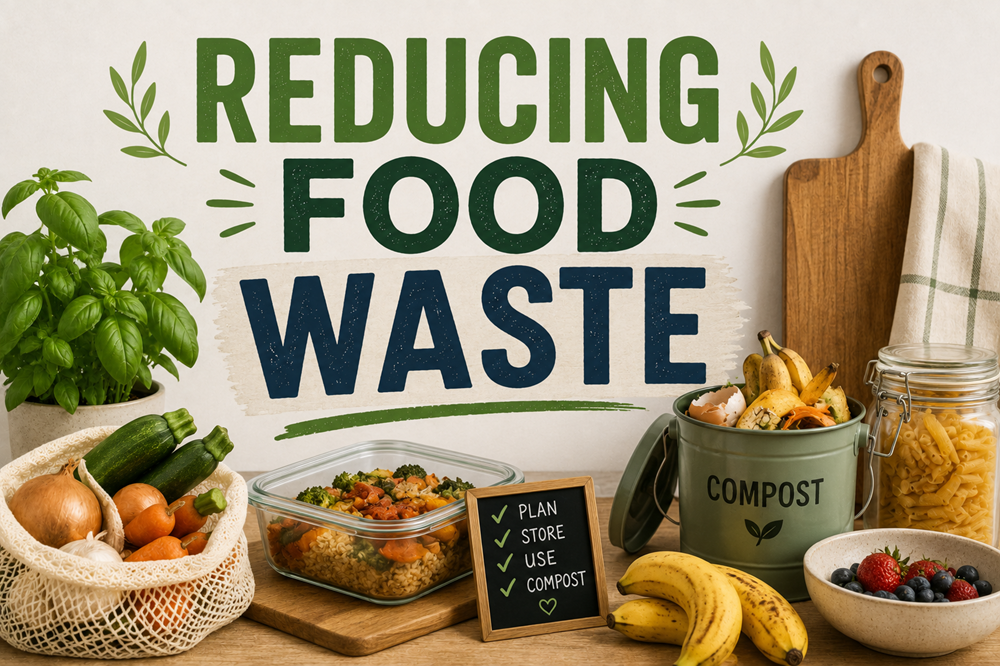
A large share of household waste in the UK is food that’s bought and never eaten. Planning meals around what’s already in the fridge, buying loose fruit and vegetables rather than pre-packaged portions, and shopping at Glasgow’s farmers’ markets or veg box schemes all help reduce this. Locavore’s veg box delivery and various farmers’ markets across the city make it easier to buy only what you need, fresh and unpackaged.
Pros:
- Saves money by reducing food bought and thrown away
- Loose produce cuts packaging waste at the same time as food waste
- Supports local farmers and shortens the supply chain
- Encourages healthier, more varied cooking habits
Cons:
- Requires more planning time than a single big weekly supermarket shop
- Farmers’ markets and veg box schemes may run on limited days or locations
- Loose produce can be pricier than multipack supermarket deals in some cases
- Takes a habit-building period before meal planning feels effortless
Conclusion and Recommendations
Zero waste living in Glasgow isn’t about achieving a perfect, rubbish-free household overnight. It’s about stacking small, sustainable choices that fit realistically into city life — a tenement flat, a busy work schedule, and a Scottish climate included. For beginners, the most practical starting point is usually a combination of approaches rather than committing fully to just one: start by mastering your council recycling and food waste caddy, since it costs nothing and is already available to you. Then introduce a handful of reusable swaps, such as a water bottle and shopping bags, before working refill shops or a veg box scheme into your routine as your confidence and habits build.
Households short on time may find the biggest impact from meal planning and correct recycling alone, while those near Govanhill, Dennistoun, or the West End are well placed to make the most of Glasgow’s refill and secondhand shopping scene. Whatever combination you choose, the goal of environment friendly living is progress, not perfection — every jar refilled, meal planned, or item repaired instead of replaced is genuine waste avoided.
FAQ: Zero Waste Living in Glasgow
Is it expensive to start living zero waste in Glasgow?
Not necessarily. Many first steps, like correctly using your council recycling bins or planning meals to reduce food waste, cost nothing. Refill shops and reusable products can involve some upfront spending, but they often save money over time through reduced food waste and bulk-buying discounts.
Where can I find zero-waste or refill shops in Glasgow?
Locavore has stores in Govanhill and Partick, Zero Waste Market is based in Dennistoun, and The Good Choice operates in Mount Florida. Roots and Fruits also has locations in the West End and Finnieston offering loose, packaging-free groceries.
What can and can’t I recycle in my Glasgow council bins?
Rules vary slightly depending on your building and bin type, so it’s worth checking Glasgow City Council’s website for your specific address. In general, blue bins take paper and card, purple bins take glass, plastics, and cans, and brown bins take garden and food waste where provided.
I live in a tenement flat with shared bins — can I still reduce waste?
Yes. Even without personal outdoor space, you can still use a small kitchen food caddy, buy loose produce, choose reusable items, and shop at nearby refill or secondhand shops. Waste reduction starts with what comes into your home, not just how it’s disposed of.
How do I start a zero waste lifestyle without feeling overwhelmed?
Pick one or two changes to start, such as switching to a reusable water bottle and using your food waste caddy properly. Add new habits gradually rather than trying to overhaul your entire household at once — sustainable change tends to stick better than sudden, drastic shifts.

Author: Sustainable Talks
Talk Green. Think Change. Act Sustainably. 🌍 Ideas, stories & actions for a greener future.