
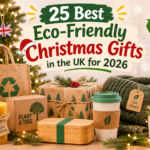

The best eco-friendly Christmas gifts in the UK are things people will actually use, finish or keep: solid shampoo bars, refillable cleaning kits, Fairtrade treats, reusable bottles, organic cotton basics, plants, and experiences that create no waste. Choose gifts with clear materials, minimal plastic packaging and a certification you can check, and avoid anything labelled “eco” without proof.
Christmas is the busiest gifting season of the year, and one of the most wasteful. Packaging piles up, novelty items go unused and wrapping paper fills the bin. The good news is that a greener Christmas does not have to cost more or feel less festive. This guide covers 25 sustainable gift ideas for UK shoppers, grouped by theme, with tips on stocking fillers, budgets, wrapping and spotting greenwashing.
Looking for gifts for other occasions? See our guide to the best eco-friendly gifts in the UK for 2026.
How to Choose a Truly Eco-Friendly Gift
A few simple rules make every purchase easier:
- Useful beats novel. A gift that gets used daily has a lower footprint per use than something that sits in a drawer.
- Consumables are safe bets. Food, soap and tea get used up, so they do not add clutter.
- Check materials and labels. Look for recognised marks such as FSC (wood and paper), GOTS (organic textiles), Fairtrade, Soil Association (organic) and Leaping Bunny (cruelty-free cosmetics).
- Look at the packaging. Prefer paper, card or reusable tins over plastic wrap and foam.
- Think second-hand. Preloved and vintage gifts are often the lowest-impact option of all.
- Be wary of vague claims. Words like “natural,” “green” and “eco” have no fixed meaning. Our guide on how to identify sustainable brands explains how to check.
Home and Kitchen Gifts
1. Refillable cleaning kit. A starter set with a glass or aluminium bottle and refill pouches or tablets cuts single-use plastic. Pair it with advice from our guide to washing-up liquid refills.
2. Beeswax or reusable food wraps. These replace cling film for covering leftovers, which is useful in a season full of shared dishes. Vegan versions use plant-based waxes.
3. Insulated stainless steel bottle or reusable coffee cup. A durable bottle replaces hundreds of disposable cups over its life. Choose a simple design that the person will actually carry.
4. Soy or beeswax candle in a refillable tin. Look for cotton wicks and a clear ingredient list. A tin or glass jar can be reused or recycled after the candle is finished.
5. Organic cotton or linen napkin set. Reusable napkins cut paper waste at every meal and look lovely on a festive table. Check for GOTS certification on organic cotton.
Bath and Body Gifts
6. Solid shampoo and conditioner bars. They last longer than many bottles, travel well and come without plastic. Check the ingredients for scalp and hair type.
7. Handmade natural soap set. Small-batch soaps wrapped in paper make an affordable gift. Look for palm-oil-free or sustainably sourced palm oil, and a full ingredient list.
8. Refillable skincare in glass or aluminium. Some brands offer refills for creams and serums, which cuts packaging over time. Include patch-test advice for sensitive skin.
9. Bamboo toothbrush and plastic-free dental kit. A small, practical present, ideal for stockings. Pair with toothpaste tablets in a tin and plastic-free floss.
10. Organic cotton towels or dressing gown. Soft, long-lasting textiles are used every day. GOTS certification gives you something verifiable.
Food and Drink Gifts
11. Fairtrade chocolate and coffee. Look for the Fairtrade mark and choose bars in paper or card wrapping. Dark chocolate with spices suits the season.
12. Loose-leaf tea in a refillable tin. A tea sampler gets used and enjoyed, and the tin can be refilled. This works well as a gift for colleagues and neighbours.
13. Local honey, jams and chutneys in glass jars. Buying from small UK producers cuts food miles, and glass jars can be reused or recycled. Check the label for where the food was made.
14. Seasonal UK-produced hamper. Build one yourself in a basket or crate with local treats, or choose a supplier that avoids plastic packaging and uses shredded paper filling.
15. Gift voucher for a local veg box or farm shop. Fresh, seasonal food from a local supplier is a gift that supports small growers and avoids clutter.
Fashion and Accessories
16. Wool or organic cotton scarf, hat and gloves. Natural fibres last longer than cheap synthetics. For wool, look for responsible sourcing standards such as the Responsible Wool Standard.
17. Preloved or vintage clothing voucher. Second-hand clothing is one of the lowest-impact gifts because nothing new is made. Many charity shops and resale sites sell gift cards.
18. Recycled or organic cotton socks. An affordable, useful stocking filler that most people will happily use.
19. Reusable tote bag. A strong tote made from recycled or organic cotton replaces dozens of plastic bags a year. Choose a design the recipient will actually use.
20. Rechargeable batteries and charger. A practical gift for toys, remotes and torches that cuts battery waste. Check the capacity and the number of charge cycles.
Garden, Kids and Experience Gifts
21. Seed, bulb or herb-growing kit. A kit with seeds, a pot and a guide suits beginners and keeps giving into spring. Use our guides on starting a sustainable garden on a budget and starting an organic garden to add a helpful note.
22. Potted plant in a terracotta pot. Herbs, houseplants and small shrubs are long-lasting gifts. Choose peat-free compost where possible. For small outdoor spaces, see our ideas for sustainable garden design in small backyards.
23. Wooden or second-hand toys. Look for FSC-certified wood, and check safety marks and age guidance. Preloved toys in good condition are a great low-waste option.
24. Experience gift or membership. Museum passes, workshop vouchers, cinema tickets or a membership to a wildlife or heritage charity create memories without creating waste.
25. Donation or tree-planting gift in their name. For the person who has everything, a donation to a registered charity is a meaningful choice. Include a card explaining what the gift will do.
Budget Guide: Eco-Friendly Gifts by Price
Prices vary by brand and retailer, so treat this as a rough guide.
| Budget | Ideas |
| Stocking fillers | Bamboo toothbrush set, socks, tea sampler, handmade soap, seed kit |
| Mid-range | Solid shampoo bars, insulated bottle, beeswax wraps, candles, scarf |
| Splurge | Organic cotton towels, refillable skincare set, hamper, experience or membership |
How to Wrap Gifts Sustainably
Wrapping is where many green gifts lose their shine. A few easy swaps:
- Use fabric (furoshiki-style), spare scarves or tea towels as wrapping the recipient can keep.
- Choose plain brown kraft paper with twine and dried foliage.
- Avoid glitter, foil and plastic ribbon, which are hard to recycle.
- Use the scrunch test: if wrapping paper stays scrunched in your hand, it is usually recyclable. If it springs back, it probably contains plastic or foil.
- Reuse gift bags, boxes and ribbon year after year.
Recycling rules differ between councils, so check your local council’s guidance.
How to Avoid Greenwashing in Christmas Gift Guides
Festive marketing is full of green language. Be cautious with vague terms, check for specific materials and certifications, and look for brands that explain where and how products are made. Be especially careful with “biodegradable” or “compostable” claims, which often need industrial facilities rather than a home compost bin. For a fuller checklist, read how to identify sustainable brands. You can also find more voices on this topic in our list of the best sustainability blogs in the UK.
Final Thoughts
A sustainable Christmas is not about spending more or giving less. It is about choosing gifts that are meaningful, useful and made with care for people and the planet. Start with one or two swaps this year, such as a solid shampoo bar, a plastic-free wrapping option or an experience gift, and build from there.
Want more ideas? Browse our eco-friendly gift guide and affordable eco-friendly cleaning products for practical swaps you can gift or use at home.
Frequently Asked Questions
The best ones are useful, long-lasting or consumable, such as solid shampoo bars, refillable cleaning kits, Fairtrade chocolate, reusable bottles, organic cotton textiles and experience gifts. Choose items with clear materials, minimal plastic packaging and verifiable certifications.
Bamboo toothbrushes, handmade soap, loose-leaf tea, seed kits, reusable straws or cutlery, organic cotton socks and rechargeable batteries all make low-waste stocking fillers. Avoid small plastic novelty items that are likely to be thrown away quickly.
Some cost more upfront, but many are competitively priced, and durable items can save money over time. Second-hand gifts, homemade gifts, consumables and plant-based items can all be affordable.
Experiences, second-hand items, consumables you will finish and things the person genuinely needs tend to have the lowest impact. A gift that is used often and kept for years usually beats a new item that is rarely used.
Look for specific information about materials, sourcing and packaging, and for recognised certifications such as FSC, GOTS, Fairtrade or Soil Association. Be sceptical of vague words like “natural” or “green” without detail.
Plain paper without glitter, foil, plastic coating or tape is usually recyclable. Try the scrunch test, and check your local council’s guidance, since rules vary by area.
Consumables such as food, tea or soap, an experience, a donation in their name or a useful everyday item they will not buy themselves are all good options.
Order as early as you can. Small and independent makers can have longer lead times and earlier cut-off dates, so check each retailer’s last order date for Christmas delivery.
Not always. The impact depends on materials, how far a product travels, how long it lasts and how it is disposed of. Plastic-free is one useful factor, but it is not the only one.

Author: Sustainable Talks
Talk Green. Think Change. Act Sustainably. 🌍 Ideas, stories & actions for a greener future.