
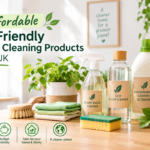


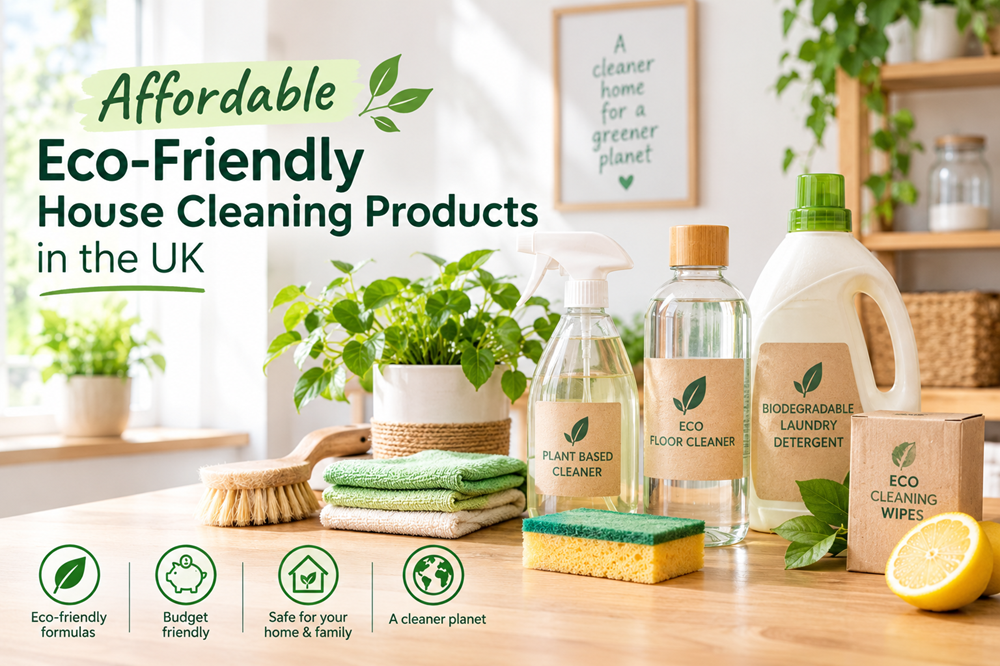
Keeping your home clean does not have to mean spending a fortune or relying on harsh, heavily packaged cleaning products. As more UK households become aware of their environmental impact, affordable eco-friendly house cleaning products in the UK are becoming an increasingly popular alternative.
From refillable cleaning solutions and reusable cloths to concentrated formulas and simple plant-based ingredients, there are many ways to create a greener cleaning routine without significantly increasing your household budget.
The key is knowing what to look for and avoiding products that use sustainability as nothing more than a marketing claim.
In this guide, we explore affordable options for sustainable home cleaning, how to choose genuinely eco-friendly products, ways to reduce packaging waste and practical tips for cleaning different areas of your home.
What Are Eco-Friendly House Cleaning Products?
Eco-friendly house cleaning products are designed with the environment in mind. Depending on the product, this can include considerations such as ingredients, packaging, manufacturing, transportation, water usage and end-of-life disposal.
Common characteristics may include:
- Plant-based or responsibly selected ingredients
- Concentrated formulas
- Refillable packaging
- Recycled or recyclable packaging
- Minimal plastic
- Reusable cleaning tools
- Biodegradable or readily degradable ingredients where appropriate
- Responsible manufacturing practices
However, “eco-friendly” does not automatically mean a product is sustainable in every respect.
A product may use plant-based ingredients but come in excessive single-use packaging. Another may use recycled plastic but require frequent replacement.
For this reason, it is useful to consider the complete lifecycle of a cleaning product rather than focusing on one feature.
Why Choose Affordable Eco-Friendly Cleaning Products?
Switching to greener cleaning products can offer several benefits for households.
Reduce Household Waste
Cleaning products often come in plastic bottles that are discarded once empty.
Refill systems and concentrated products can reduce the number of bottles required over time.
Reduce Your Environmental Impact
Choosing products with responsible ingredients, packaging and manufacturing processes can help reduce the environmental impact associated with everyday cleaning.
Save Money Over Time
Eco-friendly products are not always more expensive.
Concentrated formulas, refill pouches and reusable cleaning tools can sometimes provide better long-term value than repeatedly purchasing disposable alternatives.
Build a More Sustainable Routine
Sustainable cleaning does not need to involve a complete lifestyle change.
Replacing products gradually can make the transition easier and more affordable.
1. Start with Reusable Cleaning Cloths
One of the simplest affordable changes is replacing disposable cleaning wipes and paper towels with reusable cloths.
Microfibre cloths, washable cotton cloths and other reusable alternatives can be washed and used repeatedly.
They can be used for:
- Kitchen surfaces
- Bathroom surfaces
- Windows
- Furniture
- Dusting
- General household cleaning
When choosing reusable cloths, look for durable products that can withstand repeated washing.
The environmental benefit depends partly on how they are washed, so washing full loads and following the manufacturer’s instructions can help reduce unnecessary resource use.
2. Choose Concentrated Cleaning Products
Concentrated cleaning products can be a practical option for households looking to reduce both cost and packaging.
Instead of buying a large bottle of ready-to-use solution every time, concentrated products are diluted according to the manufacturer’s instructions.
This can mean:
- Less packaging
- Lower transport weight
- Longer product life
- Potentially lower cost per use
Always follow the manufacturer’s dilution instructions. Using more concentrate than recommended does not necessarily provide better cleaning results.
3. Try Refillable Cleaning Products
Refill systems are becoming increasingly popular in the UK.
Instead of purchasing a completely new spray bottle each time, you can keep the original bottle and purchase a refill.
Some systems use concentrated tablets or liquids that are mixed with water at home.
Before choosing a refill product, consider:
- Price per refill
- Packaging material
- Cleaning performance
- Ingredients
- Availability
- Shipping requirements
A refill system that you can easily purchase locally or combine with other household shopping may be more convenient than a product that requires frequent deliveries.
4. Use Baking Soda for Suitable Cleaning Tasks
Baking soda is an inexpensive household ingredient that can be useful for certain cleaning applications.
It can help with tasks such as:
- Removing odours
- Cleaning some surfaces
- Freshening certain areas
- Helping lift some types of dirt
However, not every surface is suitable for abrasive cleaning methods. Always check the manufacturer’s guidance for delicate surfaces and test an unfamiliar cleaning method in a small area first.
5. Consider White Vinegar for Appropriate Uses
White vinegar is another inexpensive ingredient often used in household cleaning.
Its acidic properties can make it useful for some tasks involving mineral deposits and general cleaning.
However, vinegar is not suitable for every surface. It should not be used on certain natural stone surfaces, and it should never be mixed with bleach or products containing bleach.
Always check whether a surface is compatible before using homemade cleaning solutions.
6. Choose Eco-Friendly Laundry Products
Laundry is another area where households can make sustainable changes.
Consider products such as:
- Concentrated laundry detergents
- Refillable laundry products
- Products with recyclable packaging
- Laundry products designed for lower-temperature washing
Washing clothes at an appropriate lower temperature can also help reduce energy consumption where the garment and detergent allow it.
Avoid automatically choosing a product simply because it uses words such as “natural” or “green”. Look for clear ingredient and packaging information.
7. Look for Plastic-Free Cleaning Alternatives
Many household cleaning products can be purchased in alternatives that reduce plastic packaging.
Examples include:
- Cleaning tablets
- Powder-based cleaners
- Bar soaps
- Refillable products
- Cardboard-packaged products
- Reusable spray bottles
However, plastic itself is not necessarily the only sustainability consideration.
A durable reusable plastic bottle that lasts for many years may be preferable to repeatedly replacing a poorly made alternative.
The overall lifecycle matters.
8. Choose Reusable Sponges and Brushes
Traditional cleaning sponges can wear out quickly.
Look for durable brushes, washable cleaning pads and reusable alternatives where practical.
Products made from natural fibres can be an option for some cleaning tasks, while durable recycled or long-lasting materials may be preferable for others.
Consider how frequently the product needs replacing and whether it can be cleaned or reused.
9. Buy Multi-Purpose Cleaning Products
Instead of purchasing a separate product for every room, consider using a suitable multi-purpose cleaner for several tasks.
A single product may be suitable for:
- Kitchen surfaces
- Tables
- Shelves
- General surfaces
- Some bathroom areas
This can reduce the number of bottles stored at home and potentially reduce household spending.
However, specialist products may still be necessary for particular surfaces or cleaning requirements.
10. Make Your Own Cleaning Solutions Carefully
DIY cleaning solutions can sometimes be an affordable way to reduce packaging and control ingredients.
Common household ingredients include:
- Baking soda
- White vinegar
- Water
- Unscented soap
But DIY cleaning requires care.
Never mix bleach with vinegar, ammonia or other incompatible cleaning products. Dangerous gases can be produced by some combinations.
Always research a cleaning method carefully and check whether it is appropriate for the surface.
How to Find Affordable Eco-Friendly Cleaning Products
Price comparison is important if you are trying to maintain a sustainable cleaning routine on a budget.
Compare Cost Per Use
Do not compare products based only on the price of the bottle.
Instead, consider how many cleaning applications you can get from each product.
A £5 concentrated cleaner may offer more uses than a £3 ready-to-use product.
Buy Only What You Need
Buying large quantities is not always sustainable if products expire or remain unused.
Purchase according to your household’s actual cleaning needs.
Choose Reusable Products
Spending slightly more on a durable reusable cleaning tool can sometimes reduce long-term costs.
Look for Refill Options
Once you have a reusable bottle or container, refill products may be more economical than repeatedly buying complete products.
Avoid Unnecessary “Specialist” Products
A cupboard full of different cleaning products can become expensive.
Where appropriate, choose versatile products that can safely handle multiple cleaning tasks.
Affordable Eco-Friendly Cleaning by Room
Kitchen
For everyday kitchen cleaning, consider:
- Refillable multi-purpose cleaner
- Reusable cloths
- Washing-up products with refill options
- Durable brushes
- Baking soda for appropriate applications
Always use products suitable for food-contact surfaces and follow product instructions.
Bathroom
A sustainable bathroom cleaning kit might include:
- Refillable bathroom cleaner
- Reusable cloths
- Durable toilet brush
- Suitable descaling product
- Reusable cleaning pads
Bathrooms often require products capable of dealing with limescale, particularly in hard-water areas.
Living Room
For living areas, reusable dusting cloths and multi-purpose cleaners can cover many routine tasks.
Vacuum cleaners should also be maintained properly to ensure efficient operation and extend equipment life.
Bedroom
Bedrooms generally require simple cleaning tools.
A reusable cloth, suitable surface cleaner and vacuum cleaner can handle most regular cleaning requirements.
Wash bedding according to care instructions and avoid unnecessarily frequent washing when it is not required.
How to Avoid Greenwashing
As sustainable products become more popular, some companies may use vague environmental claims.
Be cautious of phrases such as:
- “100% green”
- “Earth-friendly”
- “Chemical-free”
- “Completely natural”
without supporting information.
Instead, look for specific details about:
- Ingredients
- Packaging
- Recycled content
- Refill systems
- Manufacturing
- Certifications
- Disposal
The more specific and transparent the information, the easier it is to make an informed decision.
Eco-Friendly Cleaning on a Budget: Simple Starter Kit
You do not need dozens of products to begin.
A basic sustainable cleaning kit could include:
| Item | Purpose |
| Reusable cloths | General cleaning |
| Refillable spray bottle | Multi-purpose cleaning |
| Concentrated cleaner | Multiple household surfaces |
| Baking soda | Selected cleaning and odour tasks |
| Suitable vinegar | Selected cleaning tasks |
| Durable brush | Kitchen and bathroom cleaning |
| Reusable cleaning pad | Scrubbing |
| Eco-conscious laundry product | Clothes and linens |
Start with products that replace the most frequently purchased disposable items.
Common Mistakes to Avoid
Buying Too Many Products
More products do not necessarily mean a cleaner home.
Ignoring Product Instructions
Using excessive cleaning solution can waste product and potentially damage surfaces.
Assuming Expensive Means Sustainable
A higher price does not automatically indicate better environmental performance.
Replacing Everything at Once
There is no need to throw away perfectly usable cleaning products simply because you want to become more sustainable.
Use existing products responsibly and replace them with better alternatives as they run out.
Focusing Only on Ingredients
Packaging, durability, transportation and disposal also matter when assessing sustainability.
Final Thoughts
Creating an affordable, eco-friendly cleaning routine does not require expensive products or a complete change in your lifestyle.
Start with simple steps such as switching to reusable cloths, choosing refillable or concentrated products, reducing unnecessary packaging and buying multi-purpose cleaners.
The most sustainable approach is often to use what you already have, waste less and choose durable alternatives when replacements are necessary.
By considering both price and environmental impact, UK households can create practical cleaning routines that are kinder to their budgets and the planet.
Share Your House Cleaning Expertise
Do you have useful tips, professional experience or expert insights about sustainable home cleaning? Write for us and share your knowledge with readers interested in greener and more responsible household choices.
We are accepting house cleaning guest posts covering topics such as eco-friendly cleaning products, sustainable cleaning routines, natural home cleaning, green cleaning tips, household cleaning and related subjects.
Have an article idea? Write for us and submit your guest post house cleaning article to Sustainables Talks.
FAQs About Eco-Friendly House Cleaning Products in the UK
Reusable cleaning cloths, refillable cleaners, concentrated products and selected household ingredients such as baking soda can be affordable options. The best choice depends on price per use, durability and packaging.
Not necessarily. Some products cost more upfront but may provide better value through refills, concentration or reusable packaging. Compare the cost per use rather than only the purchase price.
Start by using reusable cloths, reducing disposable wipes and paper towels, choosing suitable multi-purpose products and avoiding unnecessary specialist cleaners.
Some homemade solutions can reduce packaging and use simple ingredients, but they are not automatically safer or more sustainable. Always check whether ingredients are appropriate for the surface and never mix incompatible cleaning chemicals.
Although both are commonly used for cleaning, combining them causes an acid-base reaction that largely neutralises their individual properties. For specific cleaning tasks, they are generally more useful when used appropriately and separately.
They can be. Refillable systems can reduce packaging waste and may lower the cost per use. Compare the refill price, packaging and cleaning performance before choosing one.
Choose refillable containers, concentrated formulas, powder or tablet formats where suitable, reusable cleaning tools and products with recyclable or minimal packaging.
Look for transparent information about ingredients, packaging, manufacturing, refill options, recycled content and relevant certifications. Avoid relying solely on vague environmental claims.

Author: Sustainable Talks
Talk Green. Think Change. Act Sustainably. 🌍 Ideas, stories & actions for a greener future.