

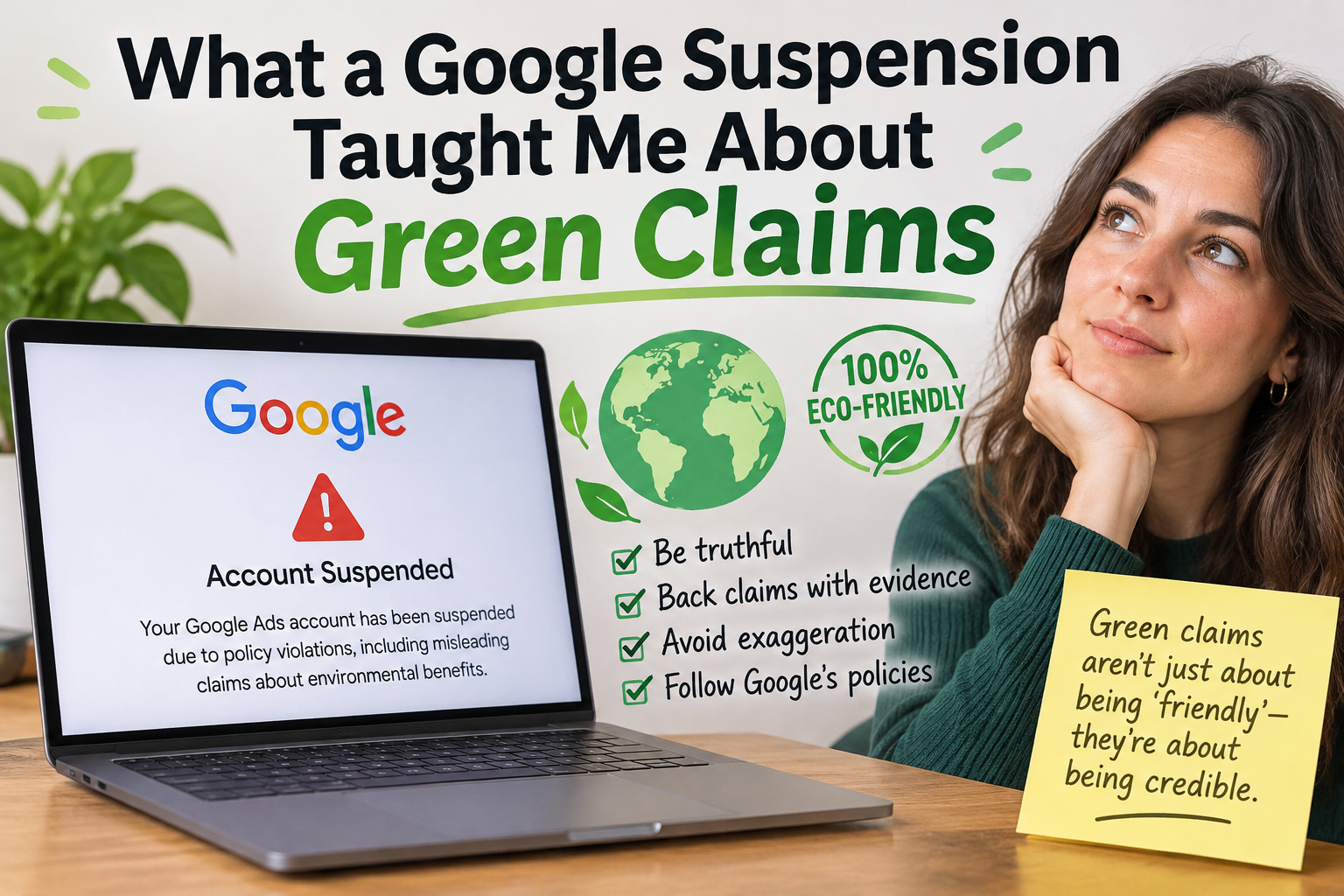
When you run a small eco business, you spend a lot of time thinking about what goes into your products. I check ingredient lists, ask suppliers questions, and turn down products that don’t meet my standards. My goal when starting EcoElara was, and still is, to provide customers with products that are true to their word. So when Google suspended my shop’s product listings for “misrepresentation”, my first reaction was confusion. I wasn’t trying to mislead anyone. Quite the opposite.
Looking back, it was one of the most useful things that has happened to my business.
What happened
EcoElara is a curated online shop for eco cleaning, laundry and personal care products. I choose products from a range of brands, so customers don’t have to research every one themselves.
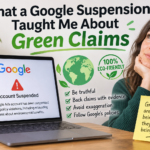
Like many online shops, I list my products on Google Merchant Center, the service that shows products in Google Shopping. One day, my account was suspended for misrepresentation.
Misrepresentation is a broad category. It can cover anything from missing business information to claims a shop can’t fully back up. So rather than looking for one quick fix, I had to look at my whole shop through fresh eyes, the way a cautious customer or a regulator might.
The surprise: everyday eco words
The biggest lesson was about language. Words that are used everywhere in the eco world turned out to be some of the hardest to stand behind.
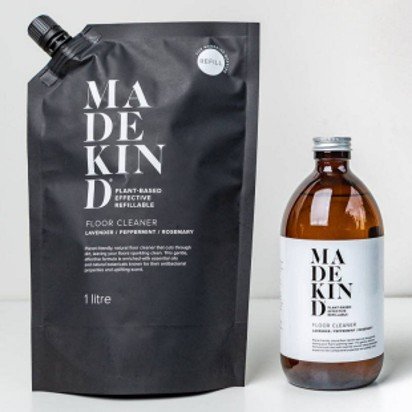
“Plastic-free.” It sounds simple. But is the pump plastic-free? The seal inside the lid? The tape on the parcel? A product can be mostly plastic-free and still contain a small amount, and “mostly” isn’t what the label says.
Plastic isn’t always the enemy. Used well, it can make something that lasts for years, or store products safely. But do we really need plastic cleaning bottles that can’t be refilled? Or plastic sponges that can shed microplastics every time we wash up?
“Chemical-free.” Everything is made of chemicals, including water, lemons and vinegar. It’s a phrase shoppers understand as “gentle” or “natural”, but taken literally it can’t be true.
What matters is how and why a chemical is used. How does it affect our health, our skin, our airways? How does it affect the environment: our waterways, animals and soil? Why is it there at all? Is it a cheaper alternative? Is it a necessity? Do we need extra foam in our detergents and toothpaste? Do we need a pine-fresh smell to feel our homes are clean?
“Eco-friendly” and “natural”. These sound positive but don’t say anything specific. Without explaining what makes a product better, they’re hard to prove.
I’ve always had an issue with these terms. Walk down a supermarket aisle labelled “eco-friendly” or “organic”, and ask yourself: what are the other aisles? Perhaps those should be the ones with labels, something more honest like “unnatural” or “eco-enemy”. I’m only half joking.
None of these words were chosen to mislead. They’re the language of the whole sector. But that’s exactly why they’re worth questioning. If a phrase can’t be backed up, it shouldn’t be doing the work of persuading a customer.
The housekeeping
Once I stopped looking for a single culprit, I found a few things to tidy up. None of them were dramatic on their own. Together, they made a real difference.
- Product details. I made sure names, sizes, prices and descriptions were consistent everywhere they appeared.
- Wording. I rewrote descriptions to say exactly what a product is and does, rather than relying on broad eco labels. It was slow, unglamorous work. But every fix made the shop clearer and easier to trust.
What I was already doing, and now show
The suspension didn’t change how I choose products. It confirmed I was doing the right thing. The problem was that my website didn’t show it.
I read the paperwork. I ask suppliers for their safety data sheets and read them properly. They tell me what’s really in a product, how it should be stored, and whether there’s anything customers need to know. Sometimes they raise questions, and I ask them. Most suppliers are glad a stockist is paying attention.
I question claims, including my suppliers’. If a product is described as “anti-bacterial”, for example, I want to know what evidence sits behind that before I repeat it. A claim on someone else’s label becomes my claim the moment I put it on my website.
I explain how I choose. I created a page on my website showing how I choose products, including an Ingredient Checker, so customers can see my reasoning for themselves rather than taking my word for it.
I’m honest about trade-offs. Some things still need plastic for now, such as a trigger spray that works well and lasts for years. I’d rather say that openly than pretend it isn’t there.
Why it made EcoElara stronger
Greenwashing hurts the people who are trying hardest to do the right thing. Shoppers who care about the planet are often the ones most let down by vague promises.
Being specific protects them, and it protects my business too. A customer who understands why I chose a product is more likely to trust the next recommendation. And when every claim on my site is one I can back up, I don’t have to worry about it.
It also shows me which suppliers can back up their claims. The best ones make wonderful, effective products and reply quickly with the evidence I need. When a supplier can’t, or doesn’t reply, that tells me something too.
I’d still rather not have been suspended. But I’m a better retailer because of it.
A green claims checklist for small eco brands
I want to be confident that the products on EcoElara are true to their word. If you sell eco products, here are the questions I ask before any claim goes on my website.
1. Can I prove it? If someone asked for evidence tomorrow, could I show it?
2. Is it specific? “Refillable aluminium bottle” says more than “eco-friendly bottle”.
3. Is it true of the whole product? Including the lid, pump, packaging and delivery.
4. Whose claim is it? If it came from a supplier, have I checked it, or am I just repeating it?
5. Does my paperwork match? Barcodes, product names, sizes and safety data sheets should all agree.
6. Would a customer read it the same way I do? If a phrase could be understood more broadly than I mean it, rewrite it.
7. Am I honest about the trade-offs? Customers respect “this part still contains plastic, and here’s why” far more than a promise that turns out to be wrong.
In the UK, the Competition and Markets Authority’s Green Claims Code is a good place to start. It’s written for businesses and is easy to read.
Final thought
It’s tempting to see rules about green claims as red tape. I see them differently. They’re there to protect the customers we all want to serve, and the honest businesses trying to serve them.
If a suspension, a supplier question or a customer query makes you look at your shop more closely, take it as an opportunity. I did, and EcoElara is stronger for it.

Author: Sandra Wilson
Sandra is the founder of EcoElara, a UK online shop for checked eco cleaning, laundry and personal care products from a range of trusted brands. EcoElara was named Highly Commended, The Green Pioneer. Find out how Sandra chooses products at ecoelaraltd.com.