

Introduction
Single-use plastic has become a major part of everyday shopping, from water bottles and food packaging to cleaning products and personal-care essentials. Although recycling helps manage plastic waste, reducing unnecessary plastic consumption and reusing products can make a meaningful difference.
Across the UK, more consumers are exploring refillable products as a practical way to reduce packaging waste. From reusable water bottles and refillable cleaning sprays to shampoo bars and food storage containers, sustainable alternatives are becoming easier to incorporate into daily routines.
Refillable products allow consumers to reuse containers, purchase concentrated refills or replenish everyday essentials without repeatedly buying new packaging. They can also help households reduce waste and make more conscious purchasing decisions.
If you are looking for simple ways to reduce single-use plastic, here are 12 refillable and reusable products worth considering for a more sustainable lifestyle.
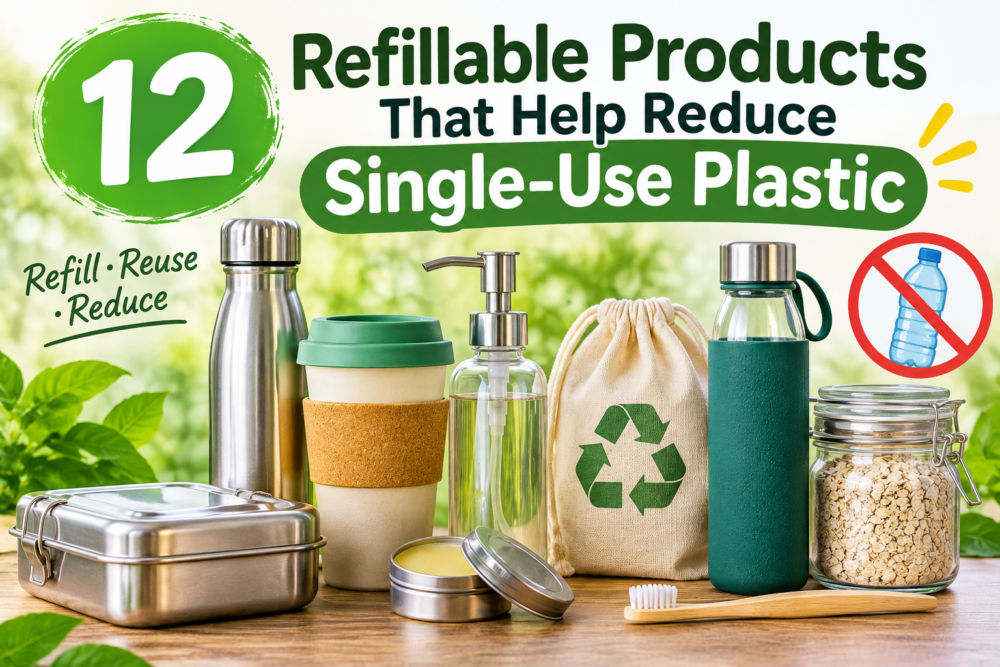
12 Refillable Products That Help Reduce Single-Use Plastic
1. Reusable Water Bottles
Best for: Reducing Single-Use Plastic Water Bottles
Reusable water bottles are among the easiest sustainable swaps for everyday life. Instead of purchasing bottled water regularly, you can carry a refillable bottle made from stainless steel, glass or durable reusable materials.
Stainless steel bottles are particularly popular because they are durable, easy to clean and available in insulated designs that keep drinks hot or cold.
In the UK, public water refill points and participating cafés can make it easier to refill your bottle while travelling, shopping or commuting.
What to look for:
- Durable stainless steel or glass construction
- Leakproof lids
- Easy-to-clean design
- Long-lasting materials
Environmental benefit: Helps reduce demand for single-use plastic water bottles.
2. Reusable Coffee Cups
Best for: Replacing Disposable Takeaway Cups
For people who regularly buy takeaway coffee, a reusable cup can be a practical everyday alternative.
Reusable coffee cups are available in stainless steel, glass, silicone and other durable materials. Many are designed with secure lids, making them suitable for commuting, travelling and office use.
Some UK cafés also offer incentives or discounts when customers bring their own reusable cups.
What to look for:
- Leak-resistant lids
- Durable materials
- Comfortable grip
- Easy cleaning and portability
Environmental benefit: Reduces reliance on disposable takeaway cups when used repeatedly.
3. Refillable Cleaning Spray Bottles
Best for: Reducing Household Cleaning Packaging
Cleaning sprays are common household essentials, but repeatedly purchasing new plastic bottles can create unnecessary packaging waste.
Refillable cleaning spray systems provide an alternative. Customers can purchase a reusable bottle and replenish it using concentrated cleaning tablets, drops or liquid refills.
Some brands, including Homethings and OceanSaver, offer concentrated cleaning products designed for use with reusable bottles.
What to look for:
- Durable reusable spray bottles
- Concentrated cleaning refills
- Clearly labelled dilution instructions
- Refill packaging with reduced material use
Environmental benefit: Reduces the need to purchase a new ready-to-use plastic spray bottle each time.
4. Refillable Laundry Detergent Containers
Best for: Sustainable Laundry Routines
Laundry detergents are frequently purchased household products, often packaged in plastic bottles or other disposable containers.
Refillable laundry detergent systems allow customers to reuse a container and replenish it with larger-volume refills, concentrated formulas or detergent tablets.
Some brands also offer laundry sheets and powder detergents in alternative packaging.
What to look for:
- Refill options from established brands
- Concentrated detergent formulas
- Recyclable or reusable packaging
- Products suitable for your washing machine and laundry needs
Environmental benefit: Can reduce packaging waste associated with frequently purchasing new detergent bottles.
5. Refillable Hand Wash Dispensers
Best for Reducing Plastic Waste in Bathrooms
Hand wash is an everyday essential found in almost every household. Instead of purchasing a new plastic dispenser whenever the soap runs out, consider using a durable refillable dispenser. If you are unsure whether to refill or switch to solid soap, our comparison of soap bars vs liquid soap explains which is the more eco-friendly choice.
Glass, ceramic and stainless steel dispensers can be reused for years. You can replenish them using hand wash refills, larger containers or concentrated hand wash products.
What to look for:
- Reusable glass or durable dispensers
- Refill packs or bulk hand wash
- Easy-to-clean pump mechanisms
- Suitable formulations for regular use
Environmental benefit: Helps reduce the number of disposable hand wash bottles purchased.
6. Refillable Shampoo and Conditioner Products
Best for Reducing Plastic Packaging in Haircare
Shampoo and conditioner bottles are among the commonly replaced plastic containers in personal-care routines.
Refillable shampoo and conditioner systems allow consumers to keep their existing bottles and replenish them using refill pouches, bulk products or refill stations.
Another option is shampoo and conditioner bars, which generally come without conventional plastic bottles and can last through multiple washes depending on their size and use.
UK consumers can explore refill-focused retailers and brands such as Faith in Nature and refill shops offering haircare products.
What to look for:
- Refillable shampoo and conditioner bottles
- Concentrated or bulk refill options
- Shampoo and conditioner bars
- Ingredients suited to your hair type
Environmental benefit: Helps reduce the demand for disposable haircare packaging.
7. Refillable Deodorant Cases
Best for Sustainable Personal Care
Conventional deodorant packaging can include multiple materials, making disposal and recycling more complicated.
Refillable deodorant systems offer an alternative by allowing customers to keep a reusable case and replace only the deodorant refill.
Brands such as Wild and Fussy offer refillable deodorant systems that are designed to reduce packaging waste compared with repeatedly purchasing complete products.
What to look for:
- Durable reusable outer cases
- Compatible replacement refills
- Refill packaging with reduced plastic
- Formulations that suit your personal preferences
Environmental benefit: Reduces the need to replace the entire deodorant container after each use.
8. Reusable Food Storage Containers
Best for Reducing Disposable Food Packaging
Reusable food storage containers are useful for storing leftovers, packing lunches and carrying snacks.
Glass, stainless steel and durable food-grade containers can replace many disposable plastic bags and takeaway food containers.
They are also useful for shopping at zero-waste stores, For work and school, see our picks for the best eco-friendly lunch boxes in the UK, where customers can bring suitable containers to purchase dry groceries and other refillable products.
What to look for:
- Food-safe materials
- Leakproof lids
- Easy-to-clean surfaces
- Durable construction
- Suitable sizes for different storage needs
Environmental benefit: Reduces dependence on disposable food storage bags and containers.
9. Reusable Beeswax and Plant-Based Food Wraps
Best for Replacing Single-Use Cling Film
Cling film is commonly used to cover leftovers and wrap food. Reusable beeswax wraps and plant-based alternatives can offer a longer-lasting option for certain food storage needs.
These wraps can be used to cover bowls, wrap sandwiches and store some fruits and vegetables.
Beeswax wraps are generally cleaned and reused according to the manufacturer’s instructions. Vegan alternatives may use plant-based waxes instead.
What to look for:
- Reusable and washable materials
- Food-contact suitability
- Plant-based alternatives if avoiding beeswax
- Clear care and maintenance instructions
Environmental benefit: Helps reduce the use of disposable cling film for suitable food storage applications.
10. Reusable Shopping and Produce Bags
Best for Plastic-Free Grocery Shopping
Reusable shopping bags are a simple alternative to disposable carrier bags.
Fabric, cotton, jute and durable recycled-material bags can be used repeatedly for groceries, shopping trips and everyday errands.
Reusable mesh produce bags are also useful when purchasing loose fruits and vegetables, helping reduce the need for small plastic bags.
What to look for:
- Strong stitching and durable handles
- Washable materials
- Lightweight, foldable designs
- Reusable mesh bags for loose produce
Environmental benefit: Helps reduce demand for single-use shopping and produce bags when the alternatives are used repeatedly.
11. Refillable Dishwashing Liquid Bottles
Best for Reducing Kitchen Plastic Waste
Dishwashing liquid is another regularly purchased household essential that often comes in plastic bottles.
A refillable dishwashing dispenser can be used repeatedly with larger refill containers or products purchased from local refill shops. For specific options, see our guide to the best washing-up liquid refills in the UK.
Some UK refill shops also allow customers to bring their own containers and purchase the amount of washing-up liquid they need.
What to look for:
- Durable dispensers
- Bulk or refillable washing-up liquid
- Clearly labelled ingredients
- Suitable cleaning performance
Environmental benefit: Reduces the need to purchase a new plastic dishwashing bottle each time.
12. Reusable Water Filter Bottles and Jugs
Best for Reducing Bottled Water Purchases
Reusable water filter bottles and jugs provide another option for households looking to reduce their dependence on bottled water.
These products use replaceable filter cartridges to improve certain aspects of water quality, depending on the filtration technology.
Instead of purchasing individual bottled water products, consumers can use a reusable bottle or jug and replace the filter when required.
What to look for:
- Reusable bottle or jug construction
- Replacement filters available separately
- Clearly explained filtration capabilities
- Easy-to-clean components
Environmental benefit: Can reduce purchases of single-use bottled water, although used filter cartridges and replacement components still need appropriate disposal.
How to Choose the Right Refillable Products
Before purchasing refillable products, consider a few important factors:
- Check refill availability: Make sure replacement refills are easy to purchase online or from nearby shops.
- Choose durable materials: Look for products designed to withstand repeated use.
- Compare packaging: Not all refill pouches are recyclable, so check local recycling instructions.
- Consider product lifespan: A reusable product provides more value when it lasts long enough to offset its manufacturing impact.
- Buy only what you need: Avoid purchasing unnecessary products simply because they are marketed as sustainable. Our guide on how to identify sustainable brands shows how to check refill and packaging claims before you buy.
- Check cleaning and maintenance instructions: Proper care helps extend the lifespan of reusable products.
According to Which?, concentrated refills can offer packaging and transportation advantages, but the overall environmental benefit depends on the refill format, product and how it is used.
Which?+1
Benefits of Switching to Refillable Products
Switching to refillable products can support more sustainable everyday habits in several ways:
- Less packaging waste: Reusing containers reduces the need for new packaging.
- Lower dependence on single-use plastic: Refillable systems provide alternatives to disposable bottles and containers.
- Convenient shopping: Many refills are available online and through local zero-waste shops.
- Potential long-term savings: Buying refills can be more economical than repeatedly purchasing complete products.
- More conscious consumption: Refillable products encourage consumers to think about product lifespan and packaging.
The most effective approach is to prioritise reuse and refill before considering alternative disposable materials.Refill kits also make thoughtful presents, so see our guide to eco-friendly Christmas gifts in the UK.
Share Your Sustainable Ideas with Sustainable Talks
Are you passionate about reducing plastic waste, sustainable living or eco-friendly products? Sustainable Talks invites sustainability enthusiasts, eco-conscious entrepreneurs, environmental writers and sustainable businesses to share their knowledge and experiences.
Whether you have practical tips on plastic-free living, product recommendations or inspiring stories about sustainable alternatives, your contribution can help readers make more environmentally responsible choices.
Want to share your story?
Visit our Write for Us page to explore guest posting opportunities and contribute valuable content to the sustainable living community.
Frequently Asked Questions (FAQs)
Refillable products are items designed to be used multiple times by replenishing their contents instead of purchasing an entirely new product. Examples include refillable cleaning bottles, shampoo dispensers, deodorant cases and reusable water bottles.
Some useful options include reusable water bottles, coffee cups, refillable cleaning sprays, laundry detergent containers, shampoo bottles, hand wash dispensers, food storage containers and reusable shopping bags.
Refillable products can help reduce packaging waste when they are reused multiple times. Their overall environmental impact depends on the materials, manufacturing process, transportation, refill packaging and number of times they are reused.
You can find refillable products at independent zero-waste shops, eco-friendly online retailers, selected supermarkets and dedicated refill stores. Some brands also offer direct-to-consumer refill subscriptions.
Refillable cleaning products can be a practical choice for households that regularly purchase cleaning supplies. Reusing spray bottles and purchasing concentrated refills can reduce packaging waste and may offer better value over time.
Refillable shampoo and conditioner products allow customers to reuse existing bottles by purchasing replacement refills. Some refill systems use concentrated formulas, while others offer larger refill containers or refill stations.
Yes, some refillable products can reduce long-term costs because customers only need to purchase replacement contents rather than a completely new container. However, savings depend on refill prices, product quantities and usage.
Reusable products are designed to be used repeatedly, such as water bottles and food containers. Refillable products are designed to have their contents replenished, such as hand wash dispensers and cleaning spray bottles. Some products are both reusable and refillable.
Start by carrying a reusable water bottle and shopping bag, switching to refillable cleaning products, using reusable food containers and choosing refillable personal-care products. Small, consistent changes can help reduce everyday plastic consumption.
Not all refill pouches can be recycled through household collections in the UK. Check the packaging instructions and your local council’s recycling guidance before disposal. Where possible, choose refill systems that allow containers to be returned, cleaned and reused.

Author: Sustainable Talks
Talk Green. Think Change. Act Sustainably. 🌍 Ideas, stories & actions for a greener future.