





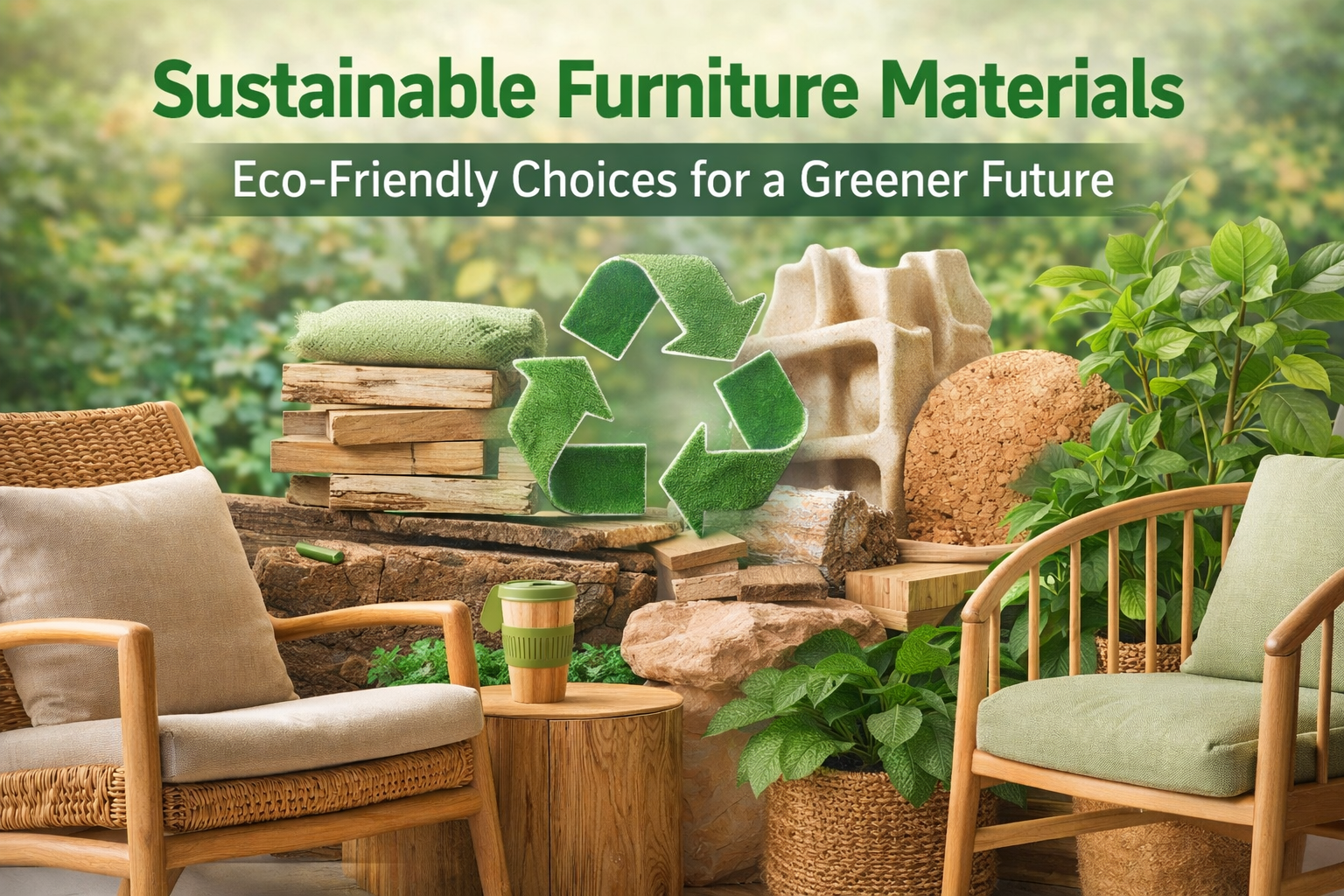
As environmental awareness continues to grow, sustainability has become a key consideration across industries—and furniture design is no exception. Traditional furniture production often relies on resource-intensive processes, deforestation, and synthetic materials that harm both human health and the environment. In response, eco-friendly and sustainable furniture materials are gaining popularity among manufacturers, designers, and consumers alike.
This article explores what eco-friendly and sustainable materials for furniture are, provides examples of commonly used sustainable materials, and explains the benefits of choosing eco-friendly materials for furniture.
What Are Eco-Friendly and Sustainable Materials for Furniture?

Eco-friendly and sustainable furniture materials are materials that have minimal negative impact on the environment throughout their lifecycle—from sourcing and manufacturing to usage and disposal. These materials are chosen with consideration for environmental conservation, human health, and long-term resource availability.
Key Characteristics of Sustainable Furniture Materials
- Renewable or Abundant Resources
Sustainable materials often come from renewable sources, such as fast-growing plants or responsibly managed forests. This reduces pressure on finite natural resources. - Low Environmental Impact
Eco-friendly materials require less energy, water, and chemicals during production and processing, leading to lower carbon emissions. - Non-Toxic and Safe
Many sustainable materials avoid harmful chemicals like formaldehyde, volatile organic compounds (VOCs), and toxic adhesives that can affect indoor air quality. - Durability and Longevity
Sustainable furniture materials are designed to last longer, reducing the need for frequent replacement and minimizing waste. - Recyclable or Biodegradable
At the end of their lifecycle, eco-friendly materials can be recycled, reused, or naturally decomposed without harming the environment. - Ethically Sourced
Sustainable materials are often harvested under fair labor practices and responsible land-use policies.
In short, sustainable furniture materials balance environmental responsibility, functionality, and aesthetics.
Examples of Eco-Friendly and Sustainable Materials for Furniture
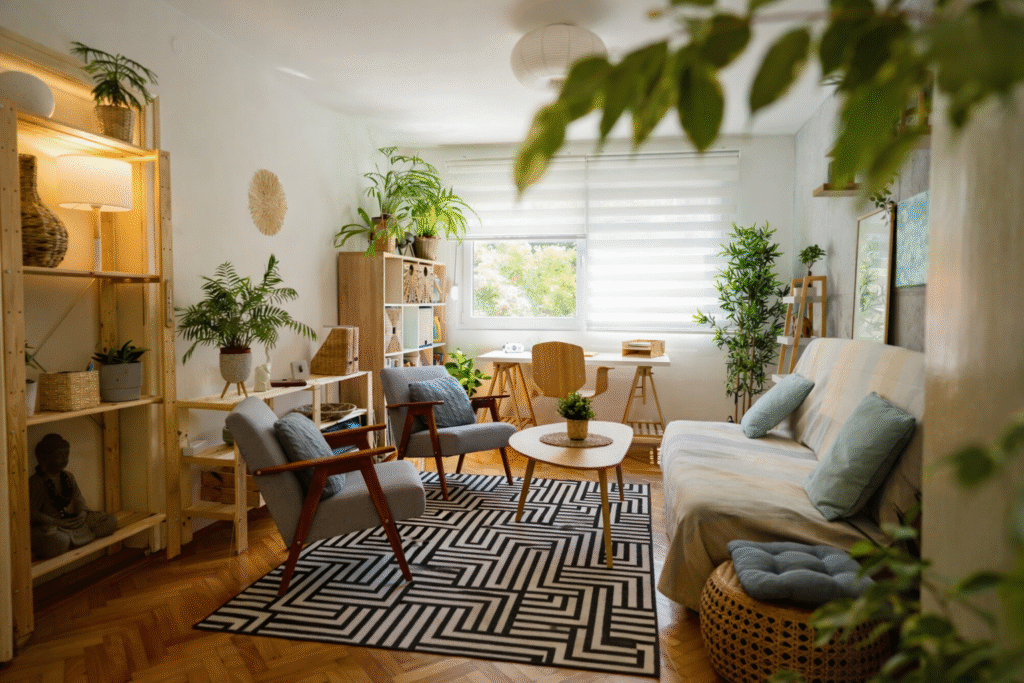
There is a wide range of sustainable materials available today, each offering unique advantages in terms of appearance, strength, and environmental impact.
1. Solid Wood from Sustainable Forests
Solid wood remains one of the most popular furniture materials, but sustainability depends on how it is sourced.
- FSC-certified wood ensures forests are responsibly managed.
- Common sustainable woods include oak, maple, beech, and rubberwood.
- Rubberwood, in particular, is harvested from rubber trees that have completed their latex-producing lifecycle.
Why it’s sustainable:
Responsibly harvested wood is renewable, biodegradable, and highly durable.
2. Bamboo
Bamboo is one of the fastest-growing plants in the world and can be harvested within 3–5 years.
- Requires little water and no pesticides
- Stronger than many hardwoods
- Naturally resistant to moisture and pests
Why it’s sustainable:
Its rapid regrowth and minimal environmental requirements make bamboo an excellent eco-friendly furniture material.
3. Reclaimed and Recycled Wood
Reclaimed wood is sourced from old buildings, factories, ships, and barns.
- Prevents usable wood from ending up in landfills
- Adds unique character and history to furniture
- Reduces the demand for newly harvested timber
Why it’s sustainable:
Reusing existing materials significantly lowers environmental impact and conserves natural resources.
4. Recycled Metal
Metals like steel and aluminum are widely used in furniture frames and accents.
- Can be recycled indefinitely without losing quality
- Requires less energy compared to producing new metal
- Highly durable and strong
Why it’s sustainable:
Recycled metal reduces mining, energy consumption, and industrial waste.
5. Cork
Cork is harvested from the bark of cork oak trees without cutting down the tree.
- Bark regenerates every 9–12 years
- Lightweight and flexible
- Naturally antimicrobial and insulating
Why it’s sustainable:
Cork harvesting supports forest ecosystems and promotes biodiversity.
6. Natural Fibers
Natural fibers are commonly used in upholstery, weaving, and padding.
Examples include:
- Organic cotton
- Linen
- Hemp
- Jute
- Wool
Why they’re sustainable:
These fibers are biodegradable, renewable, and often produced with fewer chemicals than synthetic fabrics.
7. Rattan and Wicker
Rattan is a climbing palm that grows quickly in tropical regions.
- Lightweight yet strong
- Flexible and ideal for handcrafted furniture
- Grows faster than hardwood trees
Why it’s sustainable:
When responsibly harvested, rattan regenerates quickly and supports local economies.
8. Recycled Plastic
Recycled plastics are increasingly used in modern and outdoor furniture.
- Made from post-consumer waste like bottles and packaging
- Durable and weather-resistant
- Reduces plastic pollution
Why it’s sustainable:
Recycling plastic diverts waste from landfills and oceans while reducing reliance on virgin plastic.
9. Low-VOC Finishes and Adhesives
Eco-friendly furniture also considers finishes and bonding materials.
- Water-based finishes
- Natural oils and waxes
- Formaldehyde-free adhesives
Why they’re sustainable:
They improve indoor air quality and reduce harmful emissions.
Eco-Friendly Materials for Furniture: Benefits
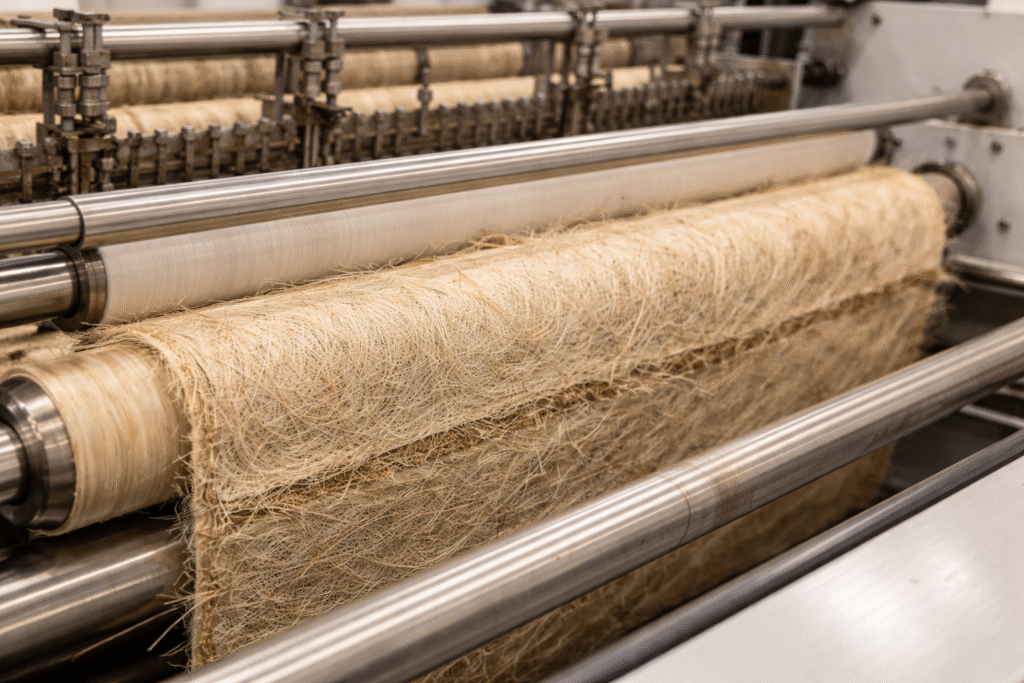
Choosing eco-friendly furniture materials offers numerous advantages, not only for the environment but also for consumers and manufacturers.
1. Environmental Protection
Sustainable furniture materials help reduce:
- Deforestation
- Greenhouse gas emissions
- Water and air pollution
- Landfill waste
By opting for renewable and recycled materials, furniture production becomes more environmentally responsible.
2. Improved Indoor Air Quality
Many conventional furniture products emit VOCs that can cause headaches, allergies, and respiratory issues.
Eco-friendly furniture:
- Uses non-toxic finishes
- Avoids harmful chemicals
- Creates healthier indoor environments
This is especially beneficial for homes, offices, schools, and healthcare facilities.
3. Durability and Long-Term Value
Sustainable materials are often more durable and well-crafted.
- Solid wood, metal, and bamboo furniture last longer
- Reduced need for frequent replacement
- Better return on investment over time
Long-lasting furniture also reduces overall consumption and waste.
4. Reduced Carbon Footprint
Using locally sourced, recycled, or renewable materials helps lower transportation emissions and energy usage during production.
Sustainable furniture supports:
- Energy-efficient manufacturing
- Responsible supply chains
- Climate change mitigation efforts
5. Ethical and Social Responsibility
Eco-friendly furniture materials often come from ethical supply chains that prioritize:
- Fair wages
- Safe working conditions
- Community development
- Responsible land use
Supporting sustainable furniture helps promote social equity and responsible business practices.
6. Aesthetic Appeal and Unique Design
Sustainable materials offer natural textures, grains, and finishes that enhance visual appeal.
- Reclaimed wood adds character
- Natural fibers bring warmth and comfort
- Handmade sustainable furniture feels unique and authentic
Eco-friendly furniture blends modern design with natural beauty.
7. Waste Reduction and Circular Economy
Sustainable furniture supports a circular economy by:
- Reusing materials
- Recycling at end of life
- Designing furniture for disassembly and repair
This approach minimizes waste and extends the lifecycle of materials.
8. Growing Consumer Awareness and Market Value
Eco-friendly furniture aligns with modern consumer values.
- Increased demand for sustainable products
- Positive brand image for manufacturers
- Compliance with environmental regulations
Sustainability is no longer a trend—it’s a long-term market expectation.
Conclusion
Sustainable furniture materials play a crucial role in reducing environmental impact while creating healthier, longer-lasting, and ethically produced furniture. From responsibly sourced wood and bamboo to recycled metals, plastics, and natural fibers, eco-friendly materials offer diverse options without compromising quality or design.
Choosing eco-friendly materials for furniture benefits the environment, enhances indoor living conditions, supports ethical practices, and promotes long-term sustainability. As awareness grows and innovation continues, sustainable furniture materials will remain at the heart of responsible design and conscious living.
Investing in sustainable furniture is not just a design choice—it’s a commitment to a healthier planet and a more sustainable future.

Author: Sustainable Talks
Talk Green. Think Change. Act Sustainably. 🌍 Ideas, stories & actions for a greener future.