
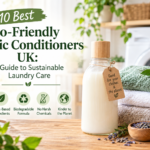

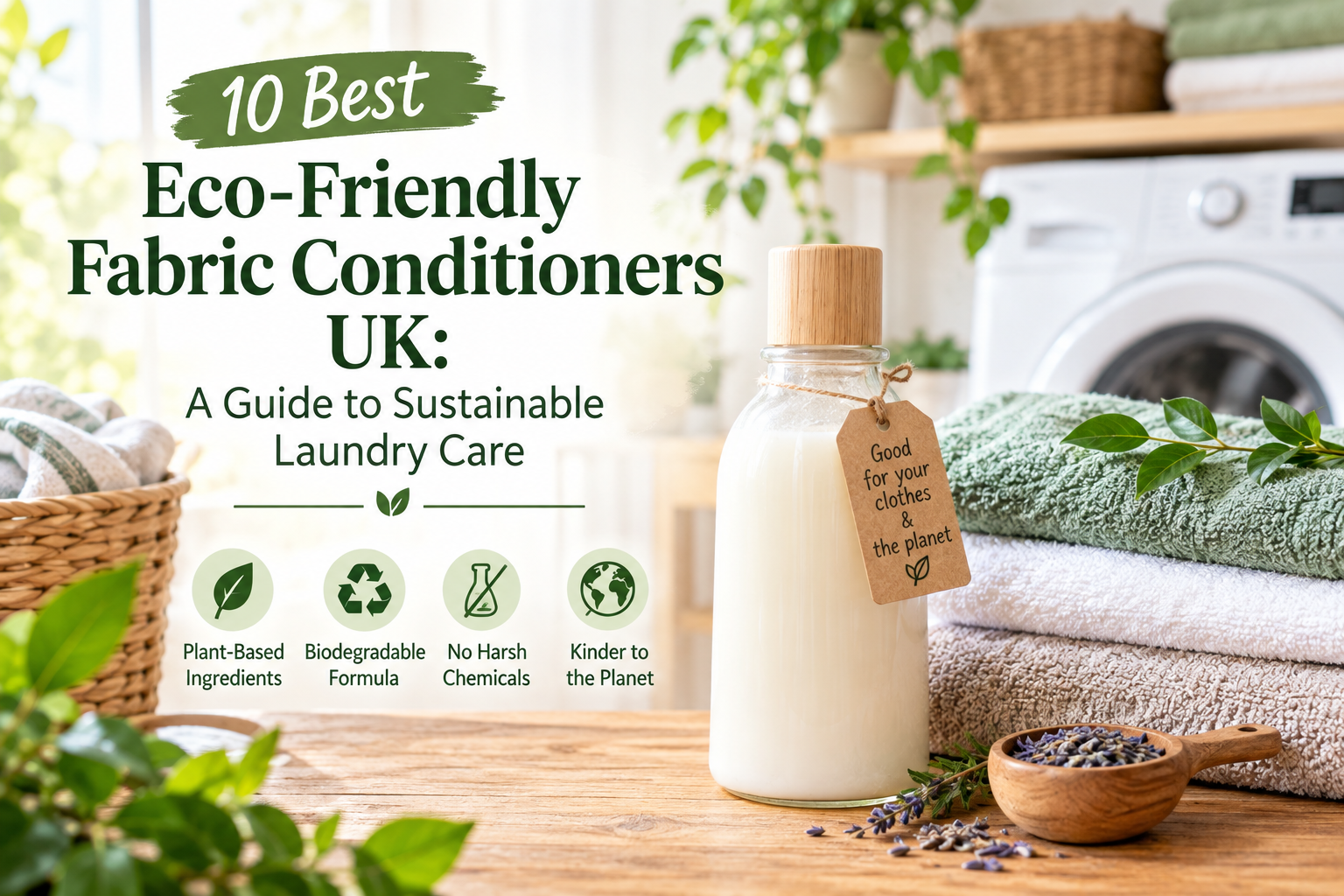
Looking for the best eco-friendly fabric conditioners in the UK? Choosing a more sustainable fabric softener can be a simple way to make your laundry routine more environmentally conscious.
From plant-based formulas and biodegradable ingredients to refillable bottles and concentrated solutions, there are now many options for households looking to reduce the environmental impact of everyday laundry.
But what should you look for when choosing an eco-friendly fabric conditioner? Are plant-based formulas actually more sustainable? And which features matter most when comparing products?
In this guide, we explore 10 types and examples of eco-friendly fabric conditioners available in the UK, along with the key features to consider before buying.
Note: Product formulations, packaging and availability can change. Always check the manufacturer’s current product information before purchasing.
What Makes a Fabric Conditioner Eco-Friendly?
Before looking at individual products, it is important to understand what “eco-friendly” means in the context of laundry care.
A more sustainable fabric conditioner may feature one or more of the following:
- Biodegradable or readily biodegradable ingredients
- Plant-derived conditioning ingredients
- Recyclable packaging
- Recycled plastic packaging
- Refillable containers
- Concentrated formulas
- Reduced packaging
- Vegan formulations
- Cruelty-free policies
- Transparent ingredient information
- Recognised environmental certifications
No single feature makes a product automatically sustainable. It is better to consider the whole product lifecycle, including ingredients, manufacturing, packaging, transportation and disposal.
10 Best Eco-Friendly Fabric Conditioners UK
1. Ecover Fabric Softener
Ecover is a well-known brand in the UK sustainable cleaning market and offers fabric softeners designed with environmental considerations in mind.
When considering Ecover products, look at the individual formula, packaging information and current sustainability claims because formulations can change.
Why consider it?
- Established eco-cleaning brand
- Plant-based ingredients used in some formulations
- Recyclable packaging options
- Widely available in the UK
- Suitable for everyday laundry
Best for: Shoppers looking for an established eco-cleaning brand.
2. Method Fabric Softener
Method is known for household cleaning products with a strong focus on design, fragrance and ingredient transparency.
Its laundry range can be an option for consumers who want to move away from conventional laundry products.
Features to consider
- Plant-based ingredients in selected products
- Cruelty-free brand positioning
- Attractive packaging
- Variety of fragrances
- Designed for everyday laundry
Best for: Households looking for a modern alternative to traditional fabric softeners.
3. Smol Fabric Conditioner
Smol is a UK-focused laundry brand offering products designed around convenient delivery and reduced packaging approaches.
Its fabric conditioner range is particularly relevant for households interested in concentrated laundry products and subscription-style purchasing.
Why consider it?
- UK-focused laundry brand
- Concentrated product formats
- Convenient home delivery
- Packaging designed with waste reduction in mind
- Useful option for regular laundry users
Best for: Consumers interested in convenient, concentrated laundry products.
4. Faith in Nature Fabric Conditioner
Faith in Nature is a UK brand associated with naturally inspired personal care and household products.
Its laundry products can appeal to consumers who prefer formulations featuring naturally derived ingredients.
What to look for
- Naturally derived ingredients
- Vegan product options
- Cruelty-free positioning
- Recyclable packaging options
- Nature-inspired fragrances
Best for: Consumers interested in naturally inspired household products.
5. Miniml Fabric Conditioner
Miniml focuses on reducing packaging waste through refill-based cleaning products.
Its approach makes it particularly relevant for consumers looking for refillable fabric conditioner in the UK.
Why consider it?
- Refill-focused approach
- Helps reduce reliance on single-use bottles
- UK-based sustainable cleaning brand
- Suitable for low-waste households
- Offers a broader range of household cleaning products
Best for: People trying to reduce plastic packaging from their laundry routine.
6. Bio-D Fabric Conditioner
Bio-D is a UK manufacturer specialising in environmentally conscious household cleaning products.
Its laundry range includes fabric conditioner designed for consumers seeking alternatives to conventional household cleaning products.
Features
- UK-made product range
- Vegan and cruelty-free positioning
- Plant-based ingredients in its formulations
- Recyclable packaging options
- Focus on environmentally conscious cleaning
Best for: Consumers looking for a UK household cleaning brand with a sustainability focus.
7. Ecozone Fabric Conditioner
Ecozone offers a range of environmentally focused household cleaning products, including laundry care products.
Its fabric conditioner is worth considering if you are looking for alternatives to conventional fabric softeners.
Potential benefits
- Eco-focused household brand
- Plant-based formulations available
- Vegan and cruelty-free options
- Suitable for everyday laundry
- UK availability
Best for: Consumers seeking eco-focused household cleaning products.
8. Miniml Refillable Fabric Softener
If reducing plastic waste is your primary goal, a refill-based fabric softener deserves particular consideration.
Rather than buying a completely new bottle every time, refill systems allow consumers to reuse the original container.
Why refill systems can help
- Reduce demand for new bottles
- Encourage reuse
- Support low-waste shopping
- Can be purchased in larger quantities
- Suitable for households committed to reducing packaging
Best for: Zero-waste and low-plastic households.
9. Concentrated Eco-Friendly Fabric Conditioner
Concentrated fabric conditioner can be another practical option for sustainable laundry.
Because concentrated products require less product per wash, they may use less packaging for the same number of washes compared with less concentrated alternatives.
However, compare the number of washes per bottle, rather than simply comparing bottle sizes.
What to check
- Recommended dosage
- Number of washes
- Packaging material
- Refill availability
- Ingredient information
Best for: Households looking to reduce product consumption and packaging.
10. Natural or Plant-Based Fabric Conditioner
A growing number of UK laundry brands offer fabric conditioners containing plant-derived ingredients.
These products can appeal to consumers who want to reduce their reliance on conventional formulations.
However, it is important to remember that plant-based does not automatically mean environmentally superior.
Look at the entire product, including:
- Ingredient sourcing
- Manufacturing
- Packaging
- Transportation
- Product concentration
- End-of-life disposal
Best for: Consumers who prioritise plant-derived ingredients and transparent formulations.
How to Choose the Best Eco-Friendly Fabric Conditioner
With numerous products available, choosing the right one requires more than simply looking for an “eco” label.
1. Check the Ingredients
Look for clear ingredient information and investigate specific environmental claims.
Avoid assuming that words such as “natural”, “green” or “eco” automatically mean a product has a low environmental impact.
2. Consider the Packaging
Packaging is an important part of a product’s environmental footprint.
Look for:
- Recycled plastic
- Recyclable bottles
- Refillable containers
- Reduced packaging
- Concentrated products
Check your local council’s recycling guidance before assuming a particular package can be recycled through your household collection.
3. Compare the Number of Washes
A large bottle is not necessarily better value or more sustainable.
Instead, compare the number of washes per container and the recommended dose per wash.
4. Look for Refill Options
Refill systems can be useful for reducing the number of new bottles purchased.
If sustainability is your priority, compare the packaging used for both the original bottle and the refill.
5. Check for Certifications
Some products carry environmental, ethical or organic certifications.
Certifications can provide additional information about how products or ingredients have been assessed.
However, always check what the specific certification covers.
Are Eco-Friendly Fabric Conditioners Better for the Environment?
They can be designed with environmental considerations such as biodegradable ingredients, concentrated formulas, refillable packaging or recycled materials.
However, there is no universal definition that makes every product labelled “eco-friendly” environmentally superior.
A useful way to compare products is to consider:
Ingredients + Packaging + Concentration + Manufacturing + Transport + Usage + Disposal
Looking at the whole lifecycle gives you a more balanced picture.
Is Fabric Conditioner Necessary?
No. Fabric conditioner is not essential for most laundry.
It is primarily used to improve softness, reduce static and add fragrance.
You may choose to skip fabric conditioner for certain fabrics, including some:
- Sportswear
- Microfibre cloths
- Waterproof garments
- Technical clothing
- Moisture-wicking fabrics
Always check the garment care instructions.
Can You Use Eco-Friendly Fabric Conditioner on Towels?
Yes, but fabric conditioner can affect towel absorbency.
If you want your towels to remain highly absorbent, consider using fabric conditioner sparingly or skipping it altogether.
Proper washing and drying practices can also help maintain towel performance.
How Can You Make Laundry More Sustainable?
Choosing an eco-friendly fabric conditioner is only one part of a greener laundry routine.
Wash at an Appropriate Temperature
Use the lowest suitable temperature recommended for the garment and detergent.
Avoid Overwashing
Not every item needs washing after every wear. Follow garment care recommendations and wash when necessary.
Use the Correct Dose
More detergent or fabric conditioner does not necessarily produce better results.
Follow the manufacturer’s dosage instructions.
Air-Dry When Practical
Line drying or using an indoor drying rack can reduce reliance on energy-intensive tumble drying.
Wash Full Loads
Where practical, wait until you have a suitably sized load rather than repeatedly washing small amounts of clothing.
Look After Your Clothes
Repairing, washing carefully and using clothing for longer can help reduce the environmental impact associated with replacing garments.
How to Avoid Greenwashing When Buying Fabric Conditioner
Greenwashing can make it difficult to distinguish meaningful environmental improvements from vague marketing.
Be cautious about unsupported claims such as:
- “100% eco-friendly”
- “Planet-friendly”
- “Chemical-free”
- “Completely natural”
- “Zero impact”
Instead, look for specific information.
For example, a company explaining its packaging material, ingredient sourcing or refill system gives consumers more information than a general “green” claim.
Final Thoughts
Choosing one of the best eco-friendly fabric conditioners in the UK can be a useful step towards a more sustainable laundry routine.
Brands and products differ considerably, so don’t rely solely on labels such as “eco”, “natural” or “green”. Instead, investigate the ingredients, packaging, concentration, refill options, certifications and sustainability information.
For the biggest impact, combine your product choice with greener laundry habits: wash efficiently, use the correct dosage, avoid unnecessary washing, air-dry when practical and keep your clothes in use for as long as possible.
A more sustainable laundry routine isn’t about finding one perfect product. It’s about making better-informed choices across the entire laundry process.
Quick Checklist: Choosing an Eco-Friendly Fabric Conditioner
Before buying, ask:
☐ Are the ingredients clearly listed?
☐ Are environmental claims specific and transparent?
☐ Is the packaging recyclable or refillable?
☐ Does the bottle contain recycled material?
☐ How many washes does the product provide?
☐ Is the product concentrated?
☐ Does the brand explain its sustainability practices?
☐ Is fabric conditioner actually necessary for your laundry?
By considering these factors, you can make a more informed choice when shopping for eco-friendly fabric conditioner in the UK.
Looking for more sustainable living ideas? Explore Sustainable Talks for practical guides covering eco-friendly homes, sustainable products, greener shopping and everyday lifestyle choices.
Explore Sustainable Talks: https://sustainablestalks.com/blog/
Frequently Asked Questions
There is no single fabric conditioner that is objectively best for every household. Compare ingredients, packaging, concentration, refill options, certifications, price and performance based on your priorities.
A product with responsibly sourced ingredients, appropriate concentration, reduced or refillable packaging and transparent environmental information may be a more suitable choice for a lower-impact laundry routine.
Some products use biodegradable ingredients, but biodegradability varies by formulation. Check the manufacturer’s current product information for specific claims.
Plant-based ingredients can come from renewable sources, but plant-based does not automatically mean more sustainable. Consider sourcing, processing, packaging and transportation as well.
Refill systems can reduce the need for new rigid bottles. Their overall environmental benefit depends on the materials used for both the reusable container and refill packaging.
No. Some technical, waterproof, absorbent or performance fabrics may not be suitable for fabric conditioner. Always check the care label.
Fabric conditioner is not primarily a cleaning product. Laundry detergent cleans clothes, while fabric conditioner is used to condition fabrics, improve softness and reduce static.

Author: Sustainable Talks
Talk Green. Think Change. Act Sustainably. 🌍 Ideas, stories & actions for a greener future.