
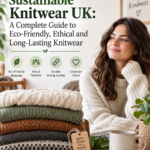


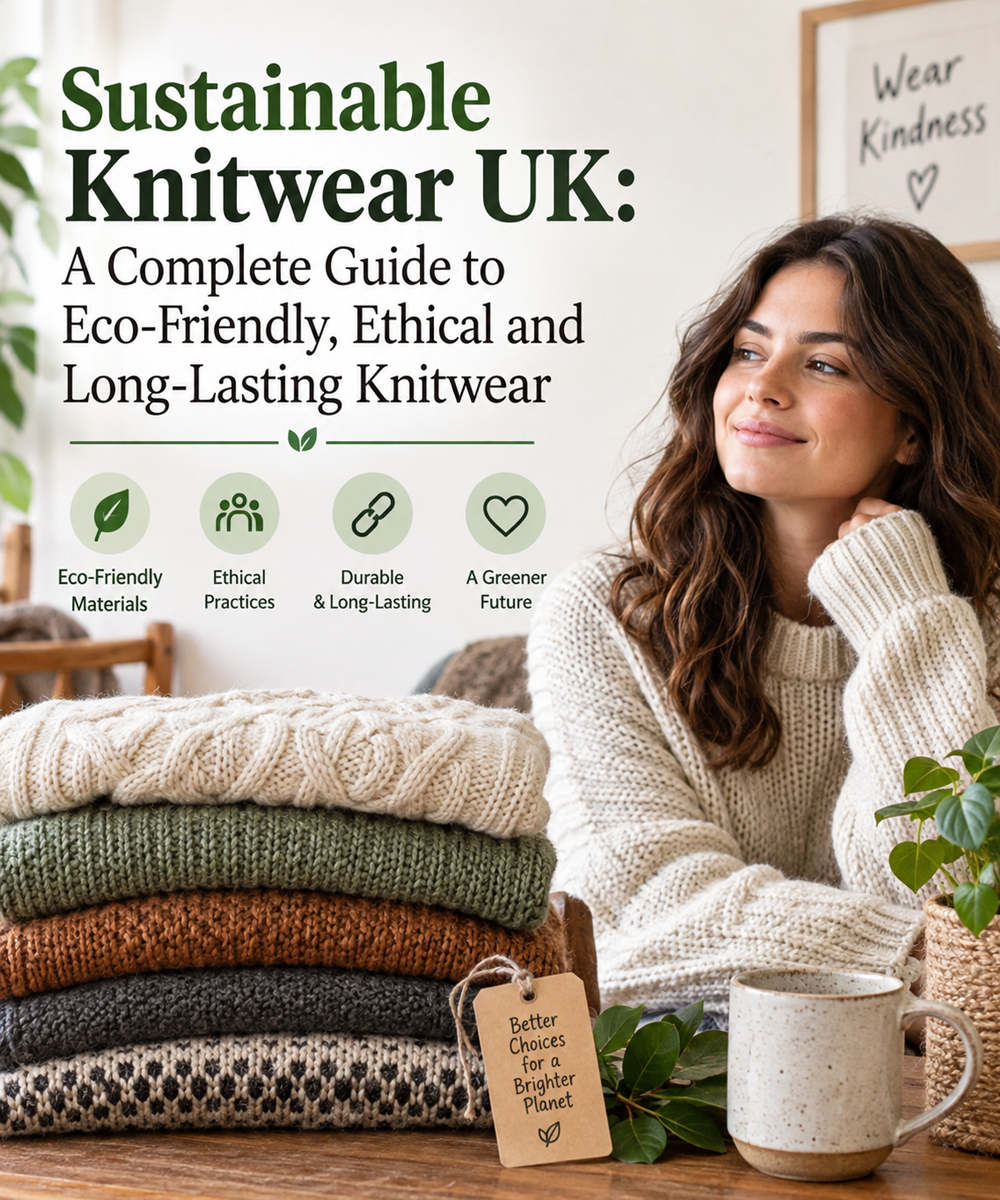
Knitwear is a wardrobe essential in the UK. From lightweight cotton jumpers for cool spring days to warm woollen sweaters for winter, knitwear offers comfort, versatility and timeless style. However, not all knitwear is produced with the same environmental and ethical standards.
As more UK shoppers look for alternatives to fast fashion, sustainable knitwear is becoming an increasingly popular choice. Sustainable knitwear focuses on better materials, responsible manufacturing, durability, lower-impact production and fair working conditions.
But what actually makes knitwear sustainable? Which materials should you look for? Is wool more sustainable than synthetic fibres? And how can you make your favourite jumper last longer?
This guide explores everything UK consumers need to know about choosing, wearing and caring for eco-friendly and ethical knitwear.
What Is Sustainable Knitwear?
Sustainable knitwear is clothing made using materials, manufacturing processes and supply-chain practices designed to reduce environmental and social impacts while producing durable garments.
Sustainable knitwear may incorporate:
- Organic or responsibly sourced natural fibres
- Recycled materials
- Responsible wool
- Lower-impact dyes and finishing processes
- Efficient manufacturing techniques
- Durable construction
- Fair and ethical working conditions
- Responsible packaging
- Repair, resale and recycling opportunities
Importantly, sustainability is not determined by one material or one label. A garment’s overall impact depends on factors including the fibre, manufacturing process, energy and water use, transport, durability and what happens to the garment at the end of its useful life.
Why Choose Sustainable Knitwear in the UK?
The UK has a strong culture of seasonal clothing, particularly knitwear for autumn and winter. Choosing garments designed to last can help consumers move away from buying large quantities of inexpensive clothing that quickly becomes unwanted.
There are several reasons to consider sustainable knitwear.
1. Better Durability
Well-made knitwear can remain in your wardrobe for many years when properly cared for.
Durability is an important part of sustainable fashion because extending the useful life of clothing can reduce the need to replace garments frequently.
2. More Responsible Materials
Sustainable knitwear can be made from materials such as organic cotton, recycled fibres and responsibly sourced wool.
The right material depends on the garment’s intended use, climate, performance requirements and manufacturing process.
3. Reduced Dependence on Virgin Resources
Recycled fibres can help make use of existing materials instead of relying entirely on newly produced raw materials.
For example, recycled wool or recycled synthetic fibres can be incorporated into some knitwear products.
4. Ethical Manufacturing
Sustainable fashion is not only about environmental impact. Working conditions, wages, workplace safety and supply-chain transparency are also important considerations.
Ethical knitwear brands may provide information about where garments are made and how workers are treated.
5. Timeless Style
A well-designed jumper that remains fashionable for several seasons is less likely to become unwanted after a few months.
Choosing classic colours, versatile designs and good-quality construction can help create a more long-lasting wardrobe.
What Materials Are Used in Sustainable Knitwear?
The material used to make a knitted garment has a significant influence on its characteristics and environmental considerations.
Here are some of the most common options.
Organic Cotton Knitwear
Organic cotton is grown according to organic agricultural standards, which restrict the use of certain synthetic pesticides and fertilisers.
Organic cotton knitwear can be a useful option for lightweight jumpers, cardigans, tops and transitional-season clothing.
Benefits of organic cotton knitwear
- Soft and comfortable
- Suitable for lightweight clothing
- Breathable
- Widely available
- Can be suitable for sensitive skin
- Avoids certain conventional agricultural inputs
However, organic cotton is not automatically a zero-impact material. Cotton production still requires land, water and other resources, while spinning, dyeing, knitting and garment manufacturing also contribute to a product’s overall footprint.
Wool Knitwear
Wool has traditionally been one of the most popular materials for UK winter knitwear.
Sheep’s wool provides warmth and insulation, making it particularly useful for cold-weather clothing.
Wool can also be durable and long-lasting when cared for correctly.
However, wool’s sustainability depends on factors such as farming practices, land management, animal welfare, processing and supply-chain transparency.
When shopping for sustainable wool knitwear, look for information about the wool’s source and any recognised responsible sourcing standards.
Recycled Wool
Recycled wool is produced using wool that has already been used or recovered from textile waste.
Using recycled fibres can help reduce dependence on virgin raw materials and divert suitable textile material from waste streams.
Recycled wool can be particularly attractive for shoppers looking for warmer knitwear while considering circular fashion principles.
Recycled Polyester
Some knitwear is made partly or entirely from recycled polyester.
Recycled polyester can make use of existing plastic-based materials, such as suitable post-consumer plastic waste.
It can offer useful properties such as durability and resistance to shrinking.
However, recycled polyester remains a synthetic fibre. Synthetic textiles can shed microfibres during washing, so consumers should consider garment construction, care instructions and washing habits as part of the wider sustainability picture.
Linen and Other Plant-Based Fibres
Some lightweight knitted garments incorporate linen or other plant-derived fibres.
These materials can provide breathability and may work particularly well for spring and summer knitwear.
As with any textile, the environmental profile depends on how the fibre is grown, processed, dyed and manufactured.
Is Wool Sustainable?
Wool can be a relatively durable and long-lasting fibre, but whether a particular wool garment is sustainable depends on how the wool is produced and processed.
Wool has several characteristics that make it useful for sustainable wardrobes:
- It can be durable.
- It provides warmth without requiring extremely heavy garments.
- Quality wool garments can last for years.
- Some wool garments can be refreshed between washes.
- Wool is a natural fibre.
At the same time, wool production has environmental and animal-welfare considerations.
When buying wool knitwear, investigate the brand’s information about:
- Wool sourcing
- Animal welfare
- Farming practices
- Processing
- Supply-chain transparency
- Relevant certification
Rather than assuming that all wool is sustainable, consider the whole supply chain.
What Makes Knitwear Ethical?
Environmental sustainability and ethical fashion are closely connected but are not exactly the same thing.
Ethical knitwear generally refers to garments produced with attention to worker welfare, fair treatment, safe working conditions and responsible supply chains.
When assessing an ethical knitwear brand, look for information about:
- Where garments are manufactured
- Factory relationships
- Worker welfare
- Labour standards
- Supply-chain transparency
- Wages and working conditions
- Independent certifications
- Production volumes
A brand that provides clear information about its supply chain can make it easier for consumers to understand how and where their clothing is produced.
How to Choose Sustainable Knitwear in the UK
Finding genuinely sustainable knitwear can be confusing because fashion marketing frequently uses words such as “green”, “conscious”, “eco” and “responsible”.
Instead of relying on marketing language alone, use a practical checklist.
1. Check the Fibre Composition
Look at the garment label.
Find out whether the jumper is made from:
- Organic cotton
- Conventional cotton
- Wool
- Recycled wool
- Recycled synthetic fibres
- Linen
- A blend of several fibres
Understanding the composition helps you compare products more meaningfully.
2. Look for Specific Information
A strong sustainability claim should ideally explain what makes the product more sustainable.
For example, a brand might provide information about the fibre source, factory, certification or recycled content.
Specific information is generally more useful than vague claims such as “eco-friendly” without supporting details.
3. Consider Certifications
Depending on the fibre and production method, relevant certifications can provide additional information about certain environmental or social criteria.
Examples can include certifications or standards relating to:
- Organic fibres
- Responsible wool
- Recycled materials
- Textile chemical management
- Social responsibility
Always check what a certification actually covers rather than assuming it verifies every aspect of a garment’s sustainability.
4. Prioritise Quality
Ask yourself:
Will I still want to wear this jumper in three or five years?
Look at:
- Stitching
- Seams
- Fabric density
- Pilling tendency
- Shape retention
- Buttons and fastenings
- Overall construction
A durable garment can be more useful than a cheaper garment that needs frequent replacement.
5. Choose Versatile Designs
A neutral, versatile jumper may work with jeans, trousers, skirts and other wardrobe staples.
The more outfits a garment works with, the more frequently it may be worn.
Sustainable Knitwear vs Fast Fashion Knitwear
Fast fashion generally focuses on producing fashionable garments quickly and selling them at relatively low prices.
Sustainable fashion places greater emphasis on durability, responsible materials, transparency and longer product use.
| Factor | Sustainable Knitwear | Fast Fashion Knitwear |
| Materials | May use organic, recycled or responsibly sourced fibres | Often uses conventional or synthetic fibres |
| Durability | Usually prioritises longer-term use | Quality can vary considerably |
| Design | Often focuses on timeless or versatile styles | Frequently follows short-lived trends |
| Supply chain | Greater emphasis on transparency | Transparency varies |
| Production | May prioritise responsible processes | Often focused on speed and volume |
| Product lifespan | Designed with longevity in mind | Can vary widely |
| Consumer approach | Buy fewer, better-used garments | More frequent purchasing can occur |
This comparison is not absolute. There are high-quality garments within mainstream fashion, and sustainability varies significantly between individual products and brands.
How to Care for Sustainable Knitwear
Buying sustainable knitwear is only part of the process.
Proper clothing care can help extend the useful life of your knitwear.
Wash Less Frequently
Many jumpers do not need to be washed after every wear.
If a garment is clean and has only been worn briefly, airing it can sometimes be sufficient.
Always follow the garment’s care label.
Use the Correct Washing Method
Different fibres require different care.
Wool, for example, can be sensitive to heat and agitation.
Always check whether your garment requires:
- Hand washing
- A wool cycle
- Cold or cool washing
- Machine washing
- Dry cleaning
Avoid Excessive Heat
High temperatures can cause some knitwear to shrink or lose its shape.
Avoid hot washes and high-heat drying unless the care label specifically recommends them.
Dry Knitwear Carefully
Many knitted garments should be dried flat rather than hung while wet.
Hanging a heavy, wet jumper can stretch the shoulders and alter its shape.
Remove Pilling Carefully
Pilling can occur when fibres rub together.
A fabric shaver or knitwear comb can help remove pills without throwing away an otherwise wearable garment.
Repair Rather Than Replace
Small holes, loose threads and damaged seams do not necessarily mean a jumper has reached the end of its life.
Simple repairs can extend the lifespan of knitwear.
For more complicated repairs, consider using a professional tailor or clothing repair service.
How to Store Knitwear
Correct storage can help protect knitwear between seasons.
Fold Heavy Jumpers
Heavy knitwear is generally better folded than hung because hanging can cause stretching.
Keep Clothes Dry
Store knitwear in a clean, dry environment to reduce the risk of dampness and mould.
Protect Seasonal Knitwear
Before storing winter knitwear for the warmer months, wash or clean it according to the care label and make sure it is completely dry.
Avoid Overpacking
Give garments enough space to retain their shape and allow air circulation.
Can Sustainable Knitwear Be Affordable?
Sustainable knitwear can have a higher upfront price than some fast-fashion alternatives.
However, price should not be considered in isolation.
A £100 jumper worn 100 times costs £1 per wear, while a £30 jumper worn only 10 times costs £3 per wear.
This is known as cost per wear.
Of course, price does not prove sustainability. A more expensive garment is not automatically more ethical or environmentally friendly.
A better approach is to consider:
- Quality
- Expected lifespan
- Fibre composition
- Manufacturing practices
- Repairability
- Versatility
- How often you will realistically wear it
What Is Circular Knitwear?
Circular fashion aims to keep clothing and materials in use for as long as possible.
For knitwear, this can include:
- Buying durable garments
- Repairing damaged knitwear
- Buying second-hand
- Reselling unwanted clothing
- Donating wearable garments
- Recycling textiles where suitable
- Choosing recyclable or mono-material designs where appropriate
Instead of thinking about clothing as something to buy and eventually throw away, circular fashion considers its entire lifecycle.
Second-Hand Sustainable Knitwear
You do not always have to buy a new garment to build a sustainable wardrobe.
Second-hand shops, charity shops, vintage stores and online resale platforms can provide opportunities to give existing clothing a longer life.
Second-hand knitwear can offer several benefits:
- Extends the life of existing garments
- Reduces demand for new production
- Can provide access to high-quality older garments
- May cost less than buying new
- Supports a more circular approach to fashion
Before purchasing second-hand knitwear, check the garment carefully for holes, stains, stretched areas, excessive pilling and damaged seams.
How to Spot Greenwashing in Knitwear
Greenwashing occurs when sustainability claims create a misleading impression about the environmental benefits of a product, company or practice.
When shopping for eco-friendly knitwear, be cautious of vague statements such as:
- “100% green”
- “Planet friendly”
- “Conscious fashion”
- “Eco collection”
without supporting evidence.
Instead, ask:
What exactly makes this garment sustainable?
Look for details about:
- Materials
- Fibre percentages
- Manufacturing location
- Certifications
- Factory standards
- Packaging
- Product durability
- Repair schemes
- Take-back programmes
The more specific and transparent the information, the easier it is to evaluate the claim.
Sustainable Knitwear for Different UK Seasons
Although knitwear is strongly associated with winter, it can be useful throughout the year.
Spring
Choose lightweight cotton, organic cotton or linen-blend knitwear.
Light cardigans and fine-knit jumpers can work well during unpredictable spring weather.
Summer
Lightweight breathable knitwear can be useful for cool evenings.
Natural-fibre options may be worth considering where they suit the climate and your preferences.
Autumn
Autumn is ideal for layering.
Medium-weight jumpers, cardigans and knitted vests can be combined with shirts, coats and jackets.
Winter
For colder UK weather, consider wool or other insulating fibres.
A high-quality jumper can become a long-term winter wardrobe staple.
Sustainable Knitwear Buying Checklist
Before purchasing a new jumper or cardigan, ask yourself:
Material
- What fibres is it made from?
- Are recycled or organic fibres used?
- Where do the fibres come from?
Manufacturing
- Where was the garment made?
- Does the brand provide supply-chain information?
- Are there relevant certifications?
Quality
- Is the knit dense and well constructed?
- Are seams secure?
- Is the garment likely to retain its shape?
Longevity
- Will I wear it regularly?
- Does it work with my existing wardrobe?
- Can it be repaired?
End of Life
- Can I resell or donate it?
- Does the brand offer a take-back scheme?
- Can the materials be recycled through an appropriate textile recycling route?
This simple checklist can help you make more informed purchasing decisions.
Final Thoughts: Choosing Better Knitwear in the UK
Sustainable knitwear is not simply about finding a jumper with an “eco-friendly” label.
It is about looking at the materials, manufacturing process, supply chain, quality, durability and end-of-life options.
For UK shoppers, choosing well-made knitwear from responsible materials, wearing it regularly and caring for it properly can be more meaningful than constantly replacing inexpensive garments.
Whether you choose organic cotton, responsibly sourced wool, recycled fibres or second-hand knitwear, the most sustainable garment is often one that you will love, wear frequently and keep for a long time.
At Sustainables Talks, we explore practical ways to make more responsible choices across fashion, home, lifestyle and everyday living.
Looking for more sustainable living inspiration? Explore Sustainable Talks for practical guides, eco-friendly ideas and sustainable lifestyle tips for UK readers.
Frequently Asked Questions About Sustainable Knitwear UK
There is no single material that is automatically the most sustainable for every situation.
Organic cotton, responsibly sourced wool and recycled fibres can each have different advantages and environmental considerations. The best option depends on factors such as durability, intended use, production practices and how long the garment will be used.
Sustainable knitwear can be a practical choice for consumers who want to prioritise durability, responsible materials and ethical production. However, shoppers should evaluate individual products rather than assuming that every garment labelled “sustainable” has the same environmental or social credentials.
Organic cotton is produced according to organic agricultural standards and avoids certain synthetic pesticides and fertilisers used in conventional agriculture. However, both organic and conventional cotton have environmental impacts, including those associated with land, water, processing and manufacturing.
Wool and synthetic fibres have different environmental characteristics and performance properties. Wool is a natural fibre and can be durable and warm, while synthetic fibres can offer durability and specific performance benefits. The sustainability of a garment depends on more than fibre type alone.
Wash garments according to their care labels, avoid unnecessary washing, use appropriate temperatures, dry them correctly, remove pilling carefully, repair small damages and store knitwear properly.
Look for transparency about factories, workers, wages, manufacturing locations, sourcing and relevant certifications. Be cautious of broad ethical claims that are not supported by specific information.
Some knitwear can be recycled, but recyclability depends on the fibre composition, garment construction and available recycling infrastructure. Check local textile recycling guidance before disposing of unwanted knitwear.
Buying second-hand can help extend the useful life of an existing garment and reduce the need for a new purchase. It is one approach consumers can consider as part of a more circular wardrobe.

Author: Sustainable Talks
Talk Green. Think Change. Act Sustainably. 🌍 Ideas, stories & actions for a greener future.