

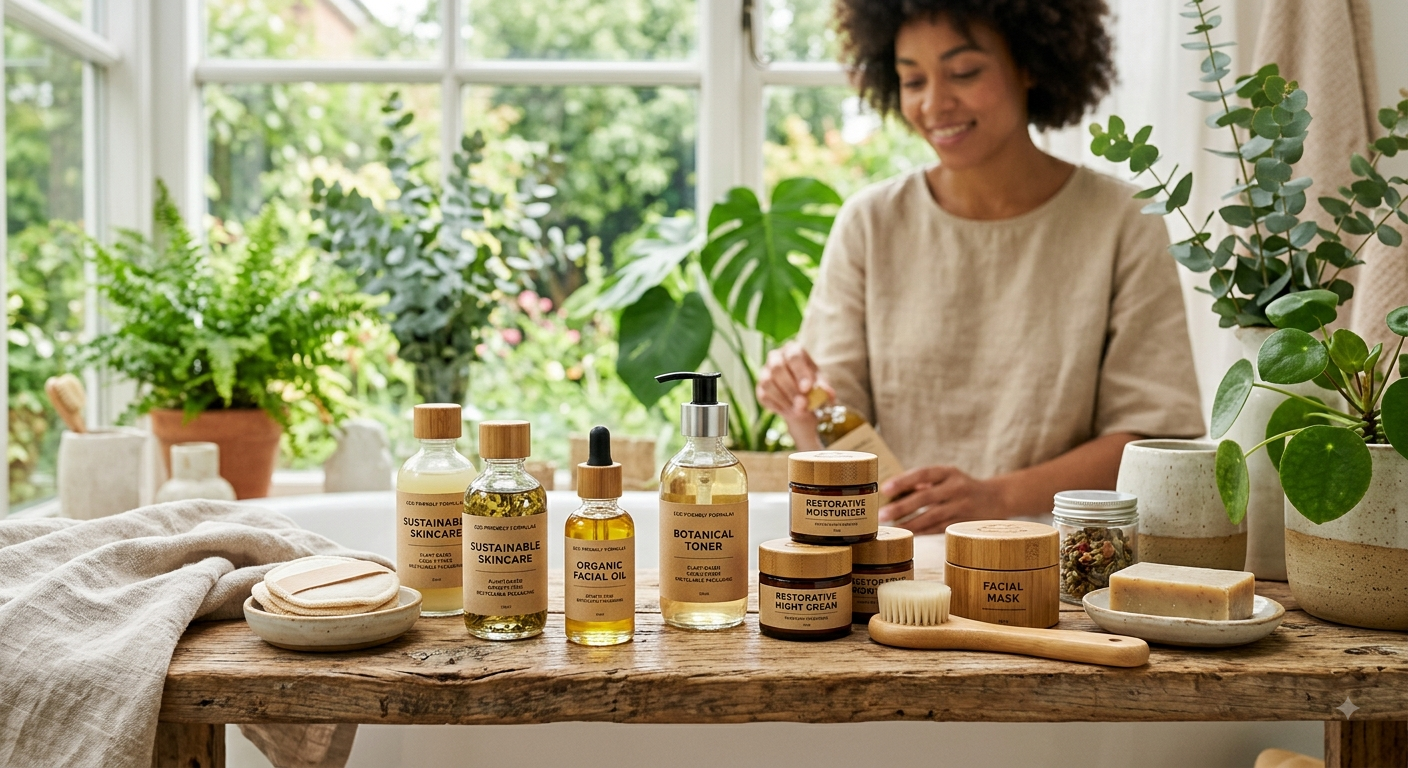
Green beauty isn’t a trend anymore — it’s the new baseline. UK shoppers are actively hunting for sustainable skincare brands that back up their claims with recyclable packaging, ethical sourcing, and genuine environmental accountability, not just a green leaf on the label.
But here’s the problem: the skincare aisle is drowning in “eco-friendly” claims, and most of them don’t hold up under scrutiny. This guide cuts through the noise. Below, we break down what sustainability actually means in skincare, how to spot greenwashing before you buy, and our pick of the top 10 sustainable skincare brands UK shoppers can trust in 2026.
Looking for more honest, in-depth reviews of green beauty and lifestyle brands? Explore more guides on Sustainable talks — we cover everything from eco-friendly brands to low-waste living.
What Actually Makes Skincare Sustainable?
“Sustainable skincare” gets thrown around loosely, but true sustainability looks at the entire lifecycle of a product — not just the packaging on your bathroom shelf. Here’s what actually counts:
- Ingredient sourcing — Are raw materials grown or harvested responsibly, without deforestation, over-extraction, or exploitative labour practices?
- Formulation impact — Does the brand avoid harsh synthetic chemicals, microplastics, and ingredients that pollute waterways once washed off?
- Recyclable packaging — Is the container made from glass, aluminium, post-consumer recycled (PCR) plastic, or refillable systems — or is it single-use plastic dressed up in earthy branding?
- Manufacturing footprint — Is production powered by renewable energy? Is water use minimised? Are emissions tracked and reduced?
- Transparency — Does the brand publish real data on sourcing, packaging recyclability, and carbon footprint, or just use vague buzzwords?
- Ethical accountability — Cruelty-free certification, fair wages, and community or environmental giveback programmes.
A genuinely sustainable brand treats these as a connected system, not a checklist to cherry-pick from for marketing purposes.
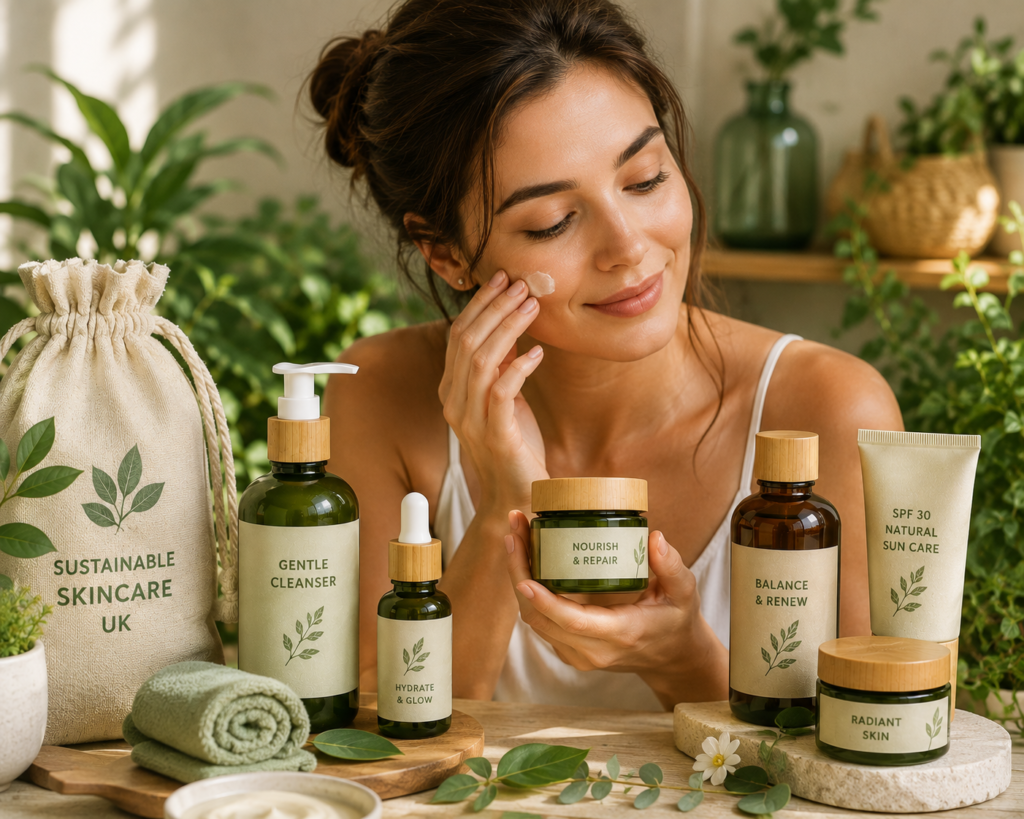
How to Spot a Greenwashing Brand vs. a Genuinely Sustainable One
Greenwashing is rampant in beauty. Here’s how to separate genuine green beauty brands from marketing spin:
- Look past the packaging colour. Brown glass and kraft paper don’t automatically mean eco-friendly. Check what the container is actually made of and whether it’s recyclable in practice, not just in theory.
- Check for third-party certifications. Look for Soil Association, COSMOS Organic, B Corp, Leaping Bunny, or Fair Trade. These require independent verification — a brand can’t just self-declare them.
- Search for a sustainability report or impact page. Genuinely sustainable brands publish specifics: percentage of recycled packaging, carbon offset programmes, refill uptake rates. Vague statements like “kind to the planet” with no data is a red flag.
- Investigate the supply chain. Does the brand name its ingredient sources? Transparent sourcing is a strong signal of accountability.
- See if sustainability is core to the brand, or a marketing layer. Brands built around circularity, waterless formulas, or refill systems from day one tend to be more credible than legacy brands that added a “green” sub-line.
- Check what happens after purchase. Does the brand offer take-back schemes, refill pouches, or recycling partnerships? True sustainability accounts for end-of-life, not just point-of-sale.
Your Pre-Purchase Checklist for Green Beauty Products
Before you add a product to your basket, run it through this quick checklist:
✅ Recyclable or refillable packaging — glass, aluminium, PCR plastic, or a refill pouch system
✅ Clean, non-toxic formulations — free from parabens, microplastics, and harsh sulphates
✅ Cruelty-free and vegan status — ideally certified, not just claimed
✅ Transparent sourcing — ingredient origins are disclosed, not hidden
✅ Independent certifications — Soil Association, COSMOS, B Corp, Leaping Bunny
✅ Low-impact manufacturing — renewable energy, water conservation, carbon tracking
✅ Size and concentration — waterless or concentrated formulas mean less packaging and lower shipping emissions
✅ End-of-life plan — take-back schemes, refill stations, or clear recycling instructions
If a brand ticks most of these boxes with evidence to back it up, it’s a genuinely sustainable skincare brand — not just a well-marketed one.
The 10 Best Eco-Friendly Skincare Brands to Shop in the UK
Here are ten UK-based (or UK-available) brands genuinely pushing the needle on sustainability, ethics, and eco-friendly packaging.
1. Pai Skincare — Best for Sensitive Skin
A go-to for sensitive and allergy-prone skin, Pai is certified organic and built around plant-based, fragrance-sensitive formulations. Packaging leans heavily on recyclable glass and minimal plastic, and the brand is vocal about ethical sourcing across its supply chain.
2. Evolve Beauty — Small-Batch, B Corp-Style Ethics
Made in small batches in Hertfordshire, Evolve’s formulas are over 99% natural, cruelty-free, and packaged in recycled bottles and sugarcane-derived tubes. A favourite among UK green beauty shoppers for combining performance with genuine environmental accountability.
3. Neal’s Yard Remedies — The Organic Skincare Pioneer
One of the longest-standing organic skincare names in the UK, Neal’s Yard is known for its iconic blue glass bottles (highly recyclable), organic certification, and long-term commitment to ethical and sustainable sourcing.
4. Trilogy — Certified Organic, Widely Available
A New Zealand-born brand widely available across the UK, Trilogy focuses on natural, certified organic ingredients like rosehip oil, with a strong emphasis on recyclable packaging and cruelty-free formulation.
5. Balance Me — Natural, High-Performance British Skincare
A British skincare brand built on natural, high-performance formulas. Balance Me has worked to reduce plastic packaging across its range and favours recyclable and reusable materials wherever possible.
6. BYBI Beauty — Best Budget-Friendly Option
BYBI proves eco-friendly skincare UK options don’t need to be expensive. Affordable, vegan, and cruelty-free, the brand focuses on accessible sustainability without sacrificing style or performance.
7. Beauty Kitchen — Leading the Zero-Waste Movement
A Scottish brand pioneering “zero waste beauty,” Beauty Kitchen offers refillable packaging systems and plastic-free alternatives like konjac cleansing sponges, positioning circularity at the centre of its business model.
8. Husk & Seed Skincare — Waterless Formulas, Lower Footprint
A waterless, essential-oil-based British brand using concentrated botanicals grown locally. Waterless formulations mean less packaging, lighter shipping, and a smaller overall carbon footprint.
9. Wild Sage & Co — Handmade, Cottage-Grown Skincare
A family-run, cottage-based brand producing cold-processed soaps and balms using biodegradable and recyclable materials. Handmade, natural, and free from parabens, SLS, and artificial fragrance.
10. Fushi Wellbeing — Ayurvedic Roots, Ethical Sourcing
A London-based brand rooted in Ayurvedic heritage, Fushi produces organic, GMO-free skincare with a strong focus on ethical sourcing and sustainable packaging practices.
Think Your Brand Deserves a Spot on This List?
We’re always updating this list. If your brand belongs on it — with genuine, verifiable sustainability credentials — get in touch with Sustainable talks to be considered for inclusion in this guide and future green beauty roundups.
Frequently Asked Questions About Sustainable Skincare Brands
What are the best sustainable skincare brands in the UK?
Some of the most credible sustainable skincare brands in the UK include Pai Skincare, Evolve Beauty, Neal’s Yard Remedies, Trilogy, and Beauty Kitchen — all known for recyclable packaging, ethical sourcing, and independent sustainability certifications.
What makes a skincare brand truly sustainable?
A truly sustainable skincare brand addresses the full product lifecycle: ethical ingredient sourcing, non-toxic formulations, recyclable or refillable packaging, low-impact manufacturing, and transparent, verifiable sustainability data — not just eco-friendly marketing language.
How can I tell if a skincare brand is greenwashing?
Check for independent certifications (Soil Association, COSMOS, B Corp, Leaping Bunny), a published sustainability or impact report, and transparent ingredient sourcing. If a brand only uses vague terms like “natural” or “eco-conscious” with no supporting data, it’s likely greenwashing.
Is recyclable packaging enough to make a brand sustainable?
No. Recyclable packaging is one important factor, but true sustainability also depends on ingredient sourcing, manufacturing energy use, cruelty-free practices, and what happens to the product after use (refill schemes, take-back programmes, etc.).
What certifications should I look for in green beauty products?
Look for Soil Association Organic, COSMOS Organic, B Corp, Leaping Bunny (cruelty-free), and Fair Trade. These require independent, third-party verification rather than self-declared claims.
Are sustainable skincare brands more expensive?
Not necessarily. Brands like BYBI Beauty show that eco-friendly, cruelty-free skincare can be affordable, while others sit at a premium price point due to ethical sourcing and small-batch production.
How is Sustainable Talks involved in green beauty coverage?
Sustainable Talks reviews and curates eco-friendly brands across skincare, beauty, and lifestyle categories, helping shoppers make genuinely sustainable choices — and helping honest brands get discovered.
Want your sustainable skincare brand featured in our next roundup? Contact Sustainable talks to submit your brand for review.

Author: Sustainable Talks
Talk Green. Think Change. Act Sustainably. 🌍 Ideas, stories & actions for a greener future.